
Equipment Financing for Startups: Requirements & Options
Starting a business often means making big decisions before revenue becomes predictable. One of the biggest is how to get the equipment needed to operate, serve customers, and grow without draining limited working capital.
Whether a startup needs delivery vehicles, commercial ovens, diagnostic tools, POS systems, manufacturing machinery, or office technology, the upfront cost can be hard to absorb all at once.
That is where equipment financing for startups becomes important. Instead of paying the full purchase price upfront, founders can spread costs over time through loans, leases, or other funding structures that fit their cash flow and stage of growth.
This can make it easier to launch sooner, preserve cash for payroll and marketing, and keep the business moving without unnecessary strain.
Still, startup founders often face an extra layer of difficulty. They may have limited operating history, uneven early cash flow, or a thinner business credit profile than established companies.
That can make financing feel confusing, especially when lenders ask for documents, personal guarantees, down payments, or detailed equipment quotes. It also raises important questions about whether a loan, lease, vendor program, or flexible credit line makes the most sense.
This guide breaks down what founders need to know about equipment financing for new businesses, including how it works, why startups use it, the most common approval requirements, and the main financing paths available.
You will also learn how lenders assess startup risk, how to compare equipment loans with leases, and what steps can improve approval odds before applying. By the end, you should have a clearer, more practical way to choose equipment funding that supports growth without creating unnecessary pressure on the business.
What Equipment Financing Means for Startups
At its core, equipment financing is a way for a startup to acquire the tools, machinery, technology, or vehicles it needs without paying the entire cost upfront.
Instead of making one large purchase from available cash, the business uses financing to spread the expense across predictable payments over a set term. This helps founders preserve capital while still getting access to the equipment required to launch or expand operations.
For startups, this can include everything from laptops and office printers to specialized machinery, work trucks, medical devices, restaurant appliances, and retail checkout systems.
In many cases, the equipment itself helps support the financing structure because it has resale value and may serve as collateral. That is one reason startup business equipment funding is often more accessible than some other forms of unsecured borrowing.
There are two main categories most founders encounter: equipment loans and equipment leases. With a loan, the business is usually working toward ownership.
With a lease, the business pays to use the equipment for a period of time, often with options to renew, upgrade, or purchase later. Both can serve a purpose depending on how quickly the equipment becomes outdated, how long the business expects to use it, and how much flexibility it needs.
This type of funding is different from general-purpose working capital because it is tied to a specific asset purchase. Lenders usually want to know exactly what is being financed, how much it costs, who the vendor is, and whether the equipment is essential to business operations.
Because of that, equipment financing requirements for startups often center on both the business owner’s financial profile and the value of the equipment itself.
For many new businesses, financing equipment is not just about affordability. It is also about timing. Buying the right equipment at the right stage can help a startup open faster, fulfill orders more efficiently, or compete at a higher level earlier in its growth cycle.
What counts as business equipment
Many founders think of equipment financing as something only manufacturers or contractors use, but the category is much broader. Business equipment generally includes durable assets that support daily operations and have an ongoing use life. Depending on the industry, that can range from basic technology to expensive specialized machinery.
Examples commonly financed by startups include:
- Office computers, servers, and networking systems
- Restaurant ovens, refrigerators, and prep stations
- Manufacturing machines and production tools
- Medical and dental devices
- Vehicles and delivery vans
- Construction tools and heavy equipment
- Retail registers, scanners, and point-of-sale systems
- Salon chairs, treatment tables, and trade-specific tools
Not every small purchase qualifies. Lenders typically look for identifiable, durable assets with measurable value. Consumables, inventory, and everyday supplies are usually handled through other types of financing rather than startup equipment loans.
How equipment financing works in practice
The process usually begins when the startup selects the equipment it wants to acquire and receives a quote or invoice from the seller. The lender or leasing company reviews the business application, the owner’s financial profile, and details about the equipment.
If approved, the financing provider either pays the vendor directly or structures the agreement so the startup can complete the purchase and begin repayment.
Payments are usually made monthly, though some agreements offer seasonal or customized structures. The term often depends on the equipment type, expected useful life, and total amount financed. Longer-life assets may qualify for longer terms, while fast-depreciating technology may have shorter repayment periods.
Some agreements require a down payment, while others offer little or no money down for stronger applicants. Startups with limited business history may need to provide more documentation, contribute more upfront, or accept a personal guarantee.
That is why understanding equipment funding approval requirements before applying can save time and improve the chances of securing the right structure.
Why Startups Use Equipment Financing

Most startups do not avoid paying cash for equipment because they are careless with money. They do it because cash is one of the most valuable and limited resources in the early stages of business growth. Preserving liquidity can matter just as much as acquiring the equipment itself.
When founders use small business equipment financing for startups, they often do so to keep more working capital available for essential operating needs. Rent, payroll, inventory, software, insurance, and customer acquisition costs can add up quickly.
If too much cash gets tied up in a large equipment purchase, the business may have less flexibility to handle delays, slower-than-expected sales, or growth opportunities that appear unexpectedly.
Equipment financing also helps startups access better tools sooner. Instead of settling for outdated machinery or delaying a launch until enough cash is saved, a business can move forward with equipment that supports productivity, quality, and customer service from day one.
In many industries, the right equipment directly affects how efficiently the business can operate and how competitive it can be.
Another reason startups finance equipment is that the cost can often be aligned more closely with the revenue the equipment helps generate.
Rather than one large expense hitting the business all at once, the startup spreads the cost across time while the equipment is being used to produce sales or deliver services. This can create a more manageable rhythm for cash flow planning.
There is also a strategic angle. Equipment financing can allow a startup to hold onto cash reserves for emergencies or use available capital for initiatives that may produce a stronger return, such as hiring, customer acquisition, or product development.
In other words, financing equipment for startups is often less about inability to buy and more about choosing a smarter capital allocation strategy.
Preserving cash for growth and stability
Cash flow pressure is one of the most common problems early-stage businesses face. Even companies with a strong product or service can struggle if too much money is committed upfront before revenue becomes consistent. Financing equipment can reduce that pressure by turning a major capital expense into a more predictable monthly obligation.
This matters because startups rarely face just one expense at a time. Opening or expanding often triggers several financial demands at once. A founder might need equipment, but also signage, software, employee training, permits, inventory, and advertising.
Using all available cash for machinery or systems can leave the business vulnerable in other areas that are just as important.
The ability to preserve cash also creates room for adaptation. If sales take longer to ramp up, the startup still has more liquidity than it would if it had paid the full equipment cost upfront. That can help the business weather uncertainty while continuing to invest in the areas that drive traction.
Accessing better equipment sooner
In many industries, using lower-quality or outdated equipment can create hidden costs. It may slow production, reduce accuracy, increase maintenance needs, or make it harder to serve customers efficiently.
For startups, those disadvantages can be especially costly because early customer experiences often shape reputation and repeat business.
That is why many founders use startup equipment financing options to get the equipment they actually need rather than the equipment they can only barely afford in cash. Better technology or machinery can improve output, reduce errors, support compliance, and help teams work more efficiently from the beginning.
There is also a timing advantage. Waiting too long to purchase critical equipment can delay a launch, stall expansion, or cause the business to miss demand. Financing gives startups a way to move forward faster while keeping the purchase within a more manageable budget structure.
Common Equipment Financing Requirements for Startups
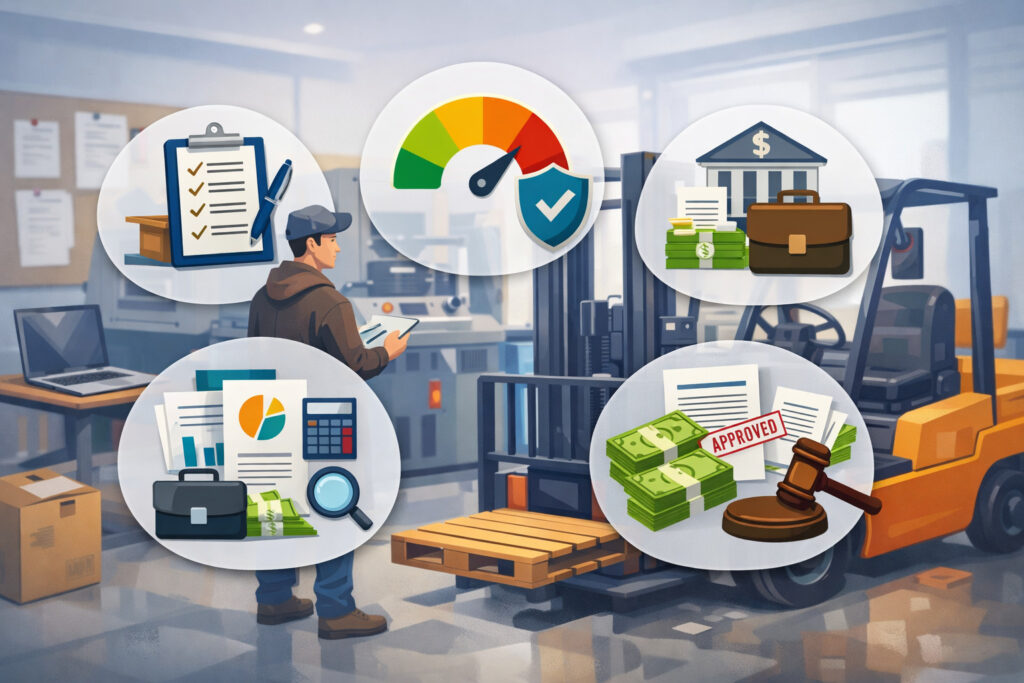
One of the biggest concerns founders have is whether they can qualify at all. Since new businesses usually lack a long operating history, lenders often rely on a combination of personal financial strength, business documentation, equipment details, and overall risk signals.
The exact standards vary by lender, but most applications for equipment financing for startups involve a similar set of requirements.
A lender generally wants to confirm that the business is legitimate, the owner is identifiable and responsible, the equipment is suitable for financing, and there is a realistic path to repayment.
For startups, that can mean a closer look at personal credit, business formation records, bank statements, projected cash flow, and sometimes the founder’s industry experience. Even when revenue is limited or not yet established, lenders still look for signs that the business is organized and prepared.
Some financing providers are comfortable working with brand-new businesses, while others prefer six months, one year, or more in operation.
Startups that do not meet stricter time-in-business thresholds may still qualify through alternative lenders, vendor programs, or lease arrangements designed for younger companies. In some cases, a larger down payment or stronger guarantor profile may help offset limited business history.
Equipment itself also plays a big role. Lenders often prefer assets with clear resale value, established secondary markets, and practical business use. That means the type, condition, age, and purchase source of the equipment can all affect approval.
Understanding equipment financing requirements for startups ahead of time helps founders prepare complete applications, avoid preventable delays, and target lenders that are more likely to fit their situation.
Business formation documents and owner identification
Most lenders want to see that the startup is properly formed and operating as a real business entity. That usually means providing core formation documents, a business license if applicable, and the employer identification details associated with the business.
The lender may also ask for proof of the business address and evidence that the company is in good standing.
Owner identification is another standard requirement. Founders are commonly asked to provide a government-issued ID, contact information, and personal details needed for identity verification and credit review.
For very new companies, the owner’s personal profile often matters almost as much as the business itself because the business has not had enough time to build a standalone borrowing history.
If there are multiple owners, the financing provider may require information for each owner above a certain ownership threshold. In some cases, all major owners may need to sign the agreement or personal guarantee. This is especially common when the business has limited revenue or no established business credit.
Credit history, bank statements, and revenue records
Because startups often lack extensive financial history, lenders use the information that is available to assess repayment ability. Personal credit history is frequently a major factor.
A stronger score can improve approval odds, reduce down payment expectations, and lead to better pricing. A weaker score does not always prevent approval, but it may narrow the financing options or lead to stricter terms.
Bank statements are commonly requested to show recent cash flow patterns and available liquidity. Even if the business is new, lenders may review business bank activity to understand deposit trends, average balances, and overall financial behavior.
Some providers may also ask for personal bank statements if the startup has not yet developed meaningful business banking history.
When revenue records are available, they can strengthen the application. That may include profit and loss statements, tax returns if any exist, invoices, contracts, or signed customer agreements.
For founders still in early launch mode, projections and a business plan may help fill part of the gap, though they usually do not replace actual financial data entirely.
Equipment quotes, down payments, and personal guarantees
A lender cannot evaluate an equipment request without understanding what is being financed. That is why equipment quotes or invoices are almost always required.
These documents show the purchase amount, seller information, equipment description, condition, and sometimes serial numbers or model details. If the startup is financing used equipment, the lender may want additional information about age, maintenance history, and market value.
Down payment requirements vary widely. Some startup-friendly financing providers advertise low or no down payment options, but others may ask for 10 percent to 20 percent or more depending on risk. A higher down payment can reduce the lender’s exposure and sometimes improve approval odds for businesses with limited operating history.
Personal guarantees are also common in equipment loans for new businesses. A guarantee means the owner accepts personal responsibility if the business fails to repay.
Many founders are understandably cautious about this, but it is a frequent requirement when a startup has not yet built enough business credit or stable financial history to stand on its own.
Main Equipment Financing Options for New Businesses

Startups have more than one path when it comes to funding equipment. The right option depends on the business model, how quickly the equipment may become outdated, the startup’s credit profile, and whether ownership or flexibility matters more.
While some founders focus only on loans, there are several startup equipment financing options worth comparing.
The most common route is a dedicated equipment loan, where the startup borrows funds to buy a specific asset and repays the amount over time. Another major option is equipment leasing, which may lower upfront cost and offer flexibility for technology or equipment that changes quickly.
Vendor financing programs can also be attractive when equipment sellers partner directly with financing companies to simplify the purchase process.
Some startups also consider broader funding tools such as term loans or business lines of credit. These can help when the purchase is part of a larger startup buildout or when the business needs flexibility beyond a single asset.
There are also alternative financing providers that focus on newer businesses, though these options may come with higher costs or more frequent payments depending on the structure.
SBA-related solutions may be relevant in some cases as well, especially when the equipment purchase is part of a larger business financing strategy. These programs are often more document-heavy and may take longer than streamlined equipment financing, but they can be useful for some startups depending on their profile and timeline.
The key is not assuming one product fits every situation. Financing machinery for startups is different from acquiring laptops, delivery vans, or restaurant equipment. The best structure should match the asset, the startup’s stage, and its cash flow reality.
Equipment loans and startup equipment loans
Equipment loans are one of the most direct ways to acquire business assets. In a typical structure, the lender finances the purchase of a specific piece of equipment, and the startup repays the loan in fixed installments.
Once the loan is repaid, the business owns the equipment outright, assuming ownership was not already transferred at the start.
This option often works well when the startup expects to use the equipment for many years and wants to build long-term value through ownership. It can be a strong fit for machinery, vehicles, kitchen equipment, durable retail systems, and other assets that do not become obsolete quickly.
Because the equipment itself often serves as collateral, rates and approval standards may be more favorable than with unsecured borrowing.
Still, startup equipment loans may require stronger owner credit, a down payment, or a personal guarantee. The monthly payment also needs to fit the company’s early cash flow. Ownership is appealing, but founders should still weigh maintenance costs, depreciation, and whether the equipment may need replacement sooner than expected.
Leasing, vendor financing, and lease options
Leasing is often attractive for startups that want lower upfront costs or more flexibility around upgrades. Instead of financing the full purchase toward ownership, the business pays for the right to use the equipment over a fixed period.
Depending on the lease structure, the startup may return the equipment at the end, renew the lease, or purchase the asset for a predetermined amount.
This can be useful for office technology, medical systems, or other equipment that may become outdated before the business wants to own it long term. Business equipment leasing for startups may also reduce the burden of a large down payment and make it easier to preserve cash for operations.
Vendor financing is another option worth exploring. Some equipment manufacturers and dealers offer financing directly or through partner lenders.
This can streamline the buying process and sometimes create access to promotions or industry-specific financing structures. However, startups should still compare terms carefully rather than assuming the vendor program is automatically the best deal.
Term loans, lines of credit, and alternative financing
Not every equipment purchase fits neatly into a dedicated equipment product. Some startups use general business term loans to cover equipment as part of a broader launch or expansion project.
For example, a restaurant startup may need kitchen equipment, furniture, initial inventory, and tenant improvements at the same time. In those cases, a broader funding structure may be more practical than financing each asset separately.
Business lines of credit can also help with smaller or phased equipment purchases. Rather than financing one large asset at once, a line of credit allows the startup to draw funds as needed and repay over time.
This may be useful for growing businesses that need flexibility, though rates can vary and the equipment itself may not secure the financing in the same way as a traditional equipment loan.
Alternative lenders fill another important gap for startups with limited time in business, inconsistent revenue, or credit challenges. These providers may use different underwriting models and can sometimes approve applications that traditional lenders decline.
The tradeoff is that the total cost may be higher, so founders should review pricing and repayment structure very carefully before accepting a deal.
How Lenders Evaluate Startup Applications
When a startup applies for equipment financing, lenders are not just asking whether the founder wants the equipment.
They are asking whether the business has a reasonable ability to manage the obligation and whether the asset gives them enough security to justify the risk. Since startups often have less operating history, lenders tend to evaluate a wider mix of factors.
A major part of this evaluation is the founder’s financial profile. Personal credit can carry significant weight for new businesses because it provides a history of borrowing behavior when business credit data is limited. Lenders may also review personal income, debt obligations, and liquid reserves, especially if the startup is very early or pre-revenue.
Business readiness matters too. Lenders often want to see that the startup has a clear model, a legitimate formation structure, and a real use case for the equipment.
A well-prepared founder who can explain how the equipment supports operations, revenue generation, or cost savings may present lower perceived risk than someone applying with vague plans and incomplete documents.
The equipment itself is another part of the risk equation. Assets with stable resale value, broad market demand, and essential business use tend to be easier to finance than highly specialized, hard-to-resell, or rapidly depreciating items. Industry type also matters, since some sectors are considered more volatile or harder to underwrite than others.
For founders pursuing equipment financing for new businesses, understanding how lenders think can make the application process more strategic. Instead of just submitting forms and hoping for approval, startups can build a stronger case by addressing the same risk questions the lender is already asking.
Credit score, cash flow, and owner background
Personal credit is often one of the first things lenders review for startup applications. A solid credit score does not guarantee approval, but it can improve the overall profile and sometimes offset other weak areas. Stronger credit often signals lower default risk, better financial discipline, and more flexibility in structuring the agreement.
Cash flow is another major consideration, even when the startup is early. If the business already has sales, lenders may look at deposits, average balances, and recurring revenue patterns.
If not, they may review outside income sources, existing contracts, or liquid reserves that suggest the owner can support the payment obligation during the ramp-up phase.
Owner background matters more than many founders realize. Relevant industry experience, management experience, or a track record in similar ventures can strengthen the application.
A lender may feel more comfortable financing equipment for a founder with years of operational knowledge than for someone entering a technically demanding field with no clear experience.
Industry type, business plan strength, and collateral value
Some industries are viewed as more predictable than others. For example, sectors with stable demand, common equipment categories, and easy-to-value assets may be simpler to finance than businesses in highly seasonal or speculative markets.
This does not mean startups in challenging industries cannot qualify, but they may face more questions or tighter terms.
A business plan can also help, especially when revenue history is limited. While not every lender requires a formal plan, many appreciate clear financial projections, market assumptions, operating strategy, and a practical explanation of how the equipment will support income generation.
A thoughtful business plan does not replace financial strength, but it can show that the founder is organized and realistic.
Collateral value plays a large role in equipment acquisition for startups. If the equipment retains value and can be resold with relative ease, the lender’s risk may feel more manageable.
That is one reason standard commercial equipment is often easier to finance than heavily customized or niche assets with limited resale demand.
New equipment versus used equipment approval differences
Startups often ask whether financing used equipment is harder than financing new equipment. The answer is often yes, though not always by a large margin. New equipment generally comes with clearer valuation, stronger condition expectations, and less uncertainty about maintenance history. That can make underwriting more straightforward.
Used equipment can still be a smart choice, especially for startups trying to conserve capital. However, lenders may review the age, condition, seller reputation, service records, and expected remaining useful life more closely. Some providers place limits on how old financed equipment can be or shorten the repayment term for older assets.
Approval can vary significantly depending on the type of used equipment and how easy it is to value and resell. A well-maintained used vehicle or common piece of machinery may be easier to finance than highly specialized used equipment with a narrow buyer market.
Equipment Loans vs Leases for Startups
One of the most important decisions founders make is whether to borrow to own or lease to use. Both options can support a growing business, but they solve different problems. Understanding leasing vs financing equipment for startups is essential because the wrong structure can create unnecessary cost or limit flexibility later.
An equipment loan is often best when the startup plans to use the equipment for a long time and wants to build equity through ownership.
Monthly payments may be slightly higher in some cases, but the business eventually owns the asset, which can create lasting operational value. This can make sense for durable equipment with a long useful life, stable technology, and strong day-to-day importance.
A lease, by contrast, may work better when the startup wants to preserve cash, reduce upfront commitment, or keep upgrade options open.
This is often helpful for fast-changing technology or equipment categories where the business may want newer models in a few years. Leasing can also appeal to founders who prioritize flexibility over ownership, especially during uncertain early growth stages.
Neither option is automatically better. The right choice depends on how long the equipment will remain useful, how important ownership is, how predictable cash flow is, and what the total cost looks like over time.
A loan that leads to ownership may be cheaper in the long run for one startup, while a lease may be smarter for another because it protects cash and reduces technology risk.
Founders comparing new business equipment lease options with loan offers should go beyond the payment amount and look closely at lifecycle, obligations, and end-of-term outcomes.
When a loan makes more sense
A loan is usually stronger when the equipment has a long productive life and the startup expects to use it well beyond the financing term.
Common examples include kitchen equipment, work vehicles, construction tools, manufacturing machinery, and durable retail systems. In these cases, ownership can create better long-term value because the equipment continues serving the business even after payments end.
Loans also make sense when the startup wants full control over the asset. Ownership gives the business freedom to keep, modify, sell, or trade the equipment without lease return conditions or usage restrictions.
For founders who know exactly what they need and do not expect rapid changes in technology or business model, this can be a practical advantage.
Still, ownership also means the business assumes the risk of maintenance, depreciation, and potential obsolescence. If the equipment becomes less useful before the loan is repaid, the startup may still owe money on an asset that no longer fits its needs.
When leasing may be the better fit
Leasing often works best when flexibility matters more than ownership. Technology-heavy startups, medical practices, and businesses using equipment that changes quickly may benefit from a lease structure that allows easier upgrades or replacement at the end of the term. This can reduce the risk of being stuck with outdated systems.
Leases may also lower the initial cash burden. For founders managing tight early-stage cash flow, that can be a major advantage. Instead of committing to a large down payment and ownership structure, the startup gets access to the equipment while keeping more liquidity available for staffing, inventory, or customer acquisition.
However, the long-term cost of leasing can be higher depending on the agreement and what happens at the end of the term. Some leases include purchase options, while others require the equipment to be returned. It is important to understand the difference before signing.
Key pros and cons founders should compare
When weighing a loan against a lease, founders should look at more than convenience. Important comparison points include:
- Upfront costs
- Monthly payment amount
- Ownership at the end
- Upgrade flexibility
- Maintenance responsibility
- Total cost over the full term
- Fit with equipment lifecycle
- Risk of obsolescence
A startup that needs stable, durable machinery may benefit more from ownership. A startup relying on fast-changing equipment may value flexibility more. The best structure is the one that supports the business without locking it into a mismatch between the equipment and the financing terms.
How to Improve Approval Chances
Even if a startup is young, approval is not purely a matter of luck. Founders can take practical steps to make their business look stronger, more organized, and less risky before submitting an application.
This matters because underwriting decisions often come down to how clearly the lender can understand the business and how comfortable they feel with the founder’s preparation.
One of the best ways to improve approval odds is to apply only after clarifying what equipment is actually needed and how it supports operations.
A vague or oversized request can create hesitation, while a well-defined financing need tied to revenue generation or operational necessity is easier to evaluate. Lenders want to see purpose, not just ambition.
It also helps to choose the right financing provider for the stage of the business. Some lenders are much more open to startups than others. Applying broadly without strategy can lead to wasted time and unnecessary credit inquiries.
A more thoughtful approach is to target lenders, leasing companies, or vendors known for working with new businesses and specific equipment categories.
Improving approval chances also means strengthening the application package. Clean records, clear equipment quotes, organized financial documents, and a credible explanation of the business model can all make a difference.
For startups with limited history, clarity and preparation can help compensate for what is not yet available in long-term financial records.
For founders exploring startup capital for equipment purchases, the goal should be to make underwriting easy. The more complete and credible the story, the better the odds of securing terms that fit the business.
Strengthen the financial and application profile
A startup does not need to be perfect to qualify, but it should aim to present itself in a stable and professional way. Start by keeping business and personal finances separate.
Use a dedicated business bank account, maintain organized records, and make sure the legal entity is formed correctly before applying. These basics may seem small, but they signal seriousness and operational readiness.
If the owner’s personal credit needs improvement, it may be worth addressing obvious issues before applying. Reducing revolving balances, correcting errors on credit reports, and avoiding new unrelated debt can all help strengthen the profile. Even a modest improvement can affect approval or pricing.
It also helps to be realistic about the amount requested. Financing a reasonable equipment package that matches the startup’s stage is often easier than requesting a much larger amount that looks aggressive compared with current revenue or available resources.
Build a clear case for the equipment need
Lenders respond better when founders can explain why the equipment matters. The application becomes stronger when the startup can show that the equipment supports revenue, lowers labor costs, increases production capacity, improves service quality, or is required to operate in the chosen industry.
This is where a simple business summary or operating plan can be useful. The founder does not need to write a novel, but the lender should be able to see what the business does, who it serves, and how the equipment fits into that model.
If the startup already has signed contracts, letters of intent, purchase orders, or customer demand indicators, those can help make the case more credible.
For more specialized assets, it may also help to explain why that particular equipment was chosen and how long it is expected to remain useful. This shows a more disciplined acquisition strategy and can support confidence in the financing request.
Consider a down payment, guarantor, or more financeable asset
When a startup has limited operating history, offering a larger down payment can improve approval odds. It reduces the lender’s risk and shows that the founder has real financial commitment to the purchase. Even if no down payment is required, contributing cash upfront may help unlock stronger terms in some cases.
Some founders also improve approval odds by choosing equipment that is easier to finance. Common, durable, easy-to-value assets are often less risky from a lender’s perspective than highly specialized or niche machinery. If there is flexibility in what model or seller to choose, that can influence the financing result.
In some cases, a stronger co-owner or guarantor profile can also support approval. This should be considered carefully, but it can help when the business itself is too new to stand on its own.
Common Mistakes to Avoid When Financing Equipment
Equipment financing can help a startup grow more efficiently, but it can also create unnecessary strain when the wrong decision is made. Many early-stage businesses run into trouble not because financing itself is bad, but because the structure, amount, or timing does not match the business’s real needs.
One common mistake is borrowing too much too early. Founders sometimes assume they should finance the most advanced equipment available, even when the business does not yet have enough demand to justify that level of investment.
Bigger equipment packages often mean larger monthly obligations, and that can put pressure on a startup before revenue becomes stable.
Another mistake is focusing only on approval and not enough on total cost. A financing offer may look manageable based on the monthly payment, but the total repayment amount, fees, down payment, and end-of-term conditions matter just as much.
This is especially true when comparing leases, alternative financing structures, and shorter-term funding with higher effective cost.
Startups also sometimes overlook the real-world lifecycle of the equipment. Financing terms should match how long the equipment is expected to stay useful. If the startup chooses a long term for fast-aging equipment, it risks paying for an asset after its value has declined or its usefulness has faded.
Thoughtful planning can prevent many of these issues. Founders comparing financing tools and machinery for small businesses should approach the decision with the same discipline they would use for any major operating commitment.
Borrowing too much or choosing the wrong term
It is easy to overestimate how much equipment the business truly needs at launch. Founders often want to prepare for future growth immediately, but financing should reflect current and near-term demand, not an ideal scenario that may take years to materialize. Overborrowing can tie up cash flow and reduce flexibility during the stage when the business needs it most.
The term matters too. A shorter term may mean higher payments but lower total financing cost. A longer term may reduce monthly burden but increase the overall cost and extend the obligation well into the future. There is no universal right answer, but the term should align with both cash flow capacity and equipment lifespan.
Choosing a term just to get the lowest monthly payment can backfire if it keeps the startup obligated on equipment long after the asset has stopped delivering value.
Ignoring lease details, maintenance, and end-of-term obligations
Leasing can be useful, but founders sometimes sign without fully understanding the terms. Important details include whether the lease allows purchase, what happens at the end of the term, who covers maintenance, whether there are return conditions, and whether the startup is locked into fixed use requirements or penalties.
Maintenance is another overlooked area in both leases and loans. Equipment may require service contracts, repairs, software updates, inspections, or replacement parts. If the startup finances the asset but underestimates operating and maintenance costs, the real burden may be much higher than expected.
End-of-term surprises are also common. Some leases involve buyout options, while others require return of the equipment in specific condition. Founders should know exactly what is expected before agreeing to any lease structure.
Failing to compare offers and match financing to business goals
Another frequent mistake is taking the first approval without comparison. Startups are often relieved just to get approved, especially if they were worried about their age or credit profile.
But one approval does not automatically mean it is the right one. The best choice requires comparing rates, fees, term length, flexibility, down payment, guarantee requirements, and ownership outcome.
It is also important to match financing to the business’s actual goals. A startup focused on conserving cash may value lower upfront cost. A business planning to use the equipment for many years may care more about ownership. A company in a fast-changing technical field may benefit from lease flexibility.
When financing does not match the business strategy, it can create friction instead of support. Good financing should make growth more manageable, not more stressful.
Frequently Asked Questions
Q.1: Can a startup qualify for equipment financing with no business history?
Answer: Yes, in many cases a startup can qualify even with little or no operating history, but approval usually depends on other strengths in the file.
Lenders may place more weight on the owner’s personal credit, industry experience, liquidity, down payment, and the value of the equipment being financed. Some providers specifically work with newer companies, while others prefer businesses with time in operation.
The key is understanding that a lack of business history does not automatically mean a lack of options. It usually means the lender will look more closely at the founder and the overall risk profile.
Q.2: What credit score is needed for startup equipment financing?
Answer: There is no single minimum score across all lenders. Some financing providers prefer stronger personal credit and reserve their best terms for better-qualified applicants. Others are willing to work with more challenged profiles if the equipment has solid resale value, the down payment is larger, or the overall application is strong in other areas.
A better credit score usually improves approval odds and pricing, but startups with less-than-perfect credit may still find equipment loans for new businesses or lease options through more flexible providers.
Q.3: Is it easier to get a lease than an equipment loan?
Answer: Sometimes, yes. Leasing can be easier for some startups because the financing company may focus more on the use and value of the equipment rather than full ownership transfer from day one. Lease structures can also reduce upfront cost, which may make them more accessible to younger businesses.
That said, ease of approval depends on the provider, the asset type, the founder’s profile, and the lease terms. A lease is not automatically easier in every case, but it is often one of the more flexible startup equipment financing options worth considering.
Q.4: Can startups finance used equipment?
Answer: Yes, many startups can finance used equipment, and doing so can be a smart cost-saving move. However, approval may depend more heavily on the equipment’s age, condition, remaining useful life, and resale value. Some lenders have restrictions on older or heavily specialized equipment.
Used equipment can still work well when the seller is reputable and documentation is strong. Providing maintenance records, model details, and a clear quote can help improve underwriting results.
Q.5: Do founders usually need a personal guarantee?
Answer: In many startup financing situations, yes. Because the business may not yet have enough financial history or business credit to stand alone, lenders often require the owner to personally guarantee repayment. This gives the lender added security and is common in early-stage business financing.
Founders should review guarantee terms carefully and understand the risk before signing. While it is a standard requirement in many cases, it should still be considered thoughtfully as part of the overall financing decision.
Q.6: What types of equipment can startups usually finance?
Answer: A wide range of business assets may qualify, including office technology, manufacturing equipment, commercial kitchen equipment, medical devices, work vehicles, retail systems, construction tools, and specialized machinery. The most financeable assets are usually durable, identifiable, business-related, and able to hold some market value.
If the equipment is essential to operations and has a clear purchase quote, there is a good chance some type of financing may be available, even if the exact structure varies.
Q.7: How should a startup choose between a loan and a lease?
Answer: The best choice depends on how long the startup plans to use the equipment, how quickly the asset may become outdated, how important ownership is, and how much cash the business needs to preserve.
A loan often makes more sense for long-life equipment that the startup wants to own. A lease may fit better when flexibility, lower upfront cost, or easier upgrades matter more.
Founders should compare monthly payment, total cost, end-of-term outcome, and equipment lifecycle before deciding. The right answer is the one that supports the business model without putting unnecessary pressure on cash flow.
Conclusion
Equipment can be one of the most important investments a startup makes. The right tools, systems, vehicles, or machinery can help a business open faster, serve customers better, operate more efficiently, and grow with greater confidence. But the way that equipment is funded matters just as much as the equipment itself.
Equipment financing for startups gives founders a way to acquire what they need without exhausting working capital upfront.
Whether the best fit is a loan, lease, vendor program, line of credit, or another structure, the decision should be based on more than approval alone. It should reflect the startup’s cash flow, growth stage, equipment lifecycle, and long-term goals.
Founders who prepare strong documentation, understand common approval requirements, and compare options carefully are usually in a better position to make a smart choice.
That means knowing what lenders look for, being realistic about how much equipment the business truly needs, and avoiding financing structures that do not match how the equipment will actually be used.