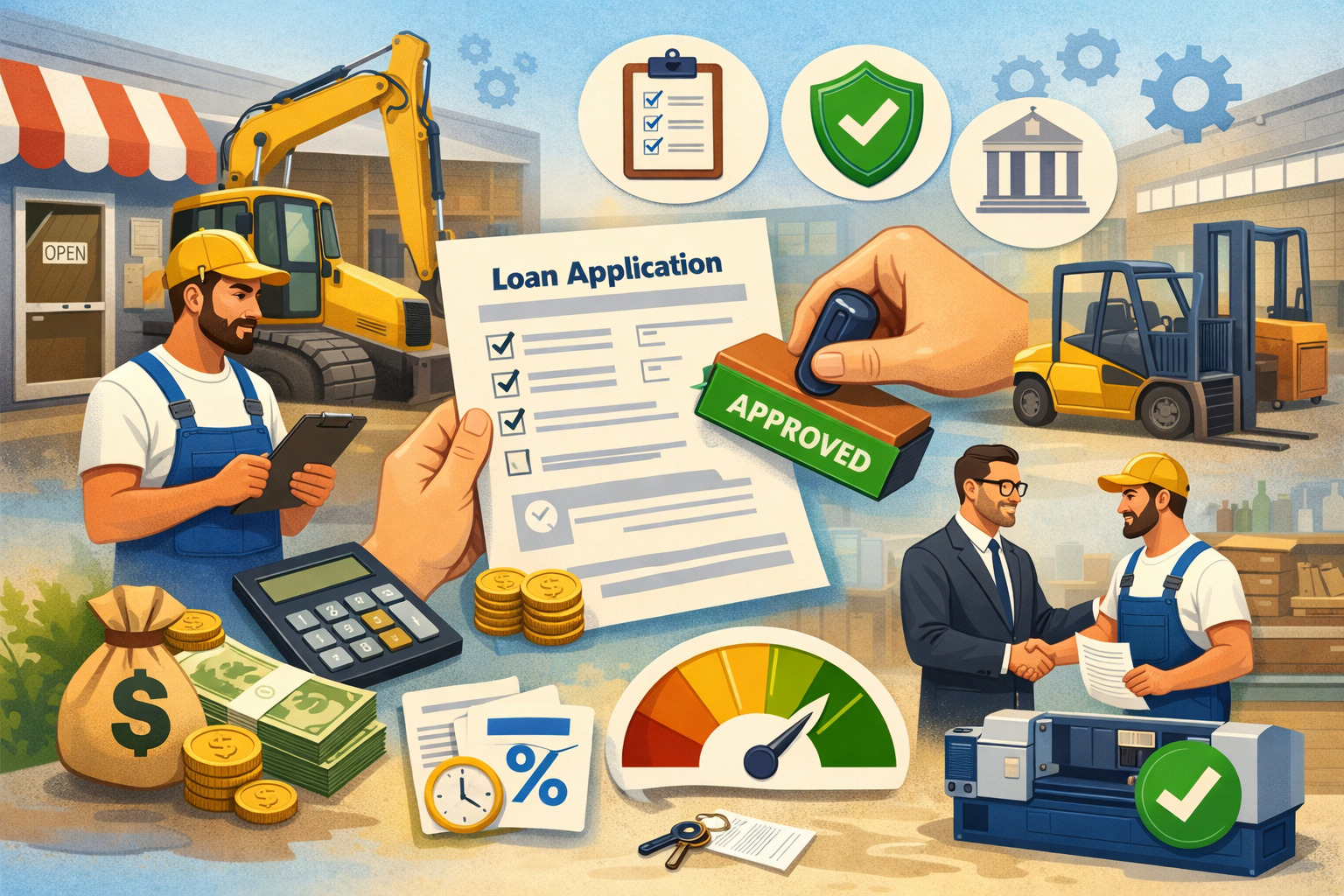
Equipment Loan Approval Process Explained: What Small Businesses Need to Know Before Applying
Buying the right equipment can help a business move faster, serve more customers, improve quality, and increase revenue. But the approval side of financing is where many owners get stuck.
They may know what they need to buy, yet feel unsure about what lenders look for, how decisions are made, or why one application moves quickly while another turns into a long back-and-forth.
Understanding the equipment loan approval process matters because it helps you prepare before you apply. That preparation can save time, reduce frustration, and improve your chances of getting approved on terms that make sense for your business.
It can also help you avoid common mistakes, such as requesting the wrong amount, submitting incomplete documents, or focusing only on the monthly payment without considering the full financing cost.
This guide breaks down the process in a practical way for startups, newer businesses, and established small companies.
You will learn what an equipment loan is, how equipment loans are approved, what lenders review during underwriting, which documents are commonly required, why approvals get delayed or denied, and what you can do to strengthen your application before it reaches a lender’s desk.
Whether you are financing machinery, vehicles, medical devices, restaurant equipment, office technology, construction tools, or specialized production equipment, the same core ideas usually apply.
The goal is simple: help you approach the equipment financing approval process with more clarity and confidence so you can make a smart borrowing decision for your business.
What an Equipment Loan Is and How It Works

An equipment loan is a type of business financing used to purchase equipment your company needs to operate or grow.
That can include heavy machinery, delivery vans, computers, manufacturing systems, point-of-sale hardware, farm equipment, office furniture, medical equipment, or other business-use assets.
Instead of paying the full purchase price upfront, the business borrows the funds and repays them over time in scheduled installments.
In most cases, the equipment being purchased plays a central role in the transaction. Unlike some forms of general-purpose working capital, equipment financing is tied to a specific asset. The lender often uses that asset as collateral, which means the equipment itself helps support the loan.
Because of that structure, equipment financing may be more accessible than other business loan options for some borrowers, especially when the equipment has clear resale value and the business can show a reasonable ability to repay.
The basic structure is usually straightforward. A lender approves financing for all or part of the purchase price, the vendor or seller gets paid, and the borrower makes monthly payments over the agreed term.
Depending on the lender and the deal, the borrower may need to contribute a down payment, provide a personal guarantee, or meet certain operating history and revenue standards.
How repayment and collateral typically work
Repayment terms for equipment loans are often aligned with the useful life of the asset. A business buying technology with a shorter lifespan may receive a shorter term than a company financing long-lasting machinery or commercial vehicles. This helps lenders match the financing structure to the value and expected use of the equipment.
Because the equipment often secures the financing, lenders care about more than the borrower’s credit profile. They also evaluate whether the asset is easy to identify, easy to value, and likely to hold enough value over time.
New equipment from established manufacturers may be easier to finance than highly specialized used equipment with limited resale demand.
This asset-based element is what makes business loan approval for equipment purchases different from many unsecured financing options. The lender is not just asking, “Can this borrower repay?”
They are also asking, “If something goes wrong, does the equipment provide meaningful collateral support?” That dual review shapes much of the equipment loan underwriting process.
Equipment loans versus equipment leases
Many business owners compare loans and leases at the same time. With an equipment loan, the borrower is generally working toward ownership. With a lease, the structure may involve lower upfront costs or more flexibility at the end, but ownership may not transfer automatically unless there is a buyout option.
This distinction matters during the equipment loan application process because the lender’s review may differ depending on the structure. A loan tied to ownership can involve deeper analysis of the equipment’s value and the borrower’s long-term repayment ability. A lease may focus more on the anticipated usage period and end-of-term options.
Why Understanding the Approval Process Matters Before You Apply
Many borrowers start shopping for rates before they fully understand the approval path. That is understandable, but it can create problems. The best-looking offer on paper may not fit your business profile, the asset you want to buy, or the way your cash flow works.
Knowing the approval process in advance helps you target the right lenders and prepare the right paperwork before a delay becomes expensive.
For startups and small companies, timing matters. Equipment often affects day-to-day operations. A landscaper may need trucks before peak season. A contractor may need machinery to begin a signed project.
A restaurant may need refrigeration and kitchen equipment before opening. If the financing process slows down, those operational plans may be disrupted. That is why understanding approval steps for equipment loans is not just about getting approved. It is about protecting momentum.
There is also a financial reason to understand the process. A strong application can improve not only the chance of approval but also the quality of the offer.
Better preparation can influence down payment expectations, repayment structure, documentation requests, and sometimes pricing. Even when the rate does not change, a smoother file can lead to faster funding and fewer surprises.
Why preparation affects approval speed and lender confidence
Lenders want to see that a borrower understands the transaction. A clear request supported by organized documents tends to inspire more confidence than a rushed application with missing information. When underwriters have to chase basic details, the process slows down, and uncertainty goes up.
For example, if a borrower submits a request for a machine but cannot provide a vendor quote, does not clearly explain how the equipment will be used, and submits incomplete bank statements, the lender has to spend extra time clarifying the basics.
By contrast, a borrower who presents the equipment invoice, revenue records, formation documents, and a concise explanation of business operations gives the lender a much cleaner file to review.
That is one reason small business equipment loan approval can feel easier for some applicants than others, even when they are asking for similar amounts. The difference is often in the quality of preparation, not just the quality of the business itself.
Why approval knowledge helps you compare offers more intelligently
Many borrowers focus almost entirely on interest rates. Rate matters, but it is only part of the financing picture. Two offers can look similar at first glance while carrying very different total costs, repayment schedules, guarantee requirements, or end-of-term obligations.
Understanding the equipment financing approval process helps you ask better questions. Is the lender requiring a blanket lien? Is there a balloon payment? Are payments seasonal or fixed? How much money is needed upfront? Is used equipment treated differently? Can the lender finance installation, training, shipping, or software tied to the equipment?
Step-by-Step Overview of the Equipment Loan Approval Process
The equipment loan approval process usually follows a sequence, even though timelines can vary by lender, deal size, and equipment type. Some smaller transactions move quickly with a streamlined review.
Larger or more specialized requests often require more underwriting. Either way, understanding the steps makes the process much easier to navigate.
Most approvals begin with a financing inquiry or application. The borrower shares basic business information, the amount requested, and the equipment details.
From there, the lender performs an initial review, requests supporting documents, evaluates the business and the equipment, issues a decision, and then moves toward final documentation and funding.
Although this sounds simple, each stage has its own purpose. A delay in one part can affect everything that follows. That is why it helps to know what is happening behind the scenes.
Step 1: Identify the equipment and define the financing request
Before a lender can seriously review the deal, the equipment itself must be identified. That usually means the borrower provides a quote, invoice, proposal, or purchase order from the seller. The lender wants to know exactly what is being financed, how much it costs, whether it is new or used, and who is selling it.
At this stage, the borrower should also know how much financing is needed. That includes deciding whether to finance just the equipment price or related costs such as delivery, installation, setup, accessories, warranties, or software. Some lenders allow these expenses to be included, while others may limit financing to the core equipment cost.
This part is more important than many borrowers realize. A vague borrowing request can create avoidable problems later. If the lender cannot tell what asset is being financed, what it is worth, or whether the amount requested is reasonable, the file may stall before it reaches full underwriting.
Step 2: Complete the application and submit initial documents
The next stage is the formal equipment loan application process. The application typically asks for business contact details, ownership information, legal structure, time in business, revenue details, intended use of the equipment, and the amount being requested.
Some lenders also ask about existing debts, business banking history, or whether the owners have prior bankruptcies or significant credit issues.
Along with the application, many lenders request initial documents such as:
- Business formation paperwork
- Owner identification
- Recent business bank statements
- Revenue records or financial statements
- Equipment quote or invoice
- Business tax returns in some cases
- A voided check or business bank verification
- Information on any down payment being made
For smaller transactions, the document list may be shorter. For larger deals, especially when the borrower is newer or the equipment is used, the review can become more detailed.
Step 3: Initial screening and lender pre-review
After the application comes in, many lenders conduct a preliminary review before full underwriting begins. This is where they look for obvious issues such as incomplete information, missing documents, mismatched borrower details, unsupported revenue claims, or equipment types outside their financing guidelines.
At this point, some lenders may run credit, some may do only a soft review first, and some may quickly determine whether the request appears to fit their program. If the basics line up, the file moves forward. If not, the lender may ask for clarification, suggest a modified structure, or decline the request early.
This step is one reason why some businesses receive a quick response while others wait longer. A clean file with clear equipment details and complete records can move through initial screening much faster than one with gaps.
Step 4: Underwriting and deeper risk review
This is the core of how equipment loans are approved. During underwriting, the lender evaluates both the borrower and the equipment. They review credit, cash flow, debt obligations, time in business, industry stability, and the asset’s collateral value. They also consider whether the requested financing amount makes sense in relation to the business’s size and financial condition.
If the application is straightforward, underwriting may be relatively light. If the transaction is larger, the borrower is a startup, or the equipment is older and specialized, the lender may request more detail. This could include additional bank statements, an explanation of cash flow fluctuations, proof of contracts, or more information about the equipment seller.
The lender review process for equipment loans is designed to answer one core question: does this transaction make sense from both a repayment and collateral standpoint? If the answer is yes, approval is more likely. If the answer is mixed, conditional approval may follow. If the lender sees major risk without enough support, the deal may be denied.
Step 5: Approval, conditional approval, or decline
Once underwriting is complete, the lender issues a decision. A full approval means the file meets the lender’s standards as submitted, subject to final documentation. A conditional approval means the lender is open to moving forward, but more items are needed first. A decline means the lender is not comfortable with the request under current conditions.
Conditional approvals are common. They do not necessarily signal a weak application. In many cases, they simply mean the lender wants more information or wants the deal restructured.
For example, the lender may ask for a larger down payment, updated bank statements, proof of insurance, a clearer equipment quote, or a personal guarantee.
Understanding this stage is important because borrowers sometimes mistake conditional approval for final approval. It is better to view it as a promising step, but not the finish line.
Step 6: Final documents, vendor coordination, and funding
Once all conditions are met, the lender prepares final loan documents. The borrower signs the agreement, the lender may verify the equipment order with the seller, and funding is arranged.
Depending on the transaction, the lender may send funds directly to the vendor, reimburse the borrower, or follow a staged payment process for equipment that is built, delivered, or installed over time.
Before funding, the lender may confirm serial numbers, invoices, insurance, business bank details, and delivery timing. This is especially common with larger-ticket equipment or transactions involving used assets from independent sellers.
Funding is the last stage, but even here details matter. A simple documentation error can delay disbursement. That is why staying organized through the end of the process is just as important as starting strong.
Common Requirements for Equipment Loan Approval
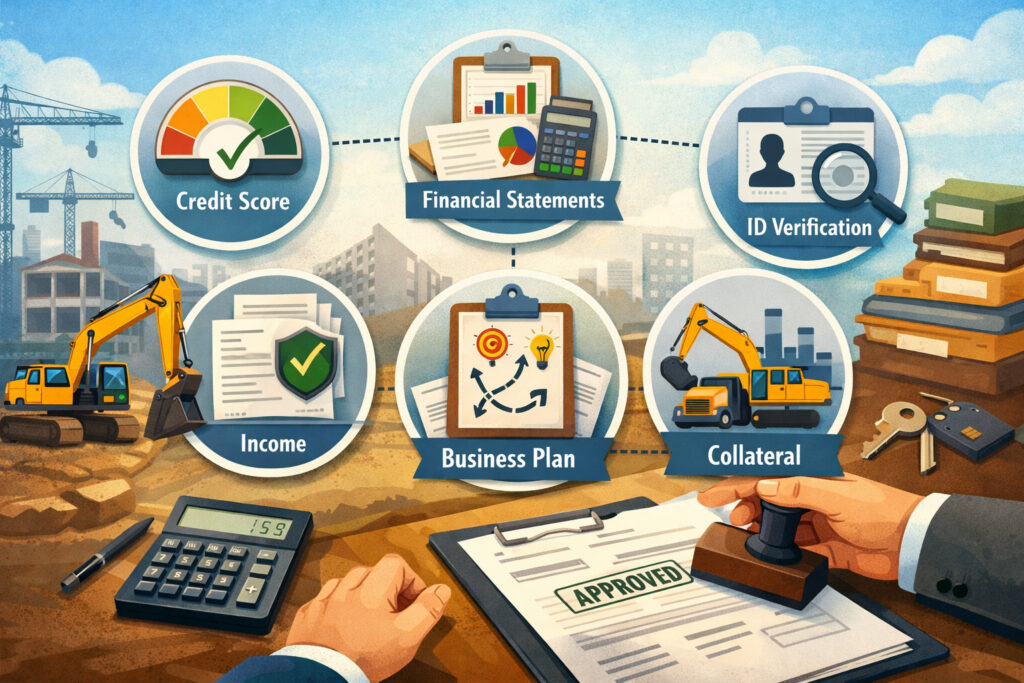
When business owners ask about business equipment loan approval requirements, they are usually trying to answer a practical question: what do I need to have ready before I apply?
The answer varies by lender, but most equipment financing requests are built around the same core categories. Lenders want to verify that the business is real, the owners can be identified, the company has a reasonable ability to repay, and the equipment is suitable for financing.
These requirements exist because equipment financing is not just about the borrower’s need. It is also about the lender’s ability to assess risk clearly. Missing or inconsistent information creates uncertainty, and uncertainty often leads to delays, added conditions, or declines.
While requirements are often lighter for lower-dollar deals than for traditional term loans, borrowers should still expect documentation. A strong file typically includes legal, financial, operational, and equipment-specific records.
Business and owner documentation lenders often request
Lenders commonly ask for documents that confirm the business exists and that the applicant has the authority to borrow on its behalf. This can include formation documents, business licenses where relevant, and ownership information.
Owner identification is also standard because lenders need to verify who is applying and who may be guaranteeing the obligation.
Typical documents needed may include:
- Articles of organization, incorporation, or similar formation records
- Employer identification details
- Business license if applicable
- Government-issued identification for owners
- Business address and contact verification
- Ownership breakdown for the company
- Operating agreement or corporate resolution in some cases
These items help confirm basic legitimacy. For newer businesses, lenders may rely more heavily on owner-level information because the company itself has a shorter financial history.
Financial records and operating history requirements
The next major category involves financial strength. Lenders usually want to understand revenue, cash flow, and banking behavior. They may review recent bank statements, profit and loss statements, balance sheets, tax returns, or processor statements depending on the business model and the lender’s underwriting approach.
Common financial items requested during the small business equipment loan approval process include:
- Recent business bank statements
- Year-to-date revenue reports
- Profit and loss statements
- Balance sheet
- Business tax returns
- Personal tax returns in some situations
- Existing debt information
- Proof of recurring customer contracts in some industries
Time in business is often a major qualification factor. Established businesses may have more options, but startups and newer companies can still qualify if they show strong owner credit, sufficient cash reserves, meaningful industry experience, or a solid down payment.
Equipment-specific documents and down payment expectations
Because the financing is tied to a specific asset, lenders also require equipment-focused records. At a minimum, they usually want a detailed vendor quote or invoice.
For used equipment, they may also want serial numbers, photographs, inspection records, maintenance history, or third-party valuations. The more specialized the asset, the more scrutiny it may receive.
Lenders may ask for:
- Equipment quote, invoice, or purchase order
- Seller or vendor details
- Equipment description, make, model, and year
- New or used status
- Serial numbers when available
- Condition reports or inspection documents
- Delivery and installation details
- Proof of insurance before funding
Some lenders finance 100 percent of the equipment cost, while others expect a down payment. A down payment may become more likely when the borrower is newer, the equipment is older, the request size is large, or the asset has uncertain resale value. Personal guarantees may also be required, especially for closely held small businesses.
What Lenders Look at During Underwriting
The underwriting stage is where the lender takes a closer look at the full picture. This is the part of the equipment financing approval process where the lender moves beyond basic data collection and asks whether the transaction makes sense financially and structurally.
It is not only about whether the borrower wants the equipment. It is about whether the request fits the borrower’s business capacity and whether the equipment provides dependable collateral support.
Lenders do not all underwrite the same way. Some rely heavily on credit scores and bank activity. Others place more emphasis on time in business, equipment type, or industry experience.
Still, the key equipment loan qualification factors tend to fall into a handful of familiar categories: credit, cash flow, debt load, business stability, industry risk, and equipment value.
Understanding what lenders examine can help borrowers prepare stronger applications and anticipate likely questions before they come up.
Credit profile, cash flow, and debt obligations
Credit is often one of the first things lenders review. In many cases, they look at both business and personal credit, especially for privately owned small companies.
A strong credit profile does not guarantee approval, but it can improve lender confidence. A weaker profile does not automatically mean denial either, especially if the rest of the file is strong and the equipment offers solid collateral value.
Cash flow is equally important. Lenders want to see whether the business can reasonably handle the proposed monthly payment alongside its existing obligations. This is where revenue alone can be misleading.
A business may have decent sales but inconsistent cash flow, thin margins, or high debt service. Underwriters look for signs that the business can absorb the new payment without creating financial strain.
They may review:
- Average monthly deposits
- Revenue trends
- Seasonal fluctuations
- Existing loan payments
- Large overdrafts or negative balance patterns
- Debt-to-income or debt service coverage concepts, depending on the lender
This is a major part of credit requirements for equipment financing, but it goes beyond a simple score. Lenders want to know how the whole business performs financially.
Business stability, industry type, and management strength
Underwriters also evaluate the borrower’s stability. Time in business matters because it gives the lender more history to review. A company with several years of operations, consistent deposits, and a track record in its industry may appear less risky than a brand-new business with limited financial history.
Industry type also plays a role. Some industries are viewed as more stable or easier to underwrite than others.
For example, businesses with recurring service demand or a strong base of contracted work may appear more predictable than highly cyclical or volatile businesses. That does not mean newer or higher-risk industries cannot qualify, but it can affect the structure of the approval.
Management experience matters too. If the business is new but the owner has years of relevant industry background, that may strengthen the file. Underwriters often want context. A new medical practice launched by an experienced practitioner may be viewed differently than a first-time owner entering an unfamiliar field.
The role of the equipment in underwriting decisions
A defining feature of equipment loan underwriting is that the asset itself matters. Lenders review whether the equipment has lasting value, broad market demand, and enough resale potential to serve as meaningful collateral. They may also evaluate whether the equipment is essential to the business’s operations or just a nice-to-have purchase.
Here are some of the factors lenders often consider:
- Is the equipment new or used?
- How old is it?
- What is its expected useful life?
- Is it from a recognized manufacturer?
- Does it have strong resale demand?
- Is it easy to inspect, identify, and value?
- Is it highly specialized or broadly marketable?
A business buying common, in-demand equipment may face a smoother review than one financing older, niche machinery from a private seller. That is why the asset itself can influence not only approval but also term length, down payment expectations, and documentation requirements.
How the Equipment Itself Influences Approval
One of the most overlooked parts of the equipment loan approval process is the role of the equipment itself.
Borrowers often assume the lender is mostly judging the business, but the asset being financed can affect the approval almost as much as the borrower’s credit and cash flow. That is because the equipment is usually central to the lender’s collateral position.
Lenders ask practical questions about the asset. Is it likely to hold value during the loan term? Can it be resold if necessary? Is it easy to identify and verify? Is it a common piece of equipment with an active market, or is it highly customized and difficult to remarket? These questions influence approval decisions, pricing, documentation, and funding speed.
For small businesses, this means the financing outcome is shaped not just by “who you are,” but by “what you are buying.”
New versus used equipment and why it matters
New equipment is often easier to finance because it is simpler to value, more likely to come from an established seller, and less likely to raise questions about wear, performance, or remaining useful life. The lender may feel more comfortable offering longer terms and higher advance rates when the asset is new and well documented.
Used equipment can still be financeable, but lenders may take a more cautious approach. Older assets may require additional review, especially if the equipment is specialized, sold by a private party, or difficult to value. Lenders may want photos, serial numbers, maintenance records, or even an appraisal or inspection before making a final decision.
This does not mean used equipment is a bad financing choice. Many businesses reduce costs successfully by buying used machinery, vehicles, or tools. It simply means that how equipment loans are approved often depends in part on how easily the lender can understand the value and condition of the asset being financed.
Age, condition, resale value, and marketability
Age matters because it affects both useful life and collateral quality. A piece of equipment that is near the end of its productive lifespan may be harder to finance over a long term. Lenders usually do not want the repayment period to outlast the equipment’s practical business value.
Condition matters because poorly maintained equipment may lose value quickly or fail operationally, which increases risk for both the borrower and the lender. Resale value matters because, if a borrower defaults, the lender may rely on the equipment’s market value to recover some of the loss.
Marketability is another factor. Equipment with broad demand, like standard trucks, forklifts, common manufacturing tools, or mainstream office systems, may be easier to finance than custom-built or highly niche assets with limited secondary buyers.
Reasons Applications Get Delayed, Conditionally Approved, or Denied
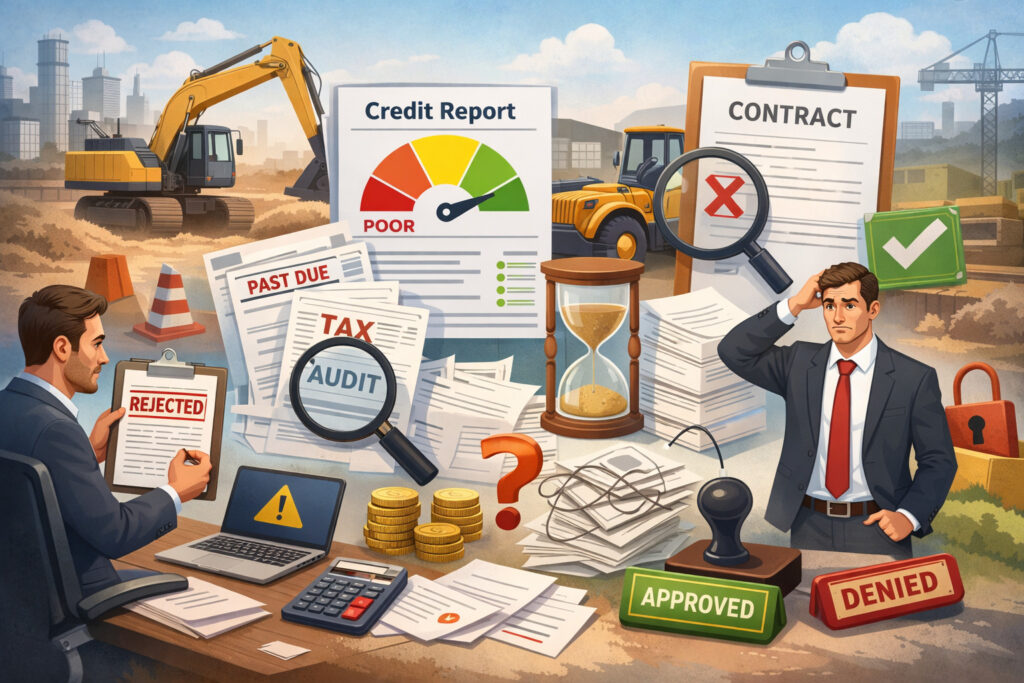
Not every application follows a smooth, direct path. Some are approved quickly. Others get delayed, move into conditional approval, or end in denial. Understanding why this happens can help business owners avoid unnecessary frustration and respond more effectively if the lender comes back with questions.
A delay does not always mean something is wrong. In many cases, it means the lender is waiting on missing information, reviewing a more complex deal, or verifying details with the vendor.
A conditional approval often means the lender sees potential but needs more support before committing. A denial means the lender believes the risk is too high or the transaction does not fit its criteria.
These outcomes are not random. They are usually tied to documentation quality, borrower strength, equipment characteristics, or deal structure.
Common causes of delays and conditional approvals
One of the most common reasons for delay is incomplete paperwork. Missing bank statements, unsigned forms, vague equipment quotes, and inconsistent business details are frequent problems. Even small discrepancies, such as mismatched business names or incomplete owner information, can slow the file.
Conditional approvals often happen when the lender needs more comfort rather than a complete change in direction. Common conditions include:
- More recent bank statements
- A larger down payment
- Additional proof of revenue
- Clarification of existing debt
- Verification of business formation
- Personal guarantee requirements
- Updated equipment invoice
- Insurance confirmation before funding
Conditional approval means the lender is still engaged. It is often a signal that the deal can move forward if the borrower responds clearly and quickly.
Common reasons for denial
Denials usually happen when the lender sees unresolved risk that does not fit its program. That could involve weak or inconsistent cash flow, significant credit problems, very limited time in business, unsupported borrowing amounts, or equipment that does not meet the lender’s collateral standards.
A few common denial triggers include:
- Serious credit issues without compensating strengths
- Insufficient business revenue for the requested payment
- Large existing debt burden
- Equipment with low resale value or unclear condition
- Unsupported startup request with no down payment or experience
- Inability to verify business legitimacy or ownership
- Borrowing request that exceeds the company’s scale
Sometimes denial is also a matter of fit. One lender may decline a file that another lender would structure differently. That is why comparing lender types can matter, especially for startups or specialized equipment buyers.
How to Improve Your Chances of Approval
The strongest equipment financing applications usually look simple on the surface because the borrower did the work before applying.
Improving approval odds is less about finding a magic trick and more about presenting a lender with a clear, realistic, well-supported financing request. The better prepared you are, the easier it becomes for an underwriter to say yes.
This is especially important for startups and small businesses. Even when you do not have years of operating history, there are still ways to make the request more persuasive.
You can strengthen your file with better documentation, more realistic borrowing expectations, stronger cash reserves, relevant industry experience, and a clear explanation of how the equipment supports business operations.
When it comes to small business equipment financing, preparation is often the difference between a quick decision and a frustrating delay.
Practical ways to strengthen your application before applying
Start by getting your financial and legal records organized. Make sure business bank statements are current, ownership information is accurate, and the equipment quote is complete. Review your credit as well, especially if you expect the lender to consider personal credit in the decision.
Then assess the request honestly. Ask whether the loan amount, term, and payment are realistic for your business. A smaller request with stronger support may be more financeable than a large request that strains the numbers.
Helpful steps include:
- Check that your business registration details are current
- Gather recent bank statements and revenue records
- Reduce avoidable overdrafts or erratic account activity before applying
- Pay down high-cost debt when possible
- Obtain a detailed equipment quote from a reputable vendor
- Be ready to explain how the equipment will generate revenue or improve operations
- Consider whether a down payment would improve lender confidence
Strategies for startups and newer businesses
A younger business may not have the same financial track record as an established company, but that does not mean approval is out of reach. Startups can often improve their position by showing strong owner credit, relevant experience, signed customer contracts, available cash reserves, or a willingness to make a meaningful down payment.
Lenders are often looking for compensating strengths. If your business is new, what reduces the lender’s uncertainty? It might be years of experience in the same field, a major customer relationship, a profitable launch trend, or a strong cash cushion. The more clearly you can present those strengths, the more credible the application becomes.
Newer businesses should also avoid stretching too far on equipment cost. Financing a practical, revenue-supporting asset is usually easier than requesting a large amount for equipment that appears oversized for the current business stage.
Common Mistakes to Avoid During the Equipment Loan Application Process
Many applications run into trouble for reasons that are preventable. Business owners may focus so much on securing financing that they miss details that matter just as much to the lender as the broad financial picture. These mistakes can lead to delays, weaker offers, or denials that might have been avoided with better preparation.
The most common problems tend to fall into a few categories: incomplete or inconsistent paperwork, unrealistic borrowing requests, weak financial presentation, and failure to evaluate the total financing cost. Borrowers also sometimes choose the wrong lender type for their situation, which can create friction from the start.
Avoiding these mistakes will not guarantee approval, but it can make the equipment loan application process more efficient and improve the overall quality of the lender’s review.
Paperwork and request-related mistakes
One of the biggest mistakes is submitting incomplete or mismatched documents. If your business name appears differently across bank statements, licenses, and formation records, the lender may have to stop and verify the basics. Missing pages, outdated statements, and vague equipment descriptions can create the same problem.
Another common issue is requesting too much financing without enough support. For example, a newer company with modest revenue may struggle to justify a large equipment purchase unless there is strong evidence that the asset is tied to clear business growth or contractual demand. Underwriters pay attention to whether the request feels proportional to the business.
Borrowers also make mistakes when they fail to understand what is actually being financed. Some assume soft costs, taxes, shipping, training, or installation will be included automatically. Not every lender handles those items the same way.
Cost comparison and lender selection mistakes
Another major mistake is comparing offers based only on the monthly payment or advertised rate. A lower monthly payment may come with a much longer term, more total interest, higher fees, or a balloon structure that creates pressure later.
Likewise, a low headline rate does not tell you whether a personal guarantee is required or whether the lender is taking a broader lien position.
Choosing the wrong lender type can also create problems. Some lenders are comfortable with startups, used equipment, or specialized industries.
Others prefer established borrowers, newer assets, or very standard equipment classes. When the lender and the deal are a poor fit, the process can drag on without producing a strong result.
To compare offers well, review:
- Total repayment cost
- Fees and documentation charges
- Down payment requirements
- Payment frequency and term length
- Prepayment flexibility
- Guarantee requirements
- Funding timeline
- Restrictions tied to the equipment or vendor
How to Compare Equipment Financing Offers Beyond the Interest Rate
Once you move past the approval stage, the next important step is choosing the right financing structure. This is where many business owners make costly mistakes.
They see multiple offers, compare interest rates, and assume the lowest rate is automatically the best deal. In reality, a financing offer has many moving parts, and the most attractive option on paper may not be the best fit for your business.
A good financing decision should reflect how the equipment will be used, how stable your cash flow is, how quickly the asset may become outdated, and how much flexibility you want during repayment. It should also account for the total cost of borrowing, not just the monthly payment or note rate.
If you understand the equipment financing terms being offered, you can make a smarter decision and avoid overcommitting your business.
Key terms and structure points to review carefully
Start with the repayment term. A longer term may lower the monthly payment, which can help cash flow, but it may also increase the total amount paid over time. A shorter term may cost less overall but create more pressure on monthly finances. The right choice depends on your margins, business cycle, and how long the equipment is likely to remain useful.
Review whether the payments are fixed, seasonal, deferred, or structured with a balloon. For some businesses, especially those with seasonal revenue, flexible payment design may matter more than squeezing out a slightly lower rate.
You should also examine:
- Origination or documentation fees
- Advance rate and required down payment
- Whether installation or related costs are included
- Prepayment rules
- Guarantee or collateral terms beyond the equipment itself
- Whether the lender requires automatic payment
- Funding speed and closing conditions
Matching the offer to your business goals
The best financing offer is the one that supports your business without creating avoidable strain. For example, a startup may benefit from preserving more cash upfront, even if that means a somewhat higher cost.
An established company with strong reserves may prefer a shorter term to minimize total interest. A business buying equipment that may become outdated quickly may value flexibility more than the absolute lowest rate.
Borrowers should also think about future plans. Will this equipment be replaced in a few years? Will the business need more financing soon? Does the lender relationship matter if you plan to expand? Sometimes the best choice is the lender that understands your industry and can support future growth, not the one with the lowest headline number.
FAQ
Q.1: How long does the equipment loan approval process usually take?
Answer: The timeline can vary widely depending on the lender, the loan amount, the type of equipment, and how complete the application is. Some smaller deals move quickly when the borrower has strong credit and the equipment is straightforward.
Larger or more specialized transactions may take longer because the lender may need deeper underwriting, more documents, or additional equipment verification.
The biggest factor borrowers can control is preparation. Clean paperwork, current financial records, and a detailed equipment quote can help reduce delays.
Q.2: What credit score is needed for equipment financing?
Answer: There is no single minimum score that applies to every lender. Some lenders place significant weight on personal and business credit, while others are more flexible if cash flow, equipment value, or down payment strength is solid. In general, stronger credit tends to improve approval odds and may lead to better financing terms.
That said, credit is only one part of the review. Many lenders also look at bank activity, time in business, debt obligations, and the quality of the equipment being financed.
Q.3: Can a startup qualify for an equipment loan?
Answer: Yes, startups can qualify in some cases, but the review is often more detailed because the business has limited operating history. Lenders may rely more heavily on owner credit, industry experience, cash reserves, contracts, and down payment ability.
The type of equipment also matters. Assets with strong collateral value may be easier to finance than highly specialized equipment with limited resale demand.
A startup does not always need to wait years to apply, but it usually benefits from a well-prepared, realistic request.
Q.4: What documents are needed for equipment loan approval?
Answer: The exact list varies, but common documents needed for equipment loan approval include a completed application, owner identification, business formation records, recent business bank statements, revenue records, and a detailed equipment quote or invoice.
Some lenders may also request tax returns, profit and loss statements, balance sheets, debt schedules, or proof of insurance.
Used equipment may require extra records such as serial numbers, maintenance history, photos, or inspection documentation.
Q.5: What does conditional approval mean?
Answer: Conditional approval means the lender is interested in moving forward but needs additional items or changes before issuing final approval and funding.
This may include updated bank statements, a larger down payment, a personal guarantee, clearer vendor documentation, insurance verification, or an explanation of credit or cash flow issues.
It is not the same as a final approval, but it is often a positive sign that the deal can still close if the borrower satisfies the conditions.
Q.6: Why do some equipment loan applications get denied?
Answer: Applications are often denied because the lender sees too much risk or the request does not fit its lending program.
Common reasons include weak credit combined with poor cash flow, limited time in business without compensating strengths, unrealistic borrowing amounts, high existing debt, incomplete documentation, or equipment with weak collateral value.
Sometimes a denial reflects lender fit rather than a fundamentally impossible deal. Another lender may structure the request differently.
Q.7: Is the equipment itself used as collateral?
Answer: In many cases, yes. The equipment being financed often serves as collateral for the loan. That is why lenders pay attention to age, condition, marketability, and resale value. The stronger the collateral, the more comfortable a lender may be with the request.
However, lenders may still require a personal guarantee or other support, especially for small businesses, startups, or riskier transactions.
Conclusion
The equipment loan approval process is easier to manage when you understand what lenders are actually reviewing. Approval is not based on one single factor. It usually comes down to the full picture: your business’s financial health, your operating history, the strength of your documentation, the structure of the deal, and the value of the equipment itself.
That is why preparation matters so much. When you know the common business equipment loan approval requirements, organize your records in advance, and make a realistic financing request, you put yourself in a much stronger position.
You also make it easier to compare lenders, respond to conditions, and avoid the mistakes that often slow down or weaken an application.
For startups, newer businesses, and established companies alike, the right approach is the same: understand the transaction, present a clean file, and evaluate offers based on total value rather than surface-level marketing.
With that mindset, the equipment financing approval process becomes more than a hurdle. It becomes a practical step toward getting the tools, machinery, vehicles, or technology your business needs to move forward.