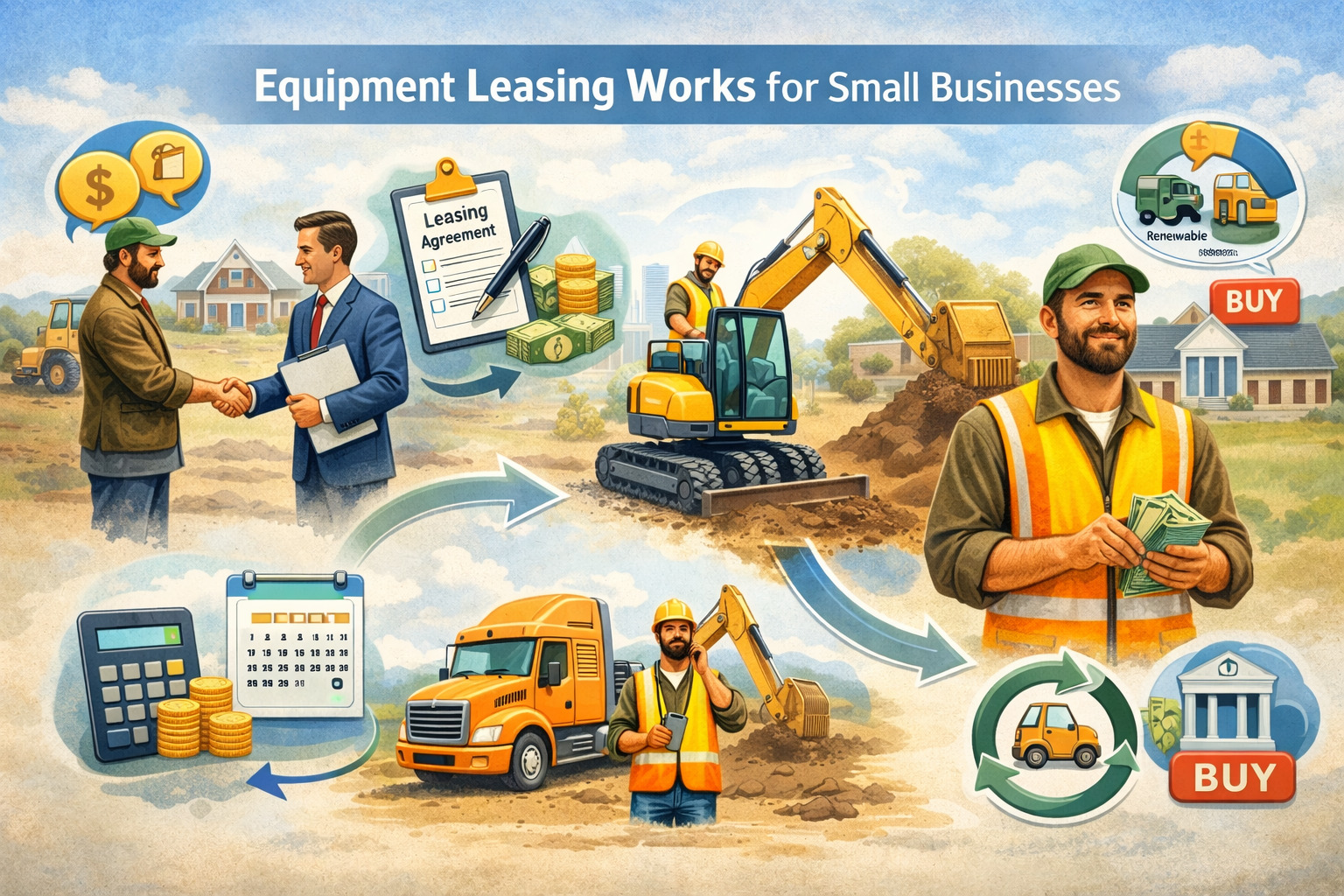
How Equipment Leasing Works for Small Businesses: A Practical Guide to Costs, Terms, and Smart Decisions
For many small businesses, equipment is not optional. It is the engine behind daily operations, customer service, production, delivery, and growth.
Whether you run a restaurant, clinic, retail shop, construction company, office-based firm, or specialized service business, the right equipment often determines how efficiently you work and how well you compete.
The challenge is that equipment can be expensive. Buying everything outright may strain cash reserves, reduce working capital, and limit flexibility when priorities change. That is why many owners look into equipment leasing for small businesses.
Leasing can make it possible to get essential tools now while spreading payments over time, preserving cash for payroll, inventory, marketing, and other operating needs.
This guide explains how equipment leasing works for small businesses in a practical, real-world way. You will learn what equipment leasing means, how the process works step by step, what the most common lease structures look like, how leasing compares with financing and buying, what requirements lessors often review, and how to avoid common mistakes before signing an agreement.
By the end, you should have a much clearer sense of whether leasing fits your business, your equipment needs, and your budget strategy.
What Equipment Leasing Means for Small Businesses
At its core, equipment leasing is an arrangement that lets a business use equipment for a set period in exchange for scheduled payments. Instead of paying the full purchase price upfront, the business agrees to lease the equipment from a leasing company, financing source, or vendor program for a defined term.
In practical terms, small business equipment leasing gives owners access to tools they need without requiring a large cash outlay on day one. That can be especially valuable for newer businesses, growing companies, and businesses that depend on technology or machinery that may become outdated before it fully wears out.
Leasing machinery for small business use can also help when demand is rising and owners need to scale operations without tying up too much capital in fixed assets.
Leases are not all the same. Some are structured more like rentals, where the business uses the equipment and returns it at the end. Others function more like long-term financing, where the business is likely to own the equipment once the lease ends.
That is why equipment leasing explained properly always comes down to the details of the agreement, not just the monthly payment amount.
A typical equipment lease agreement will cover the lease term, payment schedule, end-of-term options, maintenance responsibilities, insurance requirements, tax treatment language, default terms, and any purchase option.
It may also define usage limitations or specify what happens if the equipment is damaged, returned early, or no longer meets business needs before the contract ends.
For small businesses, the main appeal is usually flexibility. Leasing can help them:
- Preserve cash for operating expenses
- Acquire equipment faster
- Upgrade to newer models more easily
- Match equipment costs to revenue over time
- Avoid a major upfront purchase
That said, leasing is not automatically cheaper than buying. It is a financial tool, and like any business tool, it works best when used for the right reason.
Equipment leasing vs. equipment financing: what is the difference?
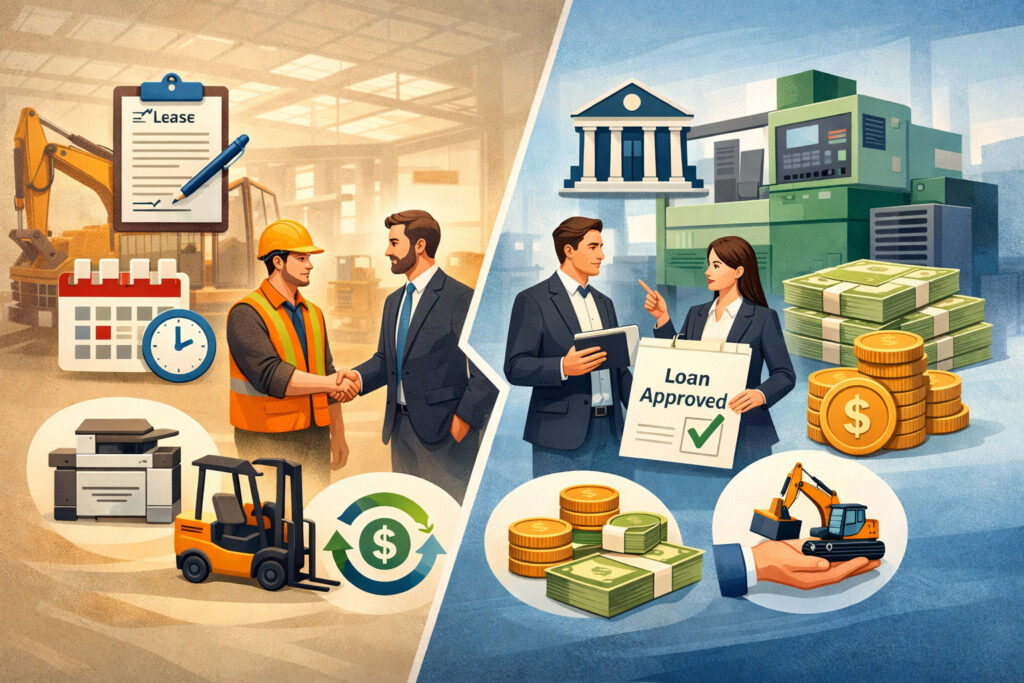
This is one of the most important distinctions for business owners to understand. Equipment leasing and equipment financing are related, but they are not the same thing.
With a lease, the lessor owns the equipment during the lease term. Your business pays to use it under the contract terms. Depending on the lease type, you may return it, renew the lease, upgrade to newer equipment, or buy it at the end.
In many cases, leasing is attractive when the equipment may need replacement in a few years or when preserving cash flow matters more than immediate ownership.
With equipment financing, your business typically borrows money to purchase the equipment. You make installment payments over time, and once the loan is paid off, the equipment is yours.
Financing often suits businesses that want to keep the equipment long term, especially if the asset has a long useful life and does not become outdated quickly.
This is where many owners start comparing lease vs buy equipment for business. A lease may offer lower upfront costs and easier upgrades, while financing may provide a more direct path to ownership.
The right choice depends on how long you expect to use the equipment, how important ownership is, and whether your business would benefit more from conserving cash or building equity in the asset.
What kinds of equipment are commonly leased?
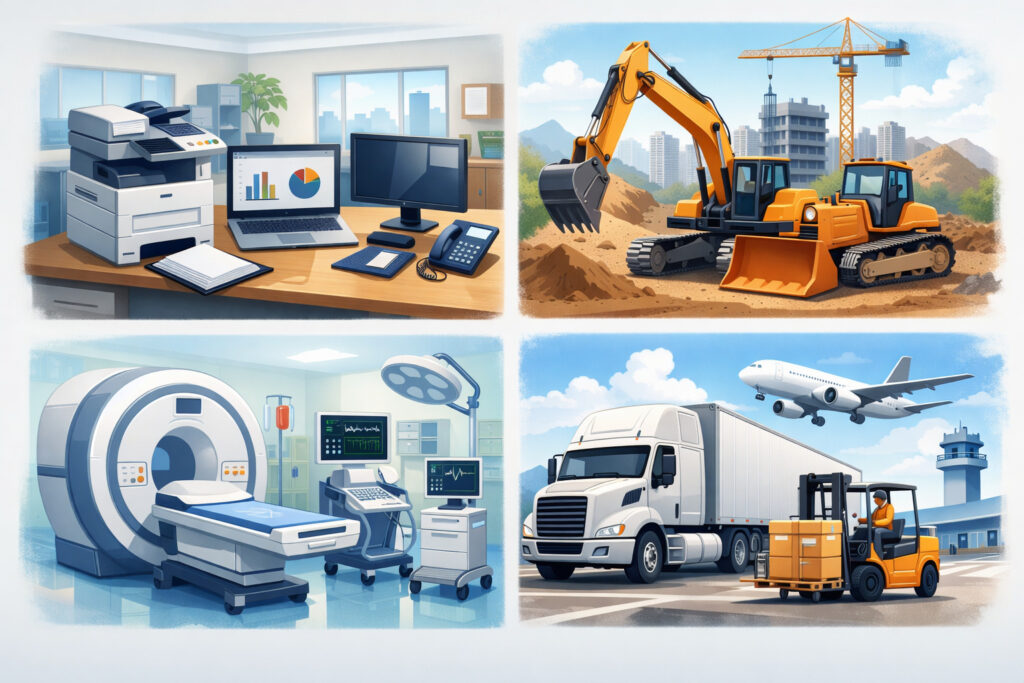
Small businesses lease a wide range of equipment across industries. In many cases, leasing makes the most sense when the equipment is expensive, essential to operations, or likely to need upgrading over time.
Common examples include:
- Computers, servers, copiers, and office technology
- Medical and dental devices
- Restaurant ovens, refrigeration, and kitchen systems
- Construction tools and heavy equipment
- Manufacturing machinery and production systems
- Vehicles and fleet equipment
- Retail POS systems, kiosks, and displays
- Printing equipment and specialized commercial equipment
Commercial equipment leasing can be used for relatively simple items as well as highly specialized machinery. A retailer may lease checkout systems and barcode scanners, while a contractor may lease excavators or compact loaders. A clinic may lease imaging equipment, and a manufacturer may lease precision production tools.
The best candidates for leasing are often assets that are vital to revenue generation but expensive to buy outright. Businesses also tend to lease equipment when technology changes quickly, maintenance planning is important, or growth is uncertain and flexibility matters.
How the Equipment Leasing Process Works Step by Step
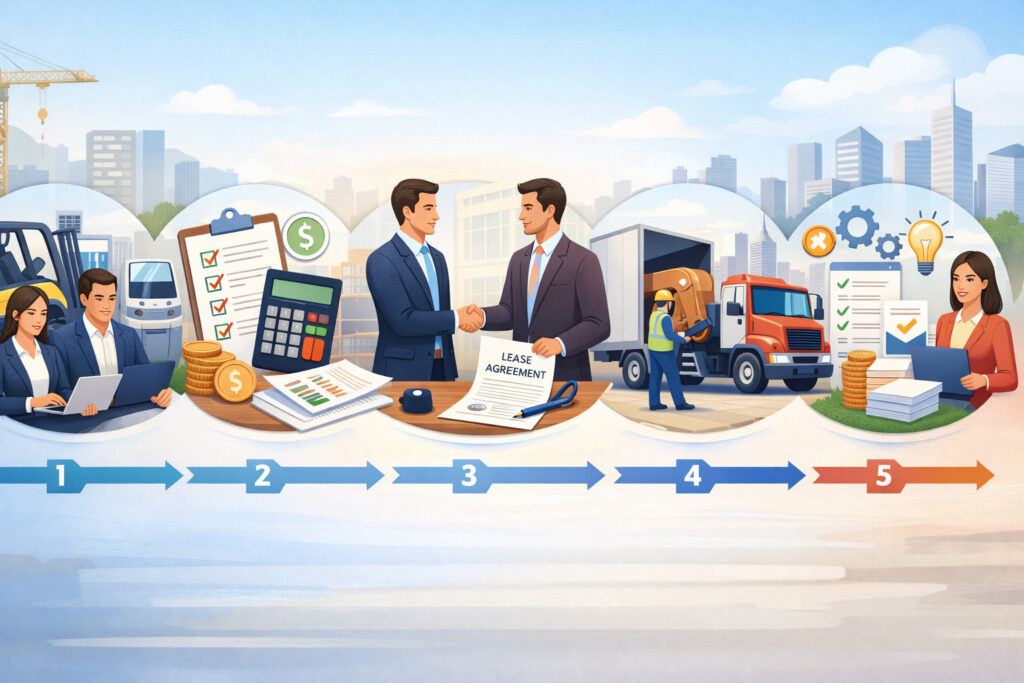
Understanding how equipment leasing works for small businesses becomes much easier when you break it into stages. While specific procedures vary by lessor, industry, and equipment type, the overall process tends to follow a predictable path.
First, the business identifies the equipment it needs. That might sound obvious, but it is a critical planning stage. Owners should determine exactly what type of equipment fits their operations, what features matter, how long they expect to use it, and whether buying or leasing is more appropriate.
Choosing equipment without a clear business purpose often leads to overspending or signing a lease that does not align with the asset’s useful life.
Next, the business gets a quote from a vendor or equipment supplier. This quote typically includes the equipment description, model details, price, installation or delivery costs, and sometimes service plans. Lessors usually need this information to structure the lease.
After that comes the application stage. The business submits information to the leasing company, which may include formation documents, bank statements, revenue details, owner identification, business history, and credit-related information.
Depending on the size of the transaction and the credit profile involved, the review may be relatively simple or more detailed.
If approved, the lessor provides lease terms. These terms outline payment amounts, contract length, any upfront costs, end-of-lease options, insurance requirements, and other conditions.
The business reviews the agreement, signs the documents, and the lessor pays the vendor or arranges the equipment acquisition. Once the equipment is delivered and accepted, payments begin according to the contract.
At the end of the lease, the business usually has one or more options. It may return the equipment, renew the lease, purchase the equipment, or upgrade to something newer.
Step 1: Choose the right equipment and define the business need
The leasing process starts long before an application is submitted. It starts with clarity. A small business should understand why the equipment is needed, how it will be used, and whether it supports current operations, future growth, or both.
For example, a business replacing a broken machine may need speed and continuity. A business opening a new location may need cost control and flexibility.
A fast-growing company may want equipment upgrade options for businesses so it can move into newer systems later without getting stuck with obsolete equipment. Each situation points toward a different leasing strategy.
This is also the stage where you should assess the equipment’s expected life. If the equipment will likely remain useful for many years and technology changes slowly, ownership may be appealing.
If the equipment may become outdated in three to five years, a lease could be a better fit. That is particularly true for office technology, medical systems, and certain retail and communications equipment.
Before moving ahead, ask practical questions:
- How central is this equipment to revenue?
- How long do we expect to use it?
- Will we need to upgrade before it wears out?
- Do we need service or maintenance bundled in?
- Would buying outright create cash flow pressure?
A thoughtful answer to those questions will make the rest of the leasing process far easier and more effective.
Step 2: Apply, go through review, and receive terms
Once the equipment is selected, the next phase is the application and underwriting process. This is where the lessor evaluates risk and decides whether to approve the lease, on what terms, and with what conditions.
For a relatively modest lease, the process may be streamlined. For larger transactions or businesses with limited operating history, it may require more documentation.
Lessors usually want to confirm that the business is legitimate, operating actively, and able to handle the payment obligation. They may review credit, cash flow, time in business, and the value and marketability of the equipment being leased.
Approval outcomes can vary. One business may receive standard terms with little money due upfront. Another may be approved but required to provide a larger advance payment, stronger documentation, or a personal guarantee.
Some lessors may also request updated bank statements or additional information if the business is seasonal or has uneven revenue patterns.
When terms are issued, owners should review more than the monthly payment. The agreement should be examined for:
- Lease duration
- End-of-term purchase options
- Fair market value language
- Fees and documentation charges
- Insurance requirements
- Maintenance responsibilities
- Default provisions
- Early termination terms
This is the moment to slow down and read carefully. Many leasing problems happen not because the business was denied, but because it was approved and signed without fully understanding the structure.
Step 3: Delivery, payments, and end-of-lease decisions
After the lease documents are signed, the lessor usually pays the vendor or authorizes the acquisition, and the equipment is delivered. In many cases, the business must confirm that the equipment arrived, was installed properly if applicable, and is acceptable for use. That acceptance often triggers the start of the lease obligation.
From there, the business makes regular payments according to the contract. These may be monthly, quarterly, or occasionally structured differently depending on the equipment and the lease design. During the lease term, the business must also meet any obligations related to maintenance, insurance, reporting, or usage conditions.
As the lease nears its end, the business usually faces a choice. Depending on the contract, the options may include:
- Return the equipment
- Renew the lease
- Buy the equipment
- Upgrade to new equipment under a new lease
This stage is often overlooked at the beginning, but it matters a great deal. A fair market value lease may result in a purchase price based on the equipment’s market value later. A $1 buyout lease points more clearly toward ownership.
A short-term operating lease may make returns easier but offer less value if you end up wanting the equipment permanently.
Small businesses should review end-of-term notices, deadlines, return conditions, and buyout language before the lease expires. Missing a notice period can lead to unexpected renewals or added costs. A good lease strategy is not just about how you start. It is also about how you plan to finish.
Common Types of Equipment Leases
Business equipment leasing options can look similar on the surface, but they work differently in practice. The right structure depends on whether the business wants flexibility, lower payments, predictable ownership, or access to upgrades. That is why it is so important to understand the core lease types before comparing offers.
Some leases are designed for businesses that want to use equipment for a limited time and then move on. Others are built for businesses that expect to keep the equipment long term and effectively treat the lease as a path to ownership.
There are also vendor leasing programs, which may simplify the acquisition process by bundling equipment and financing through the seller or a financing partner.
The most common categories include operating leases, finance leases, fair market value leases, and $1 buyout leases. You may also see short-term leases and seasonal or custom payment structures, especially in industries with uneven revenue cycles or project-based work.
The structure matters because it affects monthly payments, residual value, tax treatment, buyout expectations, and your flexibility later. Two lease offers with similar monthly costs can have very different outcomes at the end of the term.
That is why equipment leasing explained clearly should always include the nature of the lease itself, not just what it costs each month.
Operating lease for business equipment
An operating lease for business equipment is often used when a company wants access to equipment without committing to ownership. In broad terms, this type of lease is more focused on use than long-term possession.
Operating leases can be attractive for equipment that becomes outdated relatively quickly or for businesses that want easier upgrade paths. If the equipment has a meaningful residual value at the end of the term, the monthly payments may be lower than under a lease structure designed to transfer ownership. That can help improve short-term cash flow.
This type of lease is commonly used for technology, office systems, certain medical and communications equipment, and other assets where replacement cycles matter. Instead of owning aging equipment, the business may be able to return it and move into a newer model after the term ends.
That said, an operating lease is not automatically the cheapest route over time. If you continue leasing replacements repeatedly, the long-term cost can exceed purchasing.
It is best suited for businesses that value flexibility, want to avoid being stuck with outdated equipment, or need affordable equipment access for small companies without a large initial investment.
Finance lease, fair market value lease, and $1 buyout lease
A finance lease for equipment is structured more like a long-term financial commitment tied closely to ownership economics. While the exact legal and accounting treatment can vary by contract and business situation, the practical takeaway is that this type of lease is often chosen when the business expects to keep the equipment for most or all of its useful life.
A fair market value lease, often called an FMV lease, usually offers lower payments during the term because the lessor expects the equipment to retain some value later.
At the end of the lease, the business may be able to purchase the equipment at its fair market value, renew the lease, or return it. This can work well for businesses that are not sure whether they will want to keep the equipment long term.
A $1 buyout lease is more ownership-oriented. The payments are usually higher than with an FMV lease because the contract is structured around the expectation that the business will acquire the equipment at the end for a nominal amount, often one dollar. In practical terms, it functions similarly to financing over time with a defined purchase path.
The right choice depends on priorities. If flexibility matters more, FMV may be more attractive. If ownership is the clear goal, a $1 buyout structure may make more sense.
Short-term leases and vendor leasing programs
Not every lease needs to be a traditional multi-year arrangement. Short-term leases can be useful when equipment is needed for temporary demand, project-based work, seasonal operations, events, or testing a new business line. A small business that needs specialized equipment for a six-month contract may prefer a shorter lease over a long commitment.
Short-term structures can provide agility, but they may come with higher monthly costs. That is the tradeoff. Greater flexibility often means less pricing efficiency. Still, for businesses that do not need the equipment permanently, the ability to avoid a long obligation can be worth the premium.
Vendor leasing programs are another common option. In this model, the equipment seller offers leasing through an internal finance department or an outside financing partner.
This can simplify the process because the equipment selection and lease arrangement happen together. In some cases, vendor programs may offer promotional terms, bundled service, or faster approval.
However, convenience should not replace comparison. A vendor’s in-house program may be strong, but it may also be more expensive or less flexible than an independent lessor. Always review the details, compare offers if possible, and look closely at end-of-lease provisions before accepting the first option presented.
Why Small Businesses Choose to Lease Equipment
Small businesses often choose leasing not because they cannot buy equipment, but because leasing may better fit how they manage cash, growth, and operational flexibility. The decision is usually strategic, not just reactive.
One of the biggest reasons is cash flow. Buying equipment outright can tie up a large amount of capital in a single purchase. That money could otherwise support payroll, inventory, repairs, marketing, rent, staffing, or emergency reserves.
Leasing spreads the cost over time, which can make it easier to align expenses with the revenue the equipment helps generate.
Leasing can also support growth. A company adding staff, opening a new location, or expanding production may need equipment quickly. Small business equipment leasing can reduce the pressure of making multiple major purchases at once.
Instead of delaying important upgrades or expansions, businesses can move forward while preserving more working capital.
Another major reason is flexibility. Some equipment does not age well from a business standpoint. It may still function, but newer technology, better efficiency, changing customer expectations, or industry standards can make older equipment less competitive.
In those cases, leasing may provide better upgrade opportunities and reduce the risk of being stuck with outdated tools.
For some businesses, leasing also simplifies planning. Predictable payments can be easier to budget for than a large purchase followed by uncertain repair and replacement timing. That can be especially helpful for businesses trying to maintain more stable month-to-month finances.
Lower upfront costs and better cash flow flexibility
One of the clearest benefits of equipment leasing for small businesses is lower upfront cost. Buying a major asset usually requires a substantial lump-sum payment or a down payment plus associated setup costs. Leasing often reduces that initial financial burden and can make important equipment accessible sooner.
This matters because cash is rarely abundant in a growing business. Even healthy companies can feel pressure from seasonal swings, late receivables, inventory demands, or expansion expenses.
When a business leases equipment rather than paying the full cost upfront, it can keep more cash available for daily operations and strategic priorities.
Cash flow flexibility also helps reduce concentration risk. Instead of placing a large amount of money into one asset, the business spreads the cost over the period in which it expects to use the equipment.
That can be especially helpful if the equipment directly supports income generation. Ideally, the machine, device, or system helps produce revenue while the business pays for access over time.
This does not mean leasing is always less expensive overall. In some cases, the total paid over the lease term may exceed the purchase price. But the point for many businesses is not the lowest nominal cost alone.
It is preserving financial flexibility and reducing strain on working capital when the business needs that flexibility most.
Easier upgrades and access to better equipment
Another major reason businesses lease equipment is the ability to stay current. In some industries, equipment changes quickly. Better software integration, improved efficiency, stronger output, updated compliance features, and lower operating costs can all make newer equipment more attractive.
When a business buys equipment outright, upgrading later can be complicated. The company may need to sell older equipment, accept depreciation losses, or continue using systems that no longer fit the business well.
Leasing can make equipment upgrade options for businesses more straightforward, especially under lease structures designed around return, renewal, or replacement.
This can be especially useful in industries that rely on customer-facing technology, fast-moving software compatibility, advanced diagnostics, or increasingly efficient machinery. It can also help businesses avoid overcommitting to equipment before they know exactly what scale or configuration they will need long term.
For a small business, access can matter just as much as ownership. Leasing may allow the company to use higher-quality equipment than it could comfortably afford to buy outright.
Better equipment can improve speed, quality, productivity, and customer experience. In that sense, leasing is not just a financing decision. It can be an operational advantage when managed carefully.
Equipment Leasing Requirements and Approval Factors
Many business owners assume equipment leasing approval is based only on credit score. In reality, lessors often look at a broader picture. Credit matters, but so do business stability, revenue, the nature of the equipment, and the overall strength of the application.
Equipment leasing requirements can vary depending on the lessor, transaction size, business age, and equipment category.
A startup leasing modest office equipment may face different standards than a contractor leasing expensive machinery or a medical practice acquiring specialized devices. Even so, there are common themes in most underwriting reviews.
Lessors usually want to confirm three things. First, the business is real and legally formed. Second, it appears capable of making payments. Third, the equipment itself has enough value and usability to support the lease.
If the equipment is standard, useful, and easy to remarket, approval may be easier than for highly specialized equipment with a narrow resale market.
Owners should also understand that approval terms can change based on risk. A business with limited time in operation might still qualify, but with a larger advance payment or a personal guarantee. A business with strong financials might receive more favorable pricing or better end-of-term flexibility.
Being prepared can improve both speed and outcome. Businesses that gather documents early, know their equipment needs clearly, and understand their financial picture usually move through the process more smoothly.
Common documents and information lessors may request
While every leasing company has its own process, there are several items that commonly appear in a lease application package. These documents help verify the business, support underwriting, and confirm the equipment details.
Often requested items include:
- Business formation documents
- Owner identification
- Equipment quote or invoice from the vendor
- Recent bank statements
- Business financial statements
- Revenue information
- Time in business details
- Tax identification details
- Existing debt or payment obligations
- Voided business check or bank verification
For smaller leases, the process may be lighter and require fewer documents. For larger transactions, lessors may ask for more detailed financials, profit-and-loss statements, balance sheets, or information about business performance trends.
Startups and very new businesses may need to provide more owner-level support because there is less operating history to review.
The equipment quote is especially important because it tells the lessor exactly what is being financed or leased. It may include model numbers, pricing, installation charges, and service plans. Without that information, the lessor may not be able to structure accurate lease terms.
If you want a faster process, prepare these materials before applying. Delays often happen not because the lessor is slow, but because the file is incomplete.
Credit profile, time in business, revenue, and personal guarantees
When evaluating a lease application, lessors usually consider how established the business is and how likely it is to make payments consistently. Credit profile is part of that picture, but not the only part.
Time in business matters because operating history gives the lessor more context. A company that has been active for several years with stable deposits may appear less risky than a business formed recently.
Revenue matters because it helps show whether the business can reasonably support the payment obligation. Bank statements can provide an additional view into cash flow behavior and account stability.
For newer businesses, weaker credit profiles, or larger equipment amounts, a personal guarantee may be required. This means the owner agrees to be personally responsible if the business fails to meet the lease obligation.
Business owners should take this seriously. A guarantee is not just a formality. It can create real personal financial exposure.
The equipment itself also affects approval. Standard commercial equipment leasing for items with broad market demand may be easier to structure than leases for highly customized machinery. If the lessor believes the equipment would be difficult to recover or resell, terms may become stricter.
None of this means businesses with imperfect profiles cannot lease equipment. It means they should understand what factors matter and prepare accordingly. Strong organization, realistic equipment choices, and a clear business use case can improve the chances of approval and better terms.
Leasing vs. Buying Equipment for a Small Business
The question is not whether leasing is good or buying is good in general. The real question is which option makes more sense for the equipment, the business, and the timing. That is the heart of the lease vs buy equipment for business decisions.
Buying makes sense when the business wants full ownership, expects to use the equipment for a long time, and has the cash or financing capacity to acquire it without hurting operations.
Equipment with a long useful life and slower obsolescence often fits well into a purchase strategy. If the asset will still be useful years after it is paid off, buying can offer strong long-term value.
Leasing makes more sense when flexibility matters more than ownership, when conserving cash is a priority, or when the equipment may need replacement before it fully wears out. It can also be useful when a business is growing, uncertain about future needs, or trying to avoid a large capital purchase during an important expansion phase.
This comparison is also about risk. Buying concentrates capital into an asset you own. Leasing may reduce that upfront exposure but can increase total cost over time. Buying gives control, but leasing may give adaptability.
There is no one-size-fits-all answer. Some businesses use a mix. They buy durable, long-life equipment and lease technology or specialized equipment with shorter replacement cycles. That blended approach can often make the most operational sense.
When leasing may be the smarter business move
Leasing may be the better choice when the equipment supports near-term needs but long-term ownership is uncertain. For example, a business entering a new market may want to test demand before making a major capital commitment. Leasing reduces the risk of buying too much equipment too soon.
It may also be the smarter move when cash preservation is critical. A business could have enough money to buy equipment outright and still decide not to do it because that cash is more valuable elsewhere.
Working capital can protect the business against volatility, support hiring, fund marketing, or help manage inventory needs. In that context, leasing may serve a broader strategic purpose.
Another case for leasing is when the equipment becomes outdated quickly. If the business is likely to replace the asset in a few years, ownership may not add much value. Leasing can make that upgrade cycle easier to manage and may reduce the burden of disposing of old equipment later.
Leasing is also attractive when serviceability, predictability, and faster access matter more than maximizing long-term ownership value. In some situations, getting the right equipment now is more important than owning it forever.
When buying may be the stronger long-term choice
Buying can be the stronger option when the business knows it will use the equipment for many years and the equipment is unlikely to become obsolete quickly. In that case, the company may benefit from paying once, financing once, or acquiring ownership without repeated lease cycles.
This is often true for durable equipment with long service lives. If the business expects the asset to keep delivering value long after a loan is paid or a purchase is completed, ownership can lower the long-run cost.
Even if repairs and maintenance become part of the equation, the total economics may still favor buying over repeated leasing.
Buying can also provide more freedom. The business does not have to worry about return conditions, end-of-term notices, usage restrictions, or purchase option language. Once the equipment is owned, decisions about retention, resale, modifications, and deployment are generally more flexible.
That said, ownership also brings responsibility. The business carries the maintenance burden, the resale risk, and the problem of outdated equipment if needs change. That is why buying is strongest when the equipment’s long-term usefulness is clear and the initial cash commitment will not create strain.
Common Mistakes to Avoid With Equipment Leases
Leasing can be a smart move, but it is easy to make costly mistakes if you focus only on speed or monthly affordability. Many problems with equipment lease agreements do not come from the concept of leasing itself. They come from poor fit, weak review, or assumptions that were never verified.
One of the most common mistakes is looking only at the monthly payment. A lower payment can feel attractive, but it may come with a longer term, a higher residual obligation, more restrictive end-of-lease terms, or greater total cost.
Without looking at the full structure, a business can commit to a lease that seems affordable month to month while costing more than expected overall.
Another mistake is not matching the lease term to the useful life of the equipment. If you sign a long lease on equipment likely to become outdated early, you may be stuck paying for tools that no longer fit your operation. On the other hand, a lease that is too short may create unnecessary turnover or higher costs when you know the asset will be used for many years.
Business owners also sometimes misunderstand buyout terms. They assume the equipment can be purchased cheaply at the end, only to discover the contract uses fair market value or another method that results in a higher-than-expected final cost. This is why end-of-term language matters so much.
Leasing works best when expectations, usage, timing, and contract terms all line up.
Focusing only on monthly payment and ignoring total cost
A low monthly payment is not always a good deal. In leasing, payment size can be shaped by many variables, including term length, residual value, structure type, fees, and purchase options. Looking only at the payment can hide what the contract is actually costing the business over time.
For example, two leases on the same equipment may have very different economics. One may carry a lower payment because the lessor expects to recover significant value at the end.
Another may have a higher payment because it is closer to a path to ownership. Without understanding that difference, a business may think it is comparing equal offers when it is not.
This is why businesses should look at the whole financial picture:
- Total amount paid over the term
- Upfront fees and advance payments
- Insurance costs
- Maintenance obligations
- Buyout amount or return conditions
- Penalties for early termination
- Renewal terms if deadlines are missed
The total cost of using the equipment for the expected period matters more than the comfort of one monthly number. Affordability is important, but it should never be evaluated in isolation.
Overlooking usage limits, maintenance, and end-of-term clauses
Not every equipment lease is simple. Some include terms that can have a big impact later if the business fails to account for them upfront. Usage limitations, maintenance obligations, return standards, and automatic renewal clauses are all examples of details that can create friction or surprise costs.
For certain types of equipment, a lease may define acceptable wear, service requirements, or documentation responsibilities. If the equipment is returned in a condition the lessor considers below standard, extra charges may apply. If maintenance has not been handled properly, warranty or return disputes may become more likely.
End-of-term clauses are especially important. Some contracts require advance written notice if you plan to return the equipment. If that deadline passes, the lease may renew automatically for an additional period. Other agreements may set the buyout at fair market value, which can be less predictable than many owners assume.
Early termination is another area to review carefully. Businesses sometimes assume they can exit a lease easily if needs change, but many leases are not designed to be canceled without cost. Understanding those limits upfront can prevent frustration later.
How to Compare Lease Offers and Choose the Right Option
Choosing the best lease is rarely about finding the lowest payment or the fastest approval. The strongest lease is the one that fits your business use case, equipment timeline, and financial priorities without creating unnecessary risk. To get there, you need to compare offers with more discipline than many owners initially expect.
Start by evaluating the equipment itself. Ask how long you expect to use it, how quickly it may become outdated, and whether ownership matters at the end. That context will help you decide whether an operating lease for business equipment, an FMV lease, or a more ownership-oriented structure makes the most sense.
Then compare the offers on both cost and flexibility. Look at lease term, payment amount, fees, end-of-term options, maintenance obligations, insurance requirements, and default language. If one offer seems cheaper, identify exactly why. Lower cost may reflect a higher residual obligation, tighter return conditions, or less favorable purchase terms.
The lessor also matters. A good financing source should be transparent, responsive, and willing to explain the agreement clearly. If a provider avoids straightforward questions or rushes the process, that is a warning sign. Reliable lessors understand that informed borrowers and lessees tend to become better long-term customers.
Comparing business equipment leasing options carefully may take more time upfront, but it can prevent expensive surprises and help you choose an arrangement that supports the business rather than constrains it.
Questions to ask before signing an equipment lease agreement
Before signing any equipment lease agreement, a small business owner should ask direct questions and expect direct answers. This does not mean you need to be a leasing expert. It means you should understand how the lease will function in real life.
Useful questions include:
- What type of lease is this?
- Who owns the equipment during the term?
- What are my end-of-lease options?
- Is the buyout amount fixed or based on fair market value?
- What fees are due upfront?
- Who handles maintenance and repairs?
- Are there usage limits or return condition standards?
- What happens if I want to upgrade early?
- What are the penalties for missed payments or early termination?
- Does the lease renew automatically if notice is not given?
These questions reveal much more than the payment amount. They show how flexible the lease really is and whether it matches your expectations.
A business that wants ownership should not sign a lease that relies on an uncertain market-value buyout unless that uncertainty is acceptable. A business that values upgrades should not accept restrictive end-of-term rules without understanding them.
Asking good questions is not a sign of distrust. It is part of sound financial management.
Red flags that may signal a poor leasing fit
Some lease offers deserve extra caution. One red flag is vague language around end-of-term terms. If the lessor cannot clearly explain how the buyout works or what happens when the term ends, that is a reason to slow down.
Another warning sign is excessive focus on speed without meaningful explanation. Fast approvals can be helpful, but not if they pressure the business into signing a structure it does not understand. A quality lessor should be able to explain the difference between lease types, payment drivers, and end-of-term options in a way that makes practical sense.
Watch for layered fees that are not discussed early. Documentation charges, administrative fees, return fees, insurance-related requirements, and automatic renewal language can all affect cost. None of these terms are necessarily improper, but they should be transparent.
A final red flag is poor alignment between lease length and equipment use. If the contract locks you into a long term for equipment you expect to replace much sooner, the lease may not fit your business even if the payment looks manageable.
Frequently Asked Questions
Q.1: Is equipment leasing a good option for a new small business?
Answer: It can be, depending on the equipment, your available cash, and the terms offered. New businesses often lease equipment to preserve working capital and avoid large upfront purchases during the early stages of growth.
That said, approval may depend on the owner’s credit profile, the type of equipment, and whether a personal guarantee is required. Newer businesses should compare lease structures carefully and make sure the payment fits realistic revenue expectations rather than best-case projections.
Q.2: What is the difference between an operating lease and a finance lease?
Answer: An operating lease is generally more focused on temporary use and flexibility. It is often used when a business expects to return or upgrade equipment rather than keep it long term.
A finance lease for equipment is usually more ownership-oriented. It often makes more sense when the business expects to keep the equipment for most or all of its useful life and wants a structure that aligns more closely with eventual ownership economics.
Q.3: Can I buy the equipment at the end of the lease?
Answer: Often, yes, but the answer depends on the contract. Some leases include a fixed purchase option, such as a $1 buyout. Others use fair market value, which means the final purchase price may depend on the equipment’s value at the end of the term.
This is why it is important to review the buyout language early. Do not assume every lease leads to low-cost ownership. Ask exactly how the purchase option works and get the explanation in writing where appropriate.
Q.4: What credit score is needed to lease equipment for a small business?
Answer: There is no universal credit requirement because lessors evaluate more than one factor. Credit profile matters, but so do time in business, revenue, bank activity, equipment type, and transaction size.
A stronger credit profile may help you qualify for better terms, but businesses with average or challenged credit may still be approved under different structures. The key is understanding that approval and pricing are risk-based and can vary widely from one lessor to another.
Q.5: Are lease payments tax-deductible for businesses?
Answer: Tax treatment depends on the lease structure, the business entity, and how the equipment is used. In many cases, businesses may be able to deduct some or all lease-related expenses, but the exact treatment varies by situation.
Because tax rules depend on facts and can change over time, it is wise to review the proposed structure with a qualified tax professional before signing. That helps you understand the real after-tax effect of leasing versus buying or financing.
Q.6: What happens if I want to end the lease early?
Answer: Many equipment leases are not easy to exit without cost. Early termination may trigger penalties, accelerated payments, settlement requirements, or other charges depending on the contract.
If flexibility matters, ask about early upgrade paths, transfer options, or termination provisions before signing. It is much easier to plan for change at the start than to discover later that the lease is harder to exit than expected.
Q.7: What kinds of businesses use equipment leasing most often?
Answer: A wide range of businesses use leasing, including offices, medical practices, restaurants, contractors, manufacturers, retailers, and service providers. Leasing is common when equipment is expensive, essential to operations, or likely to need replacement over time.
Small businesses often use commercial equipment leasing when they need to balance growth with cash preservation. It can be especially useful for technology-heavy operations, specialized machinery, and equipment that directly supports revenue generation.
Conclusion
Understanding how equipment leasing works for small businesses gives you more than a financing option. It gives you a framework for making better decisions about cash flow, growth, flexibility, and long-term cost.
Leasing can be a smart solution when your business needs equipment now but wants to avoid a large upfront purchase.
It can also make sense when the equipment may need upgrading, when preserving working capital is important, or when you want to match equipment costs more closely to the revenue the equipment helps generate. In those cases, lease equipment for small business needs can provide a practical path forward.
At the same time, leasing is not always the best or cheapest route. The right answer depends on the equipment’s useful life, how quickly it may become outdated, whether ownership matters, and what the lease agreement actually says.
A low monthly payment does not guarantee a good deal, and a flexible lease is only useful if the end-of-term terms, maintenance obligations, and buyout options fit your real business needs.
The best approach is to start with the equipment needed, compare small business equipment financing alternatives carefully, and review every offer with a focus on total cost and operational fit.
When leasing is matched to the right equipment and the right business goals, it can be a powerful tool. When it is rushed or misunderstood, it can create unnecessary expense.
For many small businesses, the smartest decision is not simply whether to lease or buy. It is knowing when leasing makes sense, what type of lease fits best, and how to structure the agreement so it supports growth instead of limiting it.