How to Prepare a Strong Equipment Financing Application
A strong equipment financing application doesn’t happen by accident. It’s built the same way lenders underwrite: clarity, consistency, and proof that your business can repay—without surprises.
Whether you’re buying a single piece of equipment or upgrading an entire fleet, the quality of your equipment financing application impacts your approval odds, your rate, your down payment, your term length, and even how quickly you can fund.
The biggest misconception is that equipment financing is “easy” because the equipment acts as collateral. Collateral helps, but lenders still evaluate your cash flow, credit profile, time in business, industry risk, and the resale value of the asset.
A strong equipment financing application shows that you understand those decision factors and have organized documentation to support them.
This guide walks you through what underwriters look for, how to package your request, how to avoid common red flags, and how to position your business for better terms. You’ll also get practical checklists, lender-friendly language, and future-forward insights—like how faster bank data access, automated underwriting, and equipment telematics are changing approvals.
If you want your equipment financing application to move smoothly from submission to funding, the goal is simple: reduce lender uncertainty while clearly proving repayment ability.
Understand What Lenders Evaluate in an Equipment Financing Application

A lender reviewing an equipment financing application is essentially asking two questions: (1) Will this equipment produce enough value to justify the payment? and (2) Is the borrower reliable enough to pay on time for the full term? Your job is to answer both questions with evidence, not opinions.
Underwriters typically look at five pillars: borrower credit, business performance, time in business, industry stability, and collateral value. Credit matters because it predicts repayment behavior. Business performance matters because it shows whether the monthly payment fits inside your operating cash flow.
Time in business matters because newer companies tend to have less predictable revenue. Industry stability matters because some segments have higher failure rates or greater volatility. Collateral value matters because, if there’s a default, the lender wants a recoverable asset with a resale market.
A well-prepared equipment financing application aligns these pillars instead of fighting them. If your credit is average but cash flow is strong, you highlight financial strength and propose a structure that reduces lender risk.
If you’re a newer business, you lean on larger down payment, stronger documentation, or a co-borrower strategy. If the equipment is specialized, you provide extra detail on resale value, vendor support, maintenance plans, and warranty coverage.
When you understand underwriting logic, you stop guessing. You start building a lender-ready equipment financing application that anticipates objections and answers them before they are asked.
Match the Equipment to a Clear Business Use Case
Your equipment financing application becomes stronger when the equipment is directly connected to revenue generation or operational efficiency.
Underwriters prefer assets that support stable demand: machines that increase production, vehicles that expand service routes, or technology that reduces labor costs. The more clearly you tie equipment to measurable business outcomes, the more comfortable the lender becomes.
Instead of describing equipment in generic terms—“We need a new machine”—describe outcomes: “This model increases throughput by 22% and reduces downtime by replacing an aging unit with frequent repairs.”
If you can explain how the payment is covered (new contracts, expanded capacity, reduced waste, faster job completion), your equipment financing application feels less speculative.
Also consider the difference between “nice-to-have” and “must-have.” Lenders are more receptive when equipment solves an operational bottleneck, compliance requirement, safety need, or time-sensitive opportunity.
If you’re replacing equipment, show maintenance history and repair costs to justify replacement. If you’re adding equipment, explain customer demand and scheduling constraints.
Finally, show that you’ve selected the right equipment, not just any equipment. Include vendor quotes, model numbers, expected lifespan, and warranty details. A lender sees strong planning as lower risk. That planning shows up directly in a stronger equipment financing application.
Get Your Financial Documents Lender-Ready Before You Apply
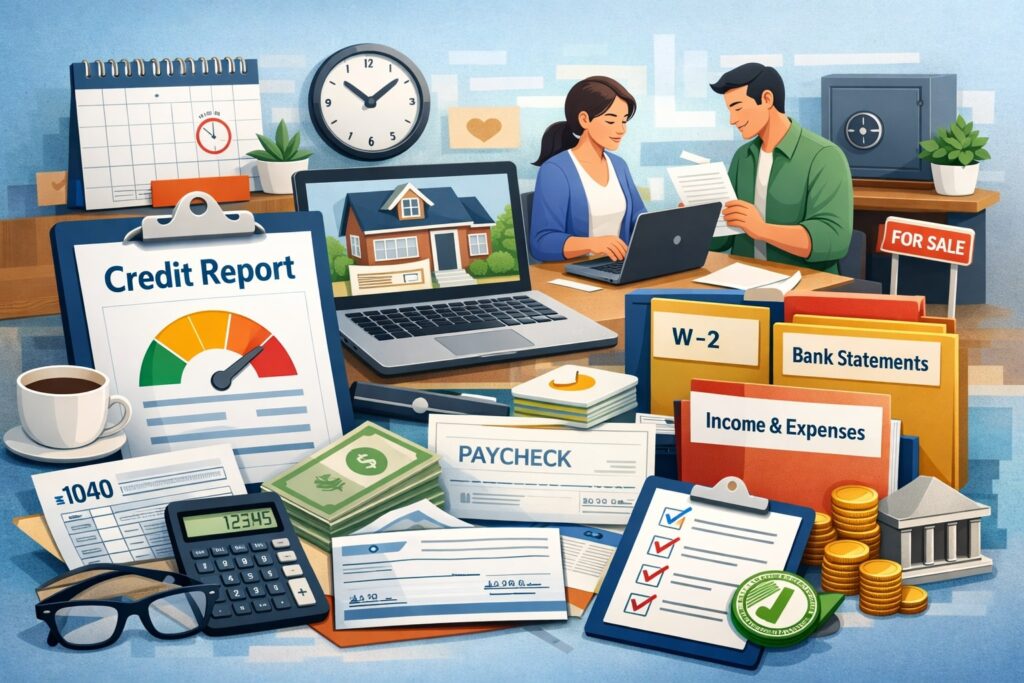
One of the fastest ways to weaken an equipment financing application is submitting incomplete or inconsistent financials. You don’t need perfect numbers, but you do need clean documentation that matches across forms.
Underwriters want to see that your revenue, bank deposits, tax filings, and stated expenses tell the same story. If documents conflict, the lender slows down, requests more information, or adjusts terms to protect themselves.
At minimum, most lenders want recent bank statements (often 3–6 months), tax returns (often 1–2 years for business and sometimes personal), and basic business information.
Larger deals or more complex borrowers may need profit and loss statements, balance sheets, AR/AP aging, and debt schedules. Even when a lender advertises “low-doc,” a better-prepared equipment financing application still wins because it reduces back-and-forth and improves pricing confidence.
Organize everything in a single folder and name files clearly: “2025-10 Bank Statement,” “2024 Business Tax Return,” “YTD P&L through Nov,” and so on. If you use accounting software, export standard reports in PDF format.
Avoid screenshots unless requested. Make sure your business legal name is consistent across documents. If your bank account name differs from your legal entity name, include an explanation (and proof of DBA filing if applicable).
A clean packet improves approval odds, speeds up funding, and often leads to better terms because the lender can verify repayment ability quickly. That’s the power of a well-documented equipment financing application.
Build a “Coverage Story” With Cash Flow and Payment Fit
A lender wants to know whether the monthly payment comfortably fits your cash flow. A strong equipment financing application doesn’t just show revenue—it shows coverage. Coverage means you have enough net operating cash flow to pay the loan and still run the business.
Start by calculating your expected payment range (based on realistic term and rate scenarios). Then show, in simple terms, why that payment is affordable.
If your monthly net income averages $25,000 and the payment is $2,200, that’s strong coverage. If net income is $4,500 and the payment is $2,200, that’s tight. Tight coverage doesn’t automatically mean denial, but it increases scrutiny.
If your business is seasonal, explain how you manage slow months. You can strengthen your equipment financing application by highlighting cash reserves, strong peak-season margins, and a plan for payment stability (such as longer terms or seasonal payment structures if available).
If you have large one-off contracts, provide signed agreements and payment schedules. If you run subscriptions or recurring revenue, show churn and retention metrics.
Also address existing debt. Underwriters will consider total monthly obligations. Provide a simple debt schedule: lender, payment, remaining balance, and maturity date.
If you’re refinancing older equipment debt into the new structure, explain how that improves cash flow. A clear “coverage story” turns your equipment financing application into a predictable repayment profile, which lenders love.
Strengthen Your Credit Profile and Borrower Narrative

Credit is more than a score. In an equipment financing application, lenders look at payment history, utilization, recent inquiries, delinquencies, and the overall pattern of how you manage obligations. Two borrowers can have the same score and receive different terms because their histories tell different stories.
If your credit is strong, your job is simple: keep it stable during the application period. Avoid opening new accounts, running up utilization, or missing payments. If your credit is average or recovering, you can still win approvals by building a credible borrower narrative.
Underwriters are trained to separate “temporary issues” from “structural risk.” Your narrative should show that past issues were temporary, addressed, and unlikely to repeat.
Write a short explanation letter if needed. Keep it factual, brief, and solution-focused. For example: “A late payment occurred during a customer dispute that delayed receivables; we updated contract terms and implemented deposits to prevent recurrence.” That kind of statement makes an equipment financing application feel controlled rather than chaotic.
Business credit can also help. If your business has established trade lines, consistent vendor payments, and a clean public record, highlight it.
If you don’t have much business credit, that’s common—equipment financing often relies on personal credit, especially for smaller businesses. In that case, emphasize business performance, down payment strength, and documentation quality.
Ultimately, the goal is to present a borrower profile that feels dependable. The more dependable you look, the more favorable the terms attached to your equipment financing application.
Handle Derogatories and Exceptions Without Triggering Red Flags
If your credit report has late payments, collections, liens, or high utilization, don’t pretend it doesn’t exist. A strong equipment financing application addresses issues proactively and calmly. The worst approach is oversharing emotion or blaming others. Underwriting is pattern-based. They want evidence of stabilization.
For late payments, show that recent history is clean and explain the cause. For collections, show proof of settlement or a payment plan. For high utilization, consider paying down balances before you submit your equipment financing application, even if only to drop utilization below key thresholds.
If you’ve had a business closure or bankruptcy, the time since the event and your post-event behavior matter a lot. Provide a simple timeline: event date, recovery steps, and current stability indicators (reserves, steady revenue, clean payment history).
Also watch “inquiry stacking.” Submitting your equipment financing application through many channels at once can create the appearance of distress. A better strategy is to work with a lender or broker who can match you to the right program first, rather than blasting multiple applications.
If you’re relying on a co-borrower or guarantor, be transparent about roles and ownership. Provide documents that confirm the relationship and authority.
Unclear ownership structures, inconsistent addresses, or mismatched entity names can become underwriting red flags even when your finances are fine. Clean details reduce suspicion. That’s why precision matters in every equipment financing application.
Choose the Right Financing Structure for Better Approval Odds
Many borrowers focus only on getting approved, but structure determines whether the deal is actually sustainable. A strong equipment financing application proposes a structure that fits the equipment’s lifecycle and your cash flow.
If the structure makes sense, underwriting becomes easier. If the structure feels misaligned—like a short term with a high payment for equipment that takes time to produce returns—risk increases and terms worsen.
Common structures include equipment loans (ownership at the start), equipment leases (often with buyout options), and vendor financing programs. For many borrowers, the key choices are term length, down payment, buyout option, and whether payments are fixed or variable.
Longer terms reduce monthly payment but may increase total cost. Larger down payments improve approval odds and reduce pricing risk. Some programs offer deferred payments or step payments, but these can come with trade-offs.
Your equipment financing application should also reflect equipment type. For vehicles and general-use equipment, lenders may offer streamlined approvals.
For specialized machinery, lenders may require more documentation and may limit advance rates. If the equipment has strong resale value, you may qualify for higher financing percentages. If it’s highly customized, lenders may ask for more money down because resale is harder.
Think strategically: if your priority is approval, consider slightly more down payment, a shorter equipment list, or a model with stronger resale value. If your priority is cash preservation, focus on the longer term but ensure coverage is still strong. Structuring well makes the underwriter’s job easy, and that improves outcomes for your equipment financing application.
Understand Advance Rate, Down Payment, and Hidden Cash Requirements
Borrowers are often surprised that “100% financing” doesn’t always mean “no money out of pocket.” A smart equipment financing application accounts for all cash requirements: taxes, delivery, installation, software, training, maintenance packages, and sometimes documentation fees. Lenders define what’s financeable differently depending on program rules and equipment category.
Advance rate is the percentage of the invoice the lender will finance. You might see 80%, 90%, or 100% on paper. But lenders may exclude “soft costs” or require a down payment if the equipment is used, older, imported, or highly specialized.
Some programs require the borrower to cover sales tax up front. Others may allow tax to be rolled in if state rules and lender guidelines permit.
Used equipment can be financeable, but lenders often ask for details: age, hours, condition, serial number, maintenance records, and appraisal or third-party valuation.
Your equipment financing application gets stronger when you provide that information proactively. The more uncertainty around valuation, the more likely the lender reduces the advance rate or shortens the term.
Also note that some lenders fund only after delivery verification. That means you may need to coordinate timing with the vendor. If your project depends on installation or milestone payments, describe the timeline clearly.
A lender-friendly timeline reduces confusion and protects your approval. When you plan for these cash requirements in your equipment financing application, you avoid delays and last-minute renegotiations.
Prepare Vendor Quotes, Equipment Specs, and Deal Documentation
Lenders love documentation that can be verified. A strong equipment financing application includes a clean purchase package: a formal quote or invoice, the vendor’s contact information, equipment specs, serial numbers (if available), and delivery/install timelines. Underwriting uses these documents to confirm what’s being financed and whether it matches program rules.
Start with a detailed quote: model, configuration, unit price, shipping, installation, warranty, and total. If there are optional add-ons, separate them clearly so the lender can determine what’s financeable.
Provide vendor W-9 or business verification if requested. Some lenders will verify the vendor’s legitimacy to avoid fraud. If the vendor is new, out-of-state, or not well-known, expect extra verification.
If you’re buying from a private seller, understand that many lenders restrict private-party transactions or require additional steps like escrow, titles, or third-party inspections.
That doesn’t mean you can’t finance it, but it means your equipment financing application should include more proof: bill of sale, ownership verification, photos, serial number verification, and sometimes a valuation report.
For technology and software-heavy equipment, describe licensing terms. Underwriters prefer transferable, standard licenses rather than non-transferable custom agreements. If the equipment includes ongoing subscriptions, separate the recurring service from the asset purchase when possible. Clear separation reduces underwriting friction.
A clean purchase package turns your equipment financing application into a verifiable transaction with predictable collateral—exactly what lenders want.
New vs. Used Equipment: Documentation Differences That Matter
New equipment usually has standardized invoices, warranties, and clear vendor support, which makes approvals smoother. Used equipment is still financeable, but a strong equipment financing application must address condition and value.
Underwriters often worry about maintenance risk and resale value for used assets, especially if the equipment is older.
For used equipment, provide year, hours/miles (if applicable), maintenance records, reconditioning details, and proof of current working condition. Photos help.
A third-party inspection can dramatically strengthen your equipment financing application, especially for higher-dollar assets. If the equipment is being purchased at a discount, show why: liquidation sale, dealer promotion, or fleet rotation. Discounts can be positive, but lenders will verify that it’s not a sign of hidden problems.
If the equipment is imported, include documentation on compliance, parts availability, and service network. Lenders get nervous when repairs require long lead times or specialty technicians.
If the manufacturer has authorized service providers, list them. If there’s a warranty, include terms. If there isn’t, describe your maintenance plan and local service arrangements.
Also pay attention to titles and ownership transfers for vehicles and titled equipment. A missing title or unclear chain of ownership can stop funding.
Your equipment financing application should anticipate this by providing ownership documents early. In used transactions, paperwork is risk control. The better the paperwork, the stronger the equipment financing application.
Avoid Common Mistakes That Weaken an Equipment Financing Application
Most denials and delays are preventable. A strong equipment financing application avoids avoidable friction by keeping information consistent, complete, and realistic.
Underwriters are trained to spot patterns that suggest instability or misrepresentation. Even small mistakes—like mismatched addresses—can trigger extra verification, which slows funding and may worsen terms.
One common issue is inconsistent revenue reporting. If your application states one number but bank statements show a different deposit pattern, the lender will ask questions.
Another issue is unclear business identity: legal name vs. DBA, old addresses, or entity details that don’t match tax filings. A third issue is unrealistic timeframes: expecting same-day funding while still negotiating vendor terms or missing a final invoice.
Another frequent mistake is applying for the wrong amount or the wrong equipment category. If you apply for a broad list of equipment without clear purpose, the lender may treat the deal as speculative.
If you include non-essential items that the program doesn’t finance, underwriting becomes more complex. A stronger equipment financing application focuses on core assets that clearly support business operations.
Finally, many borrowers accidentally weaken their profile during underwriting by taking on new debt, missing payments, or changing bank accounts. Underwriting may re-check credit or bank behavior before funding.
Stability matters. If you want a clean approval, keep your financial behavior boring until funding is complete. That discipline directly strengthens your equipment financing application.
Red Flags: What Underwriters Notice Immediately
Underwriters have “fast filters” that can slow or stop an equipment financing application quickly. The most common red flags include negative bank balances, frequent NSF events, heavy cash withdrawals with unclear business purpose, and large unexplained deposits that look like borrowed money. These aren’t automatic denials, but they do invite deeper review.
They also pay attention to business consistency. If your business name on bank statements doesn’t match your entity name, provide DBA documentation. If your address differs across documents, explain it.
If your revenue fluctuates widely, show seasonality patterns and how you manage cash flow. If you have multiple entities, clarify which one is borrowing and where revenue flows.
Another major red flag is vendor risk. If a vendor seems unverified, if invoices look informal, or if there’s pressure to wire funds to unusual accounts, lenders may halt the deal. That’s why vendor documentation and clean invoices are crucial for a strong equipment financing application.
Finally, underwriters notice behavior during the process: delayed responses, incomplete forms, and inconsistent answers. A borrower who is organized and responsive is perceived as lower risk.
Treat underwriting like a business negotiation. The more professional you appear, the better your equipment financing application performs.
Submit Like a Pro and Negotiate Terms the Smart Way
Submitting your equipment financing application is not just “sending forms.” It’s a packaging process that influences speed and pricing.
Present your application in a clean order: (1) application form, (2) equipment quote/invoice, (3) bank statements, (4) tax returns, (5) supporting reports (P&L, debt schedule), and (6) explanation letters if needed. When underwriters can review quickly without hunting for documents, approvals move faster.
Negotiation is also part of the process. Many borrowers assume terms are fixed. In reality, terms often have flexibility based on structure: term length, down payment, additional documentation, or adding a stronger guarantor.
If you want a lower payment, propose a longer term. If you want a lower rate, offer a down payment or provide stronger financial documentation. If you want faster funding, offer prompt delivery verification and provide vendor contact details.
Be clear about priorities: speed, monthly payment, total cost, or approval certainty. Your equipment financing application can be positioned differently depending on what matters most.
For example, a lender might approve quickly at a higher rate with lower documentation, while another might take longer but offer better pricing if you provide stronger financials.
Also ask about fees transparently: documentation fees, origination fees, UCC filing fees, and any penalties. The strongest borrowers ask good questions and keep everything in writing. Professional submission + smart negotiation = a stronger outcome for your equipment financing application.
What’s Changing: Faster Decisions, Alternative Data, and Future Predictions
Equipment finance underwriting is evolving fast. Many lenders now use automated decisioning for small-ticket deals, and faster bank data verification is reducing the “paper chase.”
Over the next few years, expect more approvals that rely on real-time cash flow signals rather than only tax returns—especially for smaller equipment financing application sizes.
Another change is the growth of equipment telematics and usage-based underwriting. For certain categories—vehicles, industrial machines, and connected equipment—lenders may increasingly consider operational data that shows how the asset is used and maintained. That can reduce risk and potentially improve terms for borrowers who run equipment responsibly.
Alternative data is also expanding: invoice payments, accounting integrations, and receivables quality. Borrowers with strong recurring revenue or stable receivables may see better outcomes if they can share structured data.
This makes organization even more valuable. A clean equipment financing application supported by consistent cash flow data will become the standard expectation.
Finally, industry specialization will likely increase. More lenders will build programs around specific equipment verticals, because specialized underwriting reduces defaults.
That’s good news for borrowers who can clearly document equipment value, vendor reliability, and business use. If you want your equipment financing application to stay competitive, build good bookkeeping habits now, maintain clean bank behavior, and document equipment performance over time.
FAQs
Q.1: What do I need to include in an equipment financing application to get approved faster?
Answer: To speed up an equipment financing application, focus on completeness and consistency. Most delays come from missing documents, unclear equipment details, or mismatched information across forms.
Start with a fully completed application (no blanks), a detailed vendor quote with model numbers and totals, and recent bank statements that clearly show deposits and business activity. If your business has multiple revenue streams, include a short note that explains them in simple language so underwriters don’t have to guess.
Fast approvals often depend on how quickly an underwriter can verify three things: identity, cash flow, and collateral. Identity verification becomes smooth when your entity name, DBA (if used), tax ID, and address match across paperwork.
Cash flow verification becomes smooth when bank statements show stable deposits without frequent negative balances or NSF items. Collateral verification becomes smooth when the quote is professional, the vendor is legitimate, and the equipment category fits lender guidelines.
If your credit has any issues, include a short explanation letter up front instead of waiting for a request. That proactive step can keep your equipment financing application moving in one review cycle instead of two.
Organization is speed. The better your submission package, the faster your equipment financing application reaches approval and funding.
Q.2: Can I get an equipment financing application approved with less-than-perfect credit?
Answer: Yes, many borrowers can still get an equipment financing application approved with average or challenged credit, but the strategy changes. Instead of relying on credit strength alone, you strengthen the other pillars: documentation quality, down payment, time in business, and cash flow coverage.
Lenders are often willing to approve when bank statements show stable deposits, the business has predictable revenue, and the equipment has solid resale value.
If credit issues are older and recent payment history is clean, highlight that stability. If issues are recent, improve approval odds by offering a larger down payment, choosing equipment with strong market value, and requesting a structure that reduces monthly payment pressure.
Avoid overreaching on amount. A smaller, more targeted equipment request can help your equipment financing application feel realistic rather than risky.
Also be mindful of your behavior during underwriting. Don’t take on new debt, don’t miss payments, and don’t create new negative bank events.
Many lenders re-check before funding. A steady profile over 30–60 days can matter as much as the score itself. With the right packaging and structure, a less-than-perfect credit profile doesn’t have to block your equipment financing application.
Q.3: Should I apply as a startup or wait until I have more time in business?
Answer: Startups can absolutely submit an equipment financing application, but you should expect stricter terms unless you have strong compensating factors.
Lenders often want to see operating history because it proves revenue stability. If you’re early-stage, approval may depend more on personal credit, relevant industry experience, cash reserves, and down payment size.
If the equipment is essential to launch revenue—like the core machine you need to fulfill jobs—financing can make sense sooner. The key is to present a credible plan: proof of demand, contracts, pipeline, or committed customers.
Include vendor details, delivery timelines, and how you’ll generate revenue quickly after deployment. A startup equipment financing application becomes stronger when it reads like a controlled rollout, not a hopeful bet.
If you can wait, even a few more months of consistent deposits can help. Building a track record of stable bank statements and clean payment behavior can expand lender options and reduce pricing. But don’t assume time alone fixes everything.
The real win is documentation quality and cash flow consistency. Whether you apply now or later, treat your equipment financing application like a proof package that reduces lender uncertainty.
Q.4: Is it better to finance new equipment or used equipment?
Answer: Both can work, and both can produce a strong equipment financing application, but documentation needs differ. New equipment usually supports smoother approvals because invoices are standardized, warranties are clear, and vendors are easier to verify. Used equipment can still be financed, but lenders want more proof about condition and value.
If you choose used equipment, improve your equipment financing application by providing serial numbers, photos, maintenance history, hours/miles, and any inspection reports. Be ready to document ownership transfer properly, especially for titled assets.
Lenders are primarily protecting against two risks: the equipment isn’t in the condition described, or it can’t be resold if the borrower defaults. Your documentation reduces those risks.
From a cost perspective, used equipment can lower the financed amount, which may improve payment fit. However, older assets may shorten the maximum term or require a down payment. New equipment may qualify for longer terms and better advance rates.
The best choice depends on lifecycle, reliability, service availability, and how quickly the asset supports revenue. Align the equipment decision with lender expectations, and your equipment financing application becomes much easier to approve.
Q.5: How much down payment should I plan for in an equipment financing application?
Answer: Down payment requirements vary widely by lender, equipment type, borrower profile, and deal size. Some borrowers qualify for little to no down payment, while others may need 10% to 30% or more.
If your goal is to strengthen your equipment financing application, planning for a down payment is one of the most effective tools you have.
A down payment reduces lender risk in three ways: it lowers the financed amount, it increases equity in the collateral, and it demonstrates borrower commitment.
Even a modest down payment can shift a lender’s risk view enough to approve a borderline deal or improve pricing. For newer businesses or challenged credit, down payment can matter more than rate shopping because it changes the approval decision itself.
Also remember that “down payment” isn’t the only cash requirement. Taxes, delivery, installation, and other non-financeable costs may be due upfront. A smart equipment financing application budgets for the full out-of-pocket picture so you don’t get stuck at funding.
If cash is tight, consider financing only the core asset and paying optional add-ons later. Structure strategy is part of a strong equipment financing application.
Q.6: What should I do if my equipment financing application gets declined?
Answer: A decline is not the end—it’s information. The best move is to ask for the specific reason and then rebuild the equipment financing application around that issue.
Common decline reasons include insufficient cash flow coverage, recent negative bank activity, limited time in business, weak credit history, or equipment that doesn’t fit the lender’s program. Once you know which factor triggered the decline, you can choose the right fix.
If the issue is cash flow, consider a longer term, smaller amount, or more down payment to reduce monthly payment. If the issue is credit, improve utilization, resolve collections, add a stronger guarantor, or wait until recent payment history strengthens.
If the issue is documentation, re-submit with cleaner bank statements, consistent entity details, and a stronger equipment quote. If the issue is equipment category, switch to a model with stronger resale value or buy from an approved vendor.
You can also look for a lender whose program matches your profile better. Not all lenders underwrite the same way. A well-positioned equipment financing application isn’t just about being “good”—it’s about being a fit. Rebuild strategically, and many declines turn into approvals with the right adjustments.
Conclusion
A strong equipment financing application is really a confidence package. It shows lenders that your business is real, your cash flow supports the payment, and the equipment is a verifiable asset with a clear business purpose.
When you organize financials, align structure with equipment lifecycle, provide clean vendor documentation, and address credit questions proactively, you reduce uncertainty—and lenders reward reduced uncertainty with faster approvals and better terms.
The best approach is to think like an underwriter: prove identity, prove repayment ability, prove collateral value, and prove stability. Keep details consistent, avoid last-minute changes, and don’t weaken your profile during underwriting.
As underwriting becomes more automated and data-driven, the businesses that maintain clean records and can share consistent cash flow signals will have an advantage.