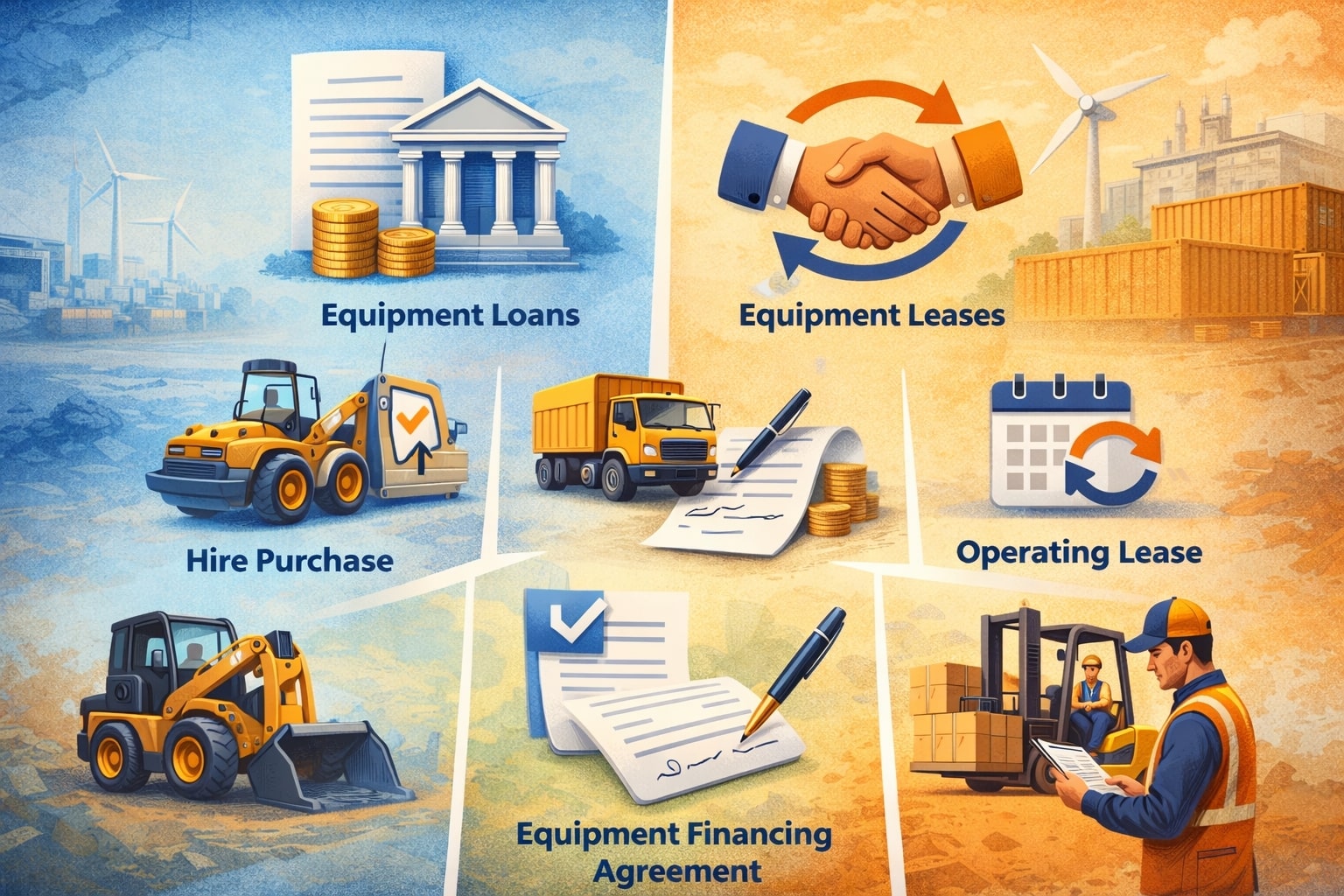
Common Types of Equipment Financing Explained
Equipment financing is how a business gets the vehicles, machinery, technology, and tools it needs—without draining cash reserves all at once. Instead of paying the full purchase price upfront, you spread the cost across predictable payments while the equipment helps generate revenue.
That simple idea is why equipment financing is so widely used by contractors, medical practices, restaurants, manufacturers, logistics operators, and growing service businesses.
But “equipment financing” is not one product. It’s a category that includes equipment loans, multiple forms of leasing, government-backed lending options, vendor programs, and creative structures like sale-leaseback.
Each type of equipment financing behaves differently in real life: who owns the asset, how fast you can get approved, what happens at end-of-term, how flexible the payments are, what collateral is required, and how it can affect accounting and taxes.
This guide breaks down the most common types of equipment financing in plain language, with practical use cases and decision tips.
You’ll also learn the terms lenders and lessors use (like UCC filings, residual values, buyouts, and TRAC leases), how to compare offers, and what trends are shaping equipment financing going forward—like embedded finance, AI-driven underwriting, and “equipment-as-a-service.”
If your goal is to preserve cash, upgrade equipment on schedule, or scale operations without taking on the wrong kind of risk, choosing the right equipment financing structure matters as much as the interest rate.
How equipment financing works in practice
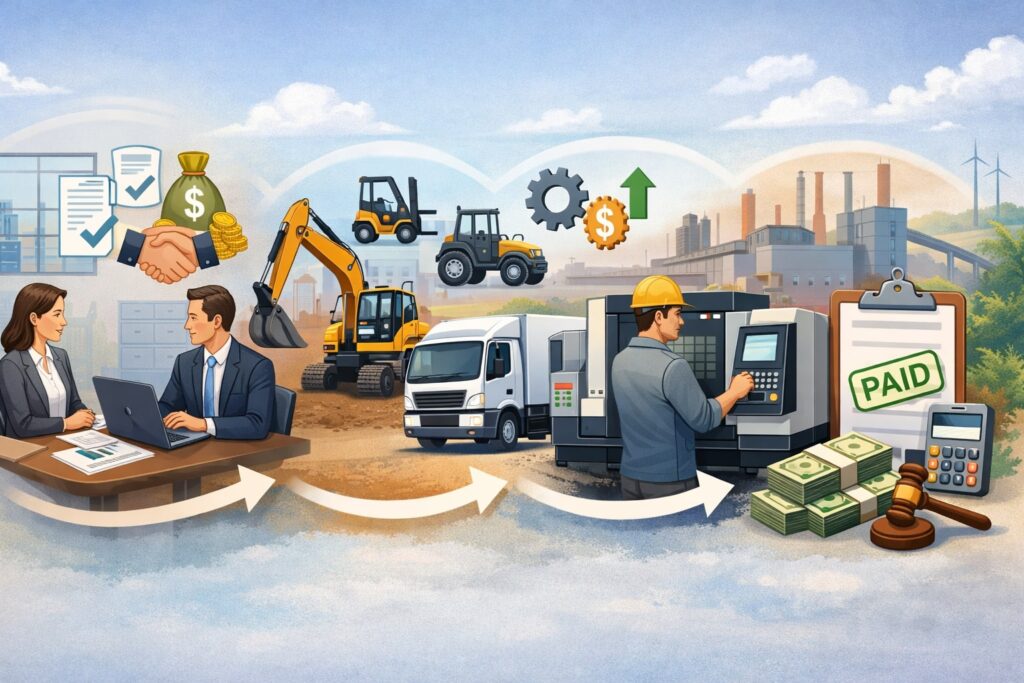
At its core, equipment financing links three things: the equipment you need, the cash flow it produces, and a repayment plan that matches its useful life. Most equipment financing is “secured,” meaning the equipment itself is collateral.
That’s why equipment financing is often easier to qualify for than unsecured working-capital products—because the lender or lessor has an asset they can recover if the deal goes sideways.
A typical equipment financing transaction includes the purchase price (plus possible soft costs like installation, freight, or warranties), a down payment (sometimes $0), a term (often 24–84 months depending on the asset class), and a pricing method (APR for loans, or lease factor/money factor equivalents for leases).
Many equipment financing agreements include a UCC-1 filing that publicly records a lender’s security interest in the equipment. That’s normal, but it affects your future borrowing because other lenders may see the lien.
The best equipment financing terms usually align the payment schedule with how the equipment earns money. A seasonal business might need step-up or skip payments. A company deploying multiple units might need progress payments or staged funding. A business expecting rapid tech obsolescence may prefer a lease that makes upgrades simple.
Equipment financing also intersects with tax and accounting rules. Some structures create ownership and depreciation; others behave more like renting. The right choice often depends on whether you want flexibility, lowest monthly payment, fastest approval, or long-term ownership.
Equipment loans
Equipment loans are one of the most straightforward types of equipment financing: a lender funds the purchase, you own the equipment, and you repay the loan over time. The equipment becomes collateral, and the lender typically files a UCC lien.
This type of equipment financing is popular for assets with long useful lives—think heavy machinery, commercial vehicles, CNC equipment, forklifts, packaging lines, or durable medical equipment.
One major advantage of equipment financing through a loan is clarity. You know your payment, your term, and your ownership path from day one.
If the equipment holds value well, you can keep it long after the loan is paid off and enjoy years of low operating cost (aside from maintenance). That’s why many established operators favor equipment financing loans for core, revenue-producing assets.
Where equipment financing loans can get tricky is in the fine print: documentation requirements, “soft cost” coverage, inspection requirements, and advance rate.
Some lenders finance 80%–100% of invoice cost, while others require a down payment. Rates and terms depend on credit, time in business, financials, equipment type, and whether the asset is new or used.
Loans are often best when you want long-term ownership, expect the equipment to remain productive beyond the repayment term, and prefer conventional pricing (APR). For businesses that upgrade frequently, a lease may be a better equipment financing fit.
Term loans for equipment purchases
A term loan is the classic equipment financing structure: fixed amount, fixed or variable rate, fixed monthly payments, and a defined payoff date. Term loans in equipment financing often range from 2 to 7 years, but certain asset categories (like transportation or specialty manufacturing) can run longer if the collateral supports it.
This style of equipment financing tends to reward strong fundamentals. If your business has stable revenue, clean bank statements, and solid credit, term-loan equipment financing may offer competitive rates and predictable costs.
Many lenders like to see that the monthly payment is comfortably supported by operating cash flow, sometimes measured via DSCR (debt service coverage ratio). Even when formal DSCR isn’t required, underwriters still look for “payment comfort.”
Term-loan equipment financing is also friendly to bundling. You can often finance related costs—like installation, delivery, training, and certain maintenance contracts—if they’re tied to the asset. That matters because the “all-in” cost of equipment ownership is rarely just the sticker price.
A downside: term-loan equipment financing can be less forgiving if your needs change midstream. If you outgrow the equipment or want to switch models early, you may need to sell the asset, pay off the note, and start over. That’s not bad—it’s just less flexible than many leasing-based equipment financing options.
Equipment loans with balloon payments
Balloon structures are a specialized type of equipment financing that reduce monthly payments by leaving a larger amount due at the end of the term. Instead of fully amortizing to zero, you pay down part of the principal and then either refinance, pay cash, or sell the equipment to cover the balloon.
This type of equipment financing can be useful when the equipment is expected to hold strong resale value (like certain vehicle categories or name-brand industrial machinery). It can also help when you’re scaling quickly and want lower payments now, with the expectation that cash flow will improve later.
However, balloon equipment financing increases end-of-term risk. If the equipment’s market value drops, or if credit conditions tighten when you need to refinance, the balloon can become a problem.
That’s why it’s important to model “what if” scenarios: what if the equipment sells for less than expected, what if you can’t refinance at favorable terms, or what if you decide to keep the equipment?
Used correctly, balloon equipment financing is a cash-flow tool. Used carelessly, it can create a future liquidity crunch. If you choose this structure, plan the balloon strategy from the start—don’t treat it as a surprise.
Equipment lines of credit
An equipment line of credit is equipment financing built for ongoing purchasing. Instead of applying for each machine or vehicle one at a time, you establish a revolving (or reusable) credit facility and draw funds as needed.
For businesses that regularly add equipment—like contractors adding attachments, medical practices adding devices, or companies expanding fleets—this can simplify growth.
Unlike a standard revolving line that’s secured by receivables, an equipment-focused line often ties each draw to a specific asset and may create multiple “sub-loans” under one umbrella.
That’s why it’s considered equipment financing even though it feels like a credit line. Approvals can be faster after the initial setup because the lender already understands your business and your purchasing pattern.
Equipment financing lines of credit can be especially valuable for businesses with irregular timing. Maybe you find the right used piece at auction, or you need to act quickly when a vendor offers a discount. A pre-approved equipment financing line allows you to move without waiting weeks.
But there are trade-offs. Some facilities include annual renewal requirements, draw fees, or covenants. Some lenders also limit what qualifies as “equipment” and may require invoices from approved dealers.
If your business buys from auctions, private sellers, or overseas manufacturers, you’ll want to confirm eligibility before relying on this equipment financing type.
Revolving vs. non-revolving equipment facilities
Not all “lines” behave the same. Revolving equipment financing means as you repay, available credit replenishes—similar to a credit card, but secured by assets.
Non-revolving facilities provide a cap you can draw against during a period (say 6–12 months), but repayments don’t restore availability. Both are used in equipment financing, and which one fits depends on purchasing cadence.
Revolving equipment financing works best when you have continuous needs and consistent repayment capacity. It supports ongoing growth and frequent upgrades.
Non-revolving equipment financing works better when you have a defined expansion plan—like outfitting a second location or adding a specific number of vehicles over a set period.
The underwriting angle matters too. Revolving equipment financing often involves stronger financial review because the lender is committing to future draws. Non-revolving equipment financing may feel closer to a multi-unit term loan, and approval criteria can be simpler.
Either way, if your growth involves repeated equipment acquisition, a facility approach can reduce paperwork and speed up deployment compared to reapplying for each piece of equipment financing.
Operating leases
Operating leases are a major category of equipment financing designed around use—not ownership. In practical terms, you’re paying for the right to use equipment over a period, and at the end, you typically return it, renew, or sometimes upgrade.
This type of equipment financing is common when technology becomes outdated quickly, when maintenance support is bundled, or when flexibility matters more than keeping the asset long-term.
Operating-lease equipment financing often produces lower monthly payments than a loan because you’re not paying off the full cost of the equipment.
Instead, you’re effectively covering depreciation during the lease term plus a return to the lessor, while the equipment retains a residual value at the end. That residual is what makes the lease economics work.
Many businesses prefer operating-lease equipment financing for IT hardware, medical imaging devices, office technology, and certain production equipment where upgrades are frequent. It can also be a strong fit for businesses that want to preserve borrowing capacity for other needs.
Since you’re not owning the asset during the term, the balance-sheet impact may differ depending on accounting treatment, but the strategic intent remains: flexibility and lifecycle management.
Banks and lessors often describe operating leases as a flexible structure compared to finance leases, with different legal and economic features.
Fair Market Value leases
A Fair Market Value (FMV) lease is one of the most common operating-lease equipment financing structures. You make payments for a set term, and at the end, you can buy the equipment at its fair market value, return it, or renew it.
The buyout price is not set in advance, which is a key feature: the end value is based on the market at that time.
FMV lease equipment financing is attractive when you want low monthly payments and optionality. If the equipment is still useful and the buyout is reasonable, you can keep it. If newer models offer better productivity, you can return and upgrade. For fast-changing technology, this is a major advantage.
However, FMV equipment financing requires you to be comfortable with uncertainty. You won’t know the buyout number in advance. You’ll also want to understand how “fair market value” is determined in the contract—some agreements specify an appraisal method or market reference process.
When comparing FMV equipment financing offers, don’t only compare payment amounts. Compare service terms, end-of-lease options, responsibility for wear and tear, and whether you’re expected to return the equipment in a certain condition.
Service-inclusive operating leases
Some of the best real-world operating-lease equipment financing deals bundle maintenance, monitoring, or support. This can reduce downtime and simplify budgeting, especially for equipment with high service needs.
Think production machines with specialized maintenance, medical devices requiring calibration, or fleet assets that need planned servicing.
This model is moving toward “equipment-as-a-service,” where you pay for outcomes and uptime rather than the asset itself. In these arrangements, equipment financing becomes part of a broader operating solution.
The equipment provider has an incentive to keep the asset running because their revenue depends on performance and renewal.
Service-inclusive equipment financing can be ideal when you have limited in-house technical staff, when downtime is expensive, or when you want a single monthly bill that covers both usage and care. It also helps businesses scale faster, because deployment is supported by the vendor ecosystem.
The caution: review what’s actually included. “Maintenance included” can mean very different things. Ask about consumables, parts, response times, and what qualifies as misuse. A well-designed service-inclusive equipment financing lease reduces surprises. A vague one can create friction when you need service most.
Finance leases and capital leases
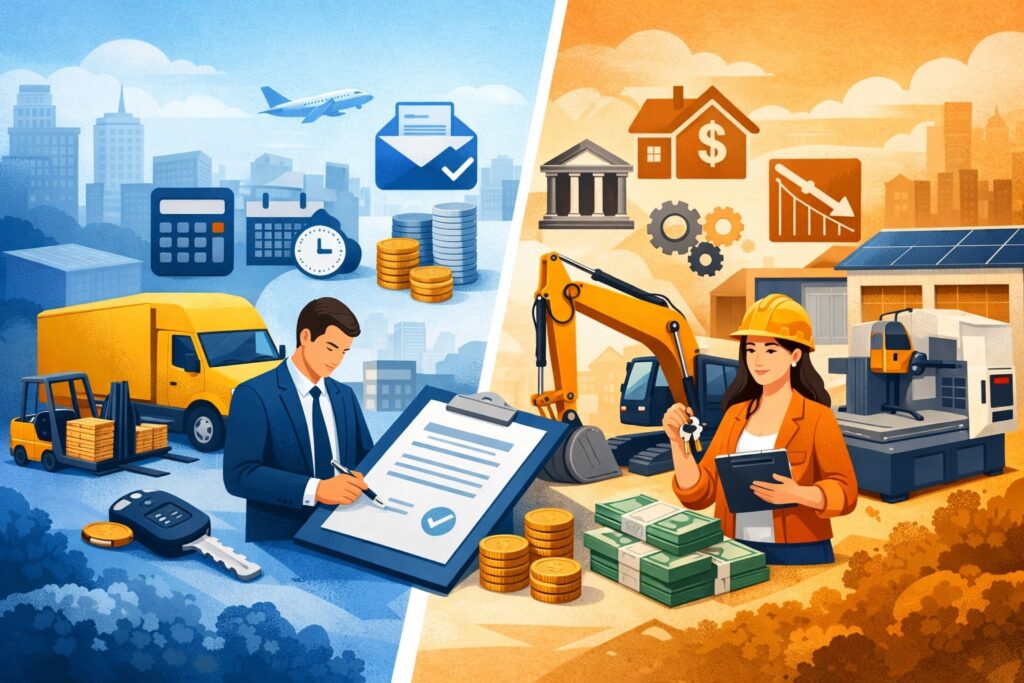
A finance lease (often called a capital lease in older terminology) is equipment financing that behaves more like ownership.
While the lessor technically owns the asset during the term, the structure is designed so that you’re paying for most or all of the equipment’s value. Many finance-lease equipment financing agreements end with a defined buyout, sometimes as low as $1.
This type of equipment financing is popular when you want the benefits of leasing—like flexible structuring and possible faster approvals—while still planning to own the equipment at the end. It’s common for durable equipment with long lives: industrial machines, restaurant equipment, specialty tools, and vehicles where the operator intends to keep the asset.
Banks often contrast finance-lease equipment financing with operating leases as two distinct structures, each suited to different goals.
Finance-lease equipment financing can also be useful when equipment vendors offer lease programs but you still want eventual ownership. It can preserve working capital while aligning the payment term with useful life. The key is to read end-of-term options carefully and confirm whether the buyout is truly fixed.
$1 buyout leases
A $1 buyout lease is one of the most recognizable finance-lease equipment financing options. The concept is simple: you lease the equipment for a term, and at the end you can purchase it for $1 (or a similarly nominal amount). Economically, you are paying for nearly the entire equipment cost during the lease.
This equipment financing structure is often chosen by businesses that want to own the equipment long-term but prefer leasing’s application process, speed, or flexibility. Monthly payments can be higher than an FMV lease because you’re financing more of the asset cost.
A big advantage of $1 buyout equipment financing is certainty. You know exactly what ownership will look like at the end, and you can plan for it. If the equipment remains productive beyond the lease term, you gain the upside of continued use without ongoing payments.
The watch-outs: early termination can be expensive, and upgrades mid-term are less convenient than with operating leases. If you think you may want to switch models frequently, an FMV lease might be better equipment financing. But if the goal is predictable ownership, $1 buyout equipment financing is a strong contender.
10% purchase option leases
A 10% purchase option lease is another finance-lease equipment financing format. At the end of the term, you can buy the equipment for 10% of its original cost (or another agreed percentage). Payments are lower than a $1 buyout lease because you’re leaving a larger portion for the end-of-term buyout.
This equipment financing structure can be a smart middle ground. If you expect strong cash flow later—or you believe the equipment will clearly be worth keeping—paying a known percentage can work well. It also provides end-of-term clarity that FMV leases don’t.
But it’s important to sanity-check the percentage against expected resale value. If the equipment depreciates quickly, a fixed 10% buyout might be higher than true market value later. In that case, you might prefer FMV equipment financing. If the equipment holds value, a fixed 10% buyout can be attractive.
When evaluating purchase-option equipment financing, compare the total cost of ownership across the full term plus buyout—not just the monthly payment. That’s where the real value shows up.
TRAC leases for vehicles and fleets
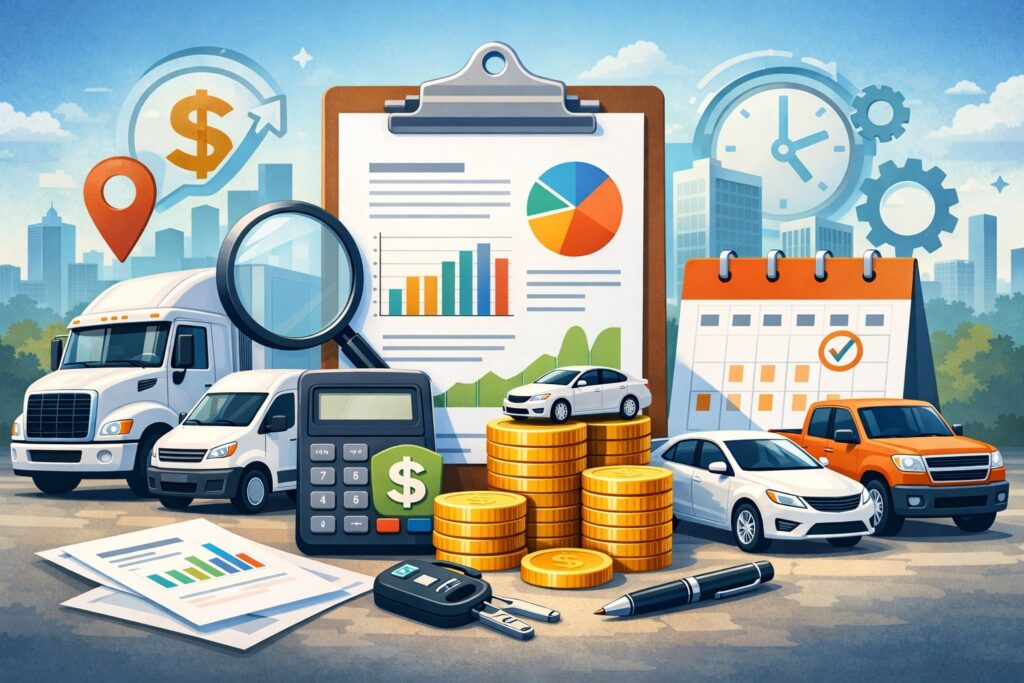
A TRAC lease (Terminal Rental Adjustment Clause) is a specialized type of equipment financing used primarily for titled vehicles—like trucks, trailers, and fleet assets.
This structure is designed to handle the residual value of a vehicle in a way that can reduce monthly payments. At the end, the vehicle is sold, and the contract adjusts based on the sale price relative to a pre-agreed residual.
In practical terms, TRAC lease equipment financing shares some characteristics with leasing and some with ownership economics. It is widely used in fleet management because it aligns payments with expected depreciation and allows businesses to cycle vehicles on a planned schedule.
The “adjustment clause” is the key. If the vehicle sells for more than expected, the benefit can flow to the lessee. If it sells for less, there may be an obligation to cover the difference (depending on the contract). That’s why TRAC lease equipment financing can be powerful but requires careful residual assumptions.
TRAC lease equipment financing is often best for businesses with fleet expertise or partners who understand vehicle values. For a company expanding delivery operations or upgrading service vehicles, it can produce lower payments and predictable replacement cycles.
When TRAC equipment financing is a strong fit
TRAC lease equipment financing shines when three things are true: the vehicles have an active resale market, you want to refresh the fleet on schedule, and you can manage mileage and condition. In those situations, the residual-value mechanism can work in your favor.
For example, a logistics operator may prefer TRAC equipment financing to avoid keeping aging vehicles that create downtime and repair costs. A service business might use TRAC equipment financing to maintain a modern fleet that supports brand perception and reliability.
The biggest benefit is strategic: TRAC equipment financing helps you treat vehicles as a managed asset pool, not a one-time purchase. That supports budgeting, planning, and operational consistency.
Key risks to model in TRAC lease deals
The main risk in TRAC equipment financing is residual mismatch. If you overestimate end value, payments may look great now, but you could face an end-of-term shortfall. That risk grows if market demand changes, mileage is higher than expected, or the equipment is damaged.
To manage TRAC equipment financing risk, pressure-test the residual. Ask how it was set. Review historical resale performance. Understand condition requirements. And consider whether you want to self-insure the residual risk or prefer a structure where the lessor bears more of it.
Done well, TRAC equipment financing is one of the most efficient ways to fund fleet growth. Done poorly, it can create unpleasant surprises at vehicle disposition time.
Sale-leaseback (unlocking cash from owned equipment)
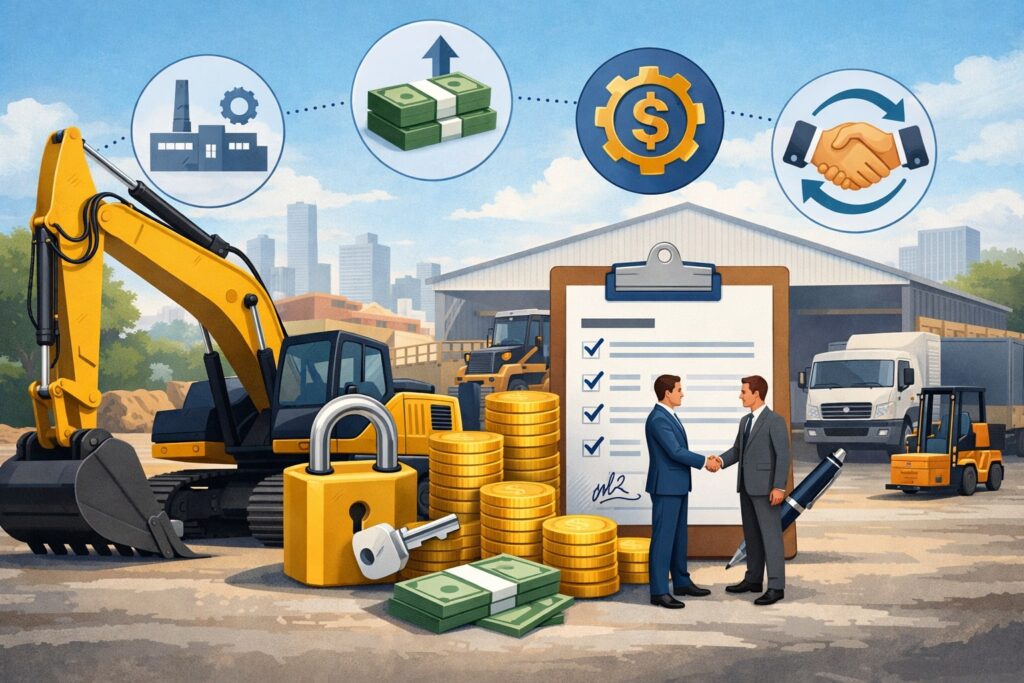
Sale-leaseback is an equipment financing strategy that converts owned equipment into working capital. You sell equipment you already own to a financing company and then lease it back, continuing to use it while receiving cash from the sale. This is equipment financing designed for liquidity.
Businesses often use sale-leaseback equipment financing when they have valuable equipment but need cash for expansion, hiring, marketing, inventory, or consolidation of other debts.
It can be especially attractive when the equipment is underutilized on the balance sheet: you have equity sitting in machines or vehicles, but that equity isn’t paying your bills.
Sale-leaseback equipment financing can be faster than traditional refinancing because the collateral already exists and can be valued. It can also be more flexible than bank refinancing, depending on the lessor. In many cases, the deal is structured as an operating lease or finance lease after the sale.
The caution is cost. You are effectively paying for capital using the leased asset, and the implied rate can be higher than a conventional secured loan. There can also be tax and accounting considerations. But for the right situation—especially when cash urgency is high—sale-leaseback equipment financing can be a practical tool.
Ideal use cases for sale-leaseback equipment financing
Sale-leaseback equipment financing is commonly used when: (1) you own equipment outright, (2) it still has meaningful market value, (3) you need liquidity quickly, and (4) the equipment remains essential to operations.
It can also be used during a growth phase to avoid issuing equity or taking on unsecured debt. A business might use sale-leaseback equipment financing to fund a second location, add a production shift, or buy inventory for a major contract while keeping core equipment in place.
One smart approach is to target equipment that is stable and easy to value—assets with a clear secondary market. That typically leads to cleaner underwriting and better pricing.
Structuring sale-leaseback for long-term health
The best sale-leaseback equipment financing deals are structured with sustainable payments and realistic end-of-term options. Don’t just maximize cash proceeds. Model the lease payment against cash flow and make sure it doesn’t restrict your ability to borrow later.
Also, ensure the contract matches how long you truly need the equipment. If you’ll rely on it for five more years, a very short lease term could create operational stress. If you might upgrade soon, locking into a long term could reduce flexibility.
Sale-leaseback equipment financing should solve a problem, not create a new one. The goal is liquidity without operational disruption—and with a payment plan your business can comfortably carry.
Vendor and manufacturer financing programs
Vendor financing is equipment financing offered directly through the seller—often a manufacturer, dealer, or authorized distributor.
In many cases, the vendor partners with a bank or captive finance company to provide pre-built equipment financing programs. This is common in industrial equipment, medical devices, office technology, and even software/hardware bundles.
Vendor equipment financing can be appealing because it’s integrated into the purchase process. Approval can be fast, paperwork may be lighter, and promotions are sometimes available (like deferred payments or discounted rates). From the seller’s perspective, vendor equipment financing increases close rates and reduces purchase friction.
But not every vendor program is automatically “the best deal.” Sometimes vendor equipment financing prioritizes speed and convenience over the lowest total cost. That’s why it’s smart to compare at least one alternative quote, especially for big-ticket purchases.
The best vendor equipment financing programs also include structured lifecycle support—installation, training, service, and upgrade paths. When that happens, you’re not just financing an asset; you’re financing an operating solution.
Captive finance vs. dealer-arranged financing
Captive finance means the equipment brand (or its finance subsidiary) effectively runs the equipment financing program. This can create strong alignment: they want you to keep buying their equipment over time. Captive programs may offer attractive terms for well-qualified borrowers and can be flexible on structure.
Dealer-arranged equipment financing means the dealer submits your application to one or more partner lenders. This can produce competitive offers, but terms can vary. It also means the dealer may prefer certain lenders based on incentives—so transparency matters.
In both cases, ask about: whether the quote is a loan or a lease, end-of-term obligations, documentation fees, service requirements, and whether the vendor is adding “soft costs” into the financed amount.
Embedded checkout financing and faster approvals
A major trend in equipment financing is “embedded finance”—where financing is built into the buying workflow, sometimes with near-instant decisions. This is expanding across procurement marketplaces and vendor platforms. Some 2025-focused industry commentary highlights faster decisioning and tech-enabled risk assessment as a growing theme.
For businesses, embedded equipment financing can reduce friction and speed deployment. For sellers, it boosts conversion. The practical takeaway: equipment financing is increasingly becoming part of the checkout experience, not a separate bank process.
The risk is that speed can hide complexity. Even when approvals are fast, you still need to review terms carefully—especially end-of-lease clauses, return conditions, and total cost.
Government-backed equipment financing options
Government-backed lending programs can be a powerful form of equipment financing for qualified small businesses. These programs don’t usually lend directly; instead, they provide guarantees that encourage lenders to approve deals they might otherwise decline. The result can be longer terms, competitive pricing, and broader eligibility for certain borrowers.
Two widely used options are the 7(a) loan program (flexible use, including equipment) and the 504 program (often for fixed assets, including certain equipment). The 7(a) program explicitly allows financing for purchasing and installing machinery and equipment and has a maximum loan amount of $5 million.
Because these programs can involve more documentation, they may take longer than “fast” private equipment financing. But for businesses that qualify, the trade-off can be worth it—especially when the amount is large or the term needs to be long.
7(a) loans for equipment purchases
7(a) loans are among the most flexible government-backed options for equipment financing. They can fund equipment purchases, working capital, and other business needs in a single loan, which is useful when equipment acquisition is part of a broader expansion plan. The program details, eligible uses, and maximum loan size are published by the administering agency.
For equipment financing, the main advantages are flexibility and potential term length. The main disadvantages are time, documentation, and process complexity compared to purely private equipment financing.
If you’re evaluating 7(a) equipment financing, be prepared with organized financial statements, tax returns, and a clear explanation of how the equipment will support growth. Underwriters care about purpose and repayment ability.
504 loans and long-life equipment
504 loans are often associated with real estate, but they can also apply to certain long-life equipment and fixed assets in eligible projects. When a business is building capacity—like a manufacturing expansion—this type of equipment financing may align well because the repayment horizon can match the asset’s economic life.
Because program rules can vary with implementation and lender practices, it’s smart to discuss project eligibility early. Even if the final structure isn’t a 504, the process can reveal other equipment financing options that fit the same project goals.
Equipment financing for technology and “soft” equipment
Not all equipment financing is about heavy machinery. Many businesses need technology stacks: POS systems, servers, cybersecurity hardware, networking gear, specialized software appliances, imaging devices, and automation tools. The challenge is that technology depreciates faster, and lenders may view it as riskier collateral.
That’s why tech-focused equipment financing often leans toward leasing structures—especially FMV leases and service-inclusive models. The goal is to avoid owning obsolete gear and to maintain upgrade flexibility.
For example, a business financing servers might prefer a 36-month lease with refresh options rather than a 60-month loan on equipment that will be outdated in three years.
Tech equipment financing is also increasingly bundled with services: monitoring, maintenance, warranties, and managed support. That bundling can improve uptime and reduce surprise expenses, which is often more valuable than shaving a small amount off the monthly payment.
In 2025, many industry discussions emphasize faster, tech-enabled underwriting and digitized workflows in equipment financing, especially for technology purchases.
POS, IT, and cybersecurity equipment financing
For businesses in retail, hospitality, and services, POS and IT equipment financing can directly impact revenue capture and customer experience. The “equipment” might include terminals, tablets, printers, routers, and security appliances. Because this category can be modular and frequently upgraded, lease-based equipment financing is common.
The best approach is to match the term to the refresh cycle. If you replace hardware every 3 years, a 5-year financing plan can trap you. If you keep hardware for 5 years, ultra-short terms may create unnecessary payment pressure.
Also, ask whether your equipment financing quote includes software licenses, implementation fees, or support. Some lessors allow certain soft costs; others won’t. Knowing that upfront prevents last-minute funding gaps.
Medical, dental, and imaging equipment financing
Medical and dental equipment financing often involves higher ticket sizes and specialized assets. Lenders may be comfortable with these categories because they retain value and generate consistent revenue when deployed properly.
Leasing can be popular for imaging systems and devices that evolve quickly, while loans may fit durable treatment equipment.
A smart equipment financing plan in this space also considers downtime risk. Service-inclusive options can be valuable, because a single day of downtime can cost more than a month of financing payments. When uptime is critical, equipment financing should support reliability, not just ownership.
Tax considerations that affect equipment financing decisions
Taxes can influence equipment financing choices because the way you acquire equipment impacts deductions and timing. Many businesses consider rules like Section 179 and bonus depreciation when planning year-end purchases and structuring equipment financing.
For 2025, Section 179 information sources commonly reference a deduction limit of $2.5 million with a phase-out beginning at $4 million of qualifying purchases.
That kind of tax rule can shape whether a business accelerates equipment purchases, chooses ownership-oriented equipment financing, or times “placed in service” dates carefully.
Bonus depreciation rules have also been a major planning factor. Reporting in late 2025 described a change reinstating 100% bonus depreciation retroactive to qualifying assets placed in service since January 19, 2025.
(Because tax rules can be complex and fact-specific, businesses should confirm how these rules apply to their situation with a qualified tax professional.)
The key point: equipment financing decisions aren’t only about the monthly payment. They’re also about total cost, timing, and how the acquisition fits into the business’s broader financial strategy.
Placed-in-service timing and equipment financing
A common mistake is assuming the purchase date controls tax outcomes. Often, what matters is when the equipment is “placed in service”—meaning it’s ready and available for use. That can be later than the invoice date if delivery, installation, or training is required.
This matters because equipment financing can be arranged quickly, but equipment delivery may not be. If you are trying to align equipment financing with tax planning, you need a realistic timeline for shipment, setup, and operational readiness.
It also affects progress funding. Some equipment financing providers can structure staged payments for build-to-order equipment. That can help you manage cash flow while ensuring the financing aligns with deployment.
Leasing vs. owning from a tax perspective
Lease payments may be treated differently than depreciation, and different lease structures can have different tax characteristics depending on facts and accounting treatment. That’s why businesses often choose equipment financing not just on “loan vs lease,” but on the economic intent: do you want to keep the asset long-term or upgrade frequently?
Use taxes as a factor, not the only factor. The best equipment financing structure is the one your business can sustain operationally and financially—while capturing tax benefits as a bonus, not a crutch.
How to choose the right equipment financing type
With so many equipment financing options, the best approach is to start with your operational reality and work backward into structure. The “right” equipment financing choice is rarely universal. It depends on how the equipment produces revenue, how fast it becomes outdated, and how your business prefers to manage assets.
Start with these questions:
- How long will this equipment remain productive for you?
- Do you want ownership, or is usage enough?
- Is flexibility (upgrades/returns) more valuable than lowest total cost?
- How stable is your cash flow?
- Do you need fast approval and minimal documentation?
- Will a UCC lien affect other financing plans?
If you want long-term ownership and the equipment has a long life, equipment loan structures or $1 buyout leases are common fits. If you want flexibility and upgrades, FMV operating leases may be better equipment financing.
If you already own equipment and need liquidity, sale-leaseback equipment financing can unlock cash—if the payments remain sustainable.
Also consider vendor support and downtime costs. Sometimes the best equipment financing deal isn’t the lowest payment—it’s the one that protects uptime and keeps you operating.
What lenders look for in equipment financing approvals
Even “easy” equipment financing has underwriting logic. Providers typically evaluate business stability, credit profile, bank activity, time in business, and the equipment itself. Equipment with strong resale markets is easier to finance. Specialized equipment may require more documentation.
Common approval factors include:
- Credit score and credit depth
- Time in business
- Revenue consistency (bank statements)
- Existing debt obligations
- Down payment availability
- Equipment type, age, and source (dealer vs private sale)
Improving approvals often comes down to preparation. Organized financials, clear invoices, and a simple explanation of how the equipment supports revenue can materially improve equipment financing outcomes.
Comparing equipment financing offers the right way
When comparing equipment financing, don’t compare only the monthly payment. Compare:
- Total cost over term (including fees)
- End-of-term obligations (especially for leases)
- Early payoff or termination rules
- Maintenance/insurance responsibilities
- Funding speed and documentation burden
- Flexibility (upgrade, add-on, seasonal payments)
Two equipment financing offers can look similar on payment but be very different in total cost and flexibility. Read the end-of-term section carefully—that’s where many surprises hide.
Future trends and predictions in equipment financing
Equipment financing is evolving quickly because technology is changing both the equipment being financed and the way financing is delivered. Many lenders and lessors are investing in faster digital workflows, data-driven underwriting, and embedded finance partnerships that put equipment financing at the point of purchase.
One big directional shift is the move toward “solutions” rather than “assets.” In other words, equipment-as-a-service models and service-inclusive leases are becoming more common where uptime matters, technology refresh cycles are short, or remote monitoring can reduce risk.
As more equipment includes sensors and telematics, financiers may price risk more accurately based on real usage data—reducing reliance on static credit metrics.
Another trend is portfolio-level funding. Businesses that deploy equipment at scale (fleet, distributed devices, multiple locations) increasingly want facility-style equipment financing that supports repeat purchases with less friction.
Finally, macro conditions influence equipment financing. When interest rates and credit standards shift, businesses become more sensitive to payment structure and cash preservation, and lessors may adjust residual assumptions. That’s why flexible equipment financing structures and clear end-of-term planning will likely grow in importance.
AI-driven underwriting and faster decisions
AI-supported underwriting is often discussed as a way to accelerate decisioning and improve risk assessment in equipment financing. For borrowers, the benefit is speed and fewer manual steps. For lenders, the benefit is better matching of pricing to risk.
The practical prediction: more equipment financing approvals will happen in hours instead of days, especially for standard equipment categories with reliable resale markets. But borrowers will still need to understand contract terms—automation won’t remove responsibility.
Embedded equipment financing in procurement platforms
Embedded finance is pushing equipment financing into the buying journey itself—inside vendor portals, marketplaces, and ERP-linked procurement flows. This can expand access for smaller operators who previously found financing intimidating or slow.
The prediction: more businesses will treat equipment financing as a default checkout option, similar to consumer “buy now, pay later,” but with commercial-grade contracts. That makes financial literacy and contract review even more important, because the ease of clicking “accept” can hide long-term obligations.
FAQs
Q.1: What is the difference between equipment financing and equipment leasing?
Answer: Equipment financing is the broader category that includes both loans and leases. Equipment leasing is one type of equipment financing where you pay to use the equipment for a term, with end-of-term options like return, renewal, or buyout.
Equipment financing through a loan typically means you own the equipment and repay a lender over time. Equipment financing through leasing often offers lower payments and more flexibility, especially for technology or assets that become obsolete quickly.
The biggest practical difference is ownership and end-of-term obligations. With loan-based equipment financing, you keep the asset when the loan is repaid.
With lease-based equipment financing, you must follow the contract’s end-of-term rules—return condition standards, buyout pricing, or renewal terms. Many businesses choose equipment financing loans for long-life assets and choose leasing equipment financing for frequent upgrades.
If you are unsure, start with your intent: if you want to own and keep it long-term, loan-like equipment financing fits. If you want flexibility and easier upgrades, lease-like equipment financing fits.
Q.2: Is equipment financing hard to qualify for?
Answer: Equipment financing is often easier to qualify for than unsecured borrowing because the equipment itself serves as collateral. That said, approvals still depend on credit profile, time in business, cash flow consistency, and the equipment category.
Some equipment financing providers specialize in newer businesses or “credit-challenged” borrowers, but pricing may be higher.
Documentation expectations vary. Some equipment financing approvals can be based primarily on bank statements and an invoice, while others require full financial statements and tax returns—especially for larger transactions.
To improve equipment financing odds, keep clean bank activity, reduce overdrafts, prepare clear invoices from reputable vendors, and be ready to explain how the equipment will generate revenue. Strong preparation often matters as much as the credit score.
Q.3: Can I get equipment financing with no money down?
Answer: Yes, $0-down equipment financing exists, especially for well-qualified borrowers and standard equipment categories. Some lessors also structure “first and last payment at signing” rather than a traditional down payment. However, not every deal qualifies.
Whether you can get no-money-down equipment financing depends on your credit profile, time in business, the equipment’s resale value, and how liquid the market is for that asset. New equipment from an authorized dealer is often easier to finance at higher advance rates than used equipment from a private seller.
If preserving cash is critical, ask providers about true $0-down equipment financing versus “soft down” structures that still require upfront payments.
Q.4: What documents do I need for equipment financing?
Answer: For many transactions, equipment financing documentation starts with an application, an invoice or purchase order, and basic business information. As deal size grows or credit complexity increases, equipment financing providers may request bank statements, tax returns, financial statements, debt schedules, and proof of insurance.
Leasing equipment financing may also require an acceptance certificate at delivery, confirming the equipment is installed and working. Loan-based equipment financing may include a UCC filing and possibly title documentation for vehicles.
The best way to reduce friction is to prepare a clean, itemized invoice, confirm vendor legitimacy, and keep your financials organized. Faster equipment financing is usually the result of fewer missing pieces—not “luck.”
Q.5: How do I avoid surprises at the end of an equipment lease?
Answer: End-of-term surprises in equipment financing leases usually come from misunderstanding buyout terms, return conditions, or automatic renewals. To avoid that, confirm upfront:
- Is the lease FMV or fixed buyout?
- How is FMV determined?
- What condition standards apply at return?
- What notice is required to return or buy out?
- Is there an automatic renewal clause?
If you want ownership, consider a $1 buyout or fixed purchase option equipment financing structure. If you want flexibility, choose FMV equipment financing but plan for end-of-term decisions early. Many problems happen when businesses wait until the last month and then feel forced into an expensive extension.
Conclusion
Equipment financing is not one decision—it’s a set of tools. Equipment loans support long-term ownership and predictable amortization. Operating leases prioritize flexibility and upgrades. Finance leases provide a lease pathway to ownership.
TRAC leases optimize fleet economics. Sale-leaseback unlocks cash from owned assets. Vendor programs reduce buying friction. Government-backed lending can expand eligibility and improve long-term structure. And tech-focused equipment financing increasingly blends assets with services and lifecycle management.
To choose well, match the equipment financing type to how the equipment will be used, how fast it becomes outdated, and how your cash flow behaves. Compare offers based on total cost, end-of-term obligations, and flexibility—not just monthly payment.
And keep an eye on the direction of the market: faster digital approvals, embedded financing at checkout, and service-inclusive “equipment-as-a-service” models are reshaping how businesses fund growth.