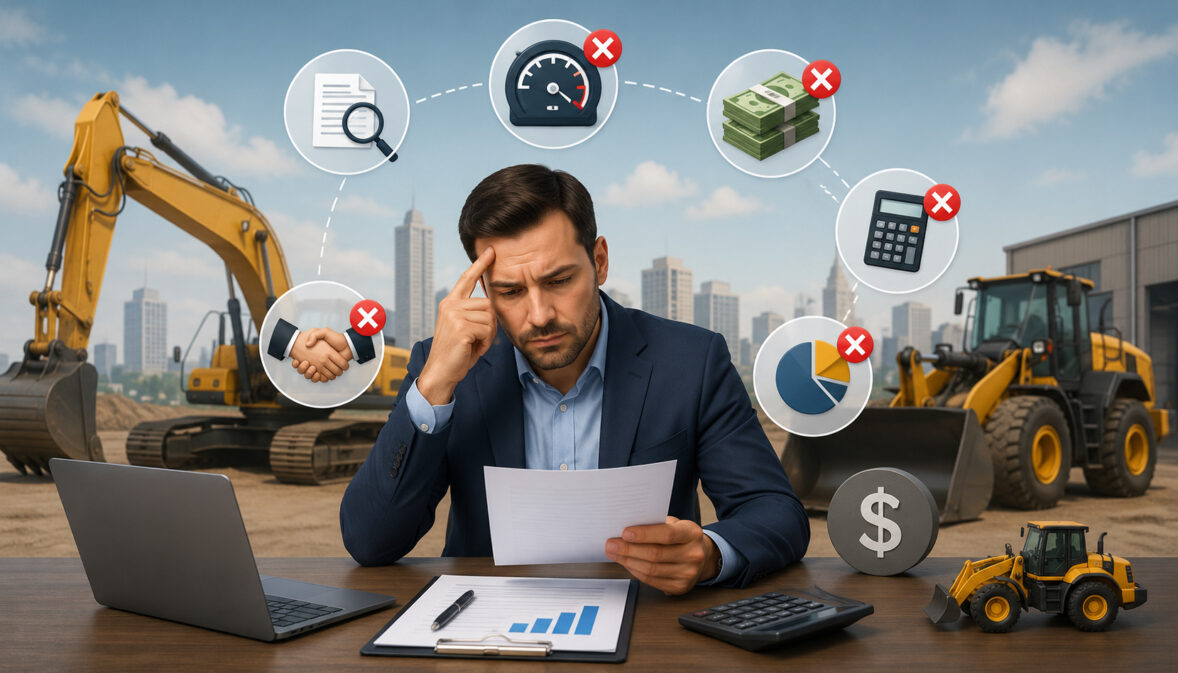
Common Equipment Financing Mistakes to Avoid
Purchasing the right equipment can improve productivity, expand capacity, reduce labor demands, and help a business serve more customers.
Contractors may need vehicles and heavy machinery, medical practices may require diagnostic devices, restaurants may need commercial kitchen systems, and manufacturers may depend on specialized production equipment.
Paying the entire purchase price upfront, however, can consume cash needed for payroll, inventory, rent, taxes, marketing, and unexpected expenses. Equipment financing can spread the cost over time through an equipment loan, equipment lease, or another financing agreement.
Financing does not automatically make an equipment purchase affordable. A poorly planned transaction may create excessive interest costs, restrictive repayment terms, unnecessary fees, or monthly payments that become difficult to manage during a slow period.
Understanding the common equipment financing mistakes to avoid helps business owners evaluate more than the advertised payment. The decision should account for total financing costs, equipment usefulness, maintenance, insurance, cash flow, documentation, contract terms, and the long-term value the asset may provide.
This article provides general educational information rather than financial, accounting, tax, insurance, or legal advice. Requirements and contract terms vary, so qualified professionals should review decisions involving complex financing agreements or business-specific consequences.
What Is Equipment Financing?
Equipment financing is a method of acquiring vehicles, machinery, tools, technology, furniture, medical devices, restaurant appliances, production systems, or other business assets without paying the full cost immediately.
The business generally makes scheduled payments over an agreed period. Depending on the structure, the transaction may be an equipment loan, an equipment lease, lease-to-own arrangement, vendor financing program, or another form of commercial equipment financing.
The equipment itself frequently supports the financing arrangement as collateral. This can reduce the lender’s risk because the asset may be repossessed following a default, subject to the agreement and applicable law. Nevertheless, equipment value alone does not determine approval.
A lender or lessor may also review:
- Personal and business credit history
- Time in business
- Revenue consistency
- Bank balances and deposit patterns
- Existing debt obligations
- Cash flow and debt service capacity
- Equipment age, condition, and resale value
- The vendor’s identity and reputation
- The requested down payment
- The applicant’s industry and operating history
Government-backed programs may permit eligible borrowers to use loan proceeds for equipment and other qualifying business purposes. The small-business loan overview explains that available programs, eligibility standards, and permitted uses depend on the financing structure.
Equipment Loans vs. Equipment Leases
An equipment loan typically provides funds to purchase an asset. The business generally becomes the owner, while the lender holds a security interest until the obligation is satisfied. Payments commonly include principal and interest, and ownership continues after the final payment.
A lease generally gives the business the right to use equipment for a specified period. The lessor may remain the legal owner during the lease, although some contracts provide a purchase option at the end.
Important lease structures include:
- Fair market value lease: The business may return, renew, or purchase the equipment at its estimated market value.
- Fixed-buyout lease: The contract identifies a predetermined purchase amount.
- Nominal-buyout arrangement: Ownership may transfer after a small final payment, subject to the contract.
- Operating-style lease: Access and upgrade flexibility may be more important than long-term ownership.
The right choice depends on asset life, upgrade needs, cash flow, end-of-term plans, accounting treatment, and the importance of ownership. A detailed comparison of equipment loans versus equipment leases can help clarify the structural differences before an application is submitted.
Why Equipment Financing Requires Careful Planning
Business equipment financing should not be treated as a quick purchasing decision. The financed price may represent only one part of the actual commitment.
Additional costs can include freight, installation, site preparation, taxes, insurance, warranties, maintenance, inspections, software, accessories, employee training, replacement parts, and downtime during implementation.
A business should also determine when the equipment will begin producing revenue or reducing expenses. Payments may start before installation is complete, before employees are trained, or before the business receives customer revenue connected to the asset.
Mistake One: Not Calculating the Total Cost of Equipment Financing
One of the most common equipment financing mistakes is focusing on the purchase price or monthly payment while overlooking the total cost of acquiring, financing, operating, and eventually replacing the asset.
The financing offer may include interest, an origination fee, documentation charges, lien-filing expenses, inspection costs, deposits, advance payments, insurance requirements, and early payoff restrictions. Some charges are paid upfront, while others are added to the financed balance.
The equipment itself may also require:
- Delivery and installation
- Electrical, plumbing, or facility upgrades
- Licensing or registration
- Software subscriptions
- Operator training
- Preventive maintenance
- Repair contracts
- Fuel or energy
- Consumable materials
- Storage or security
- Replacement parts
- Disposal or return costs
An offer with a lower payment may cost more overall if it uses a longer repayment term. Similarly, a lease with a low payment may require a substantial buyout if the business intends to keep the equipment.
Business owners can review a detailed explanation of common equipment financing fees when identifying charges that may appear at approval, during repayment, or at the end of the agreement.
Looking Beyond the Monthly Payment
Monthly payment comparisons are useful, but they do not show the complete economics of a financing offer.
For example, a longer equipment loan term may reduce the monthly obligation while increasing total interest. A lease may advertise a manageable payment but include advance payments, a security deposit, a documentation fee, and an end-of-term purchase amount.
Before comparing offers, request the following information in writing:
- Amount financed
- Cash required at signing
- Number and frequency of payments
- Total scheduled payments
- Interest rate or other pricing method
- All mandatory fees
- Final or balloon payment
- Purchase option
- Early payoff amount or formula
- Late-payment and default charges
The objective is to compare total dollars paid under each offer rather than comparing only the smallest recurring payment.
Factoring in Ownership and Operating Costs
Financing affordability depends on more than debt service. Equipment must remain productive enough to cover its direct and indirect operating expenses.
A delivery vehicle may require fuel, commercial insurance, registration, tires, repairs, and parking. Restaurant equipment may need ventilation, cleaning, utility upgrades, inspections, and replacement components. Manufacturing machinery may require specialized technicians, calibration, tooling, and periods of scheduled downtime.
Estimate costs under normal, favorable, and difficult operating conditions. A new machine may be economical when used at full capacity but expensive when customer demand falls below expectations.
Total cost of ownership should include:
- Acquisition costs
- Financing costs
- Operating expenses
- Maintenance and repair costs
- Downtime costs
- Insurance and compliance expenses
- End-of-life, return, or disposal costs
- Expected resale or trade-in value
This broader calculation helps prevent equipment loan mistakes caused by an incomplete budget.
Mistake Two: Choosing the Wrong Financing Option
Businesses can obtain equipment through multiple funding structures, but not every product is suitable for every purchase.
Common equipment financing options include equipment loans, leases, conventional term loans, government-backed loans, business lines of credit, vendor programs, and short-term financing. Each has different ownership rules, pricing methods, repayment schedules, collateral requirements, and approval timelines.
A line of credit may offer flexibility for smaller purchases, but using revolving working capital for a long-lived asset can reduce the funds available for everyday operations. Short-term financing may provide rapid access to capital, but frequent payments or a compressed repayment period may create unnecessary cash flow pressure.
Vendor financing may simplify the purchase, although convenience should not replace comparison. The equipment seller’s financing program may not provide the lowest total cost or the most suitable end-of-term terms.
Choosing the wrong structure is one of the mistakes to avoid with equipment financing because the mismatch can continue for the entire repayment period.
When an Equipment Loan May Fit Better
An equipment loan may be appropriate when the business expects to use the asset for many years and considers ownership strategically important.
Potential reasons to choose a loan include:
- The equipment has a long useful life.
- The asset is expected to retain meaningful resale value.
- The business needs to modify or customize it.
- Usage will be heavy or continuous.
- Return-condition restrictions would be impractical.
- The business wants to keep the asset after repayment.
- Predictable ownership is more valuable than upgrade flexibility.
Ownership also gives the business control over when to sell, trade, or retire the equipment, subject to any lender lien and payoff requirements.
However, an equipment loan may require a down payment, stronger credit, or additional documentation. The owner is typically responsible for maintenance, repairs, insurance, and obsolescence risk.
When Leasing May Make More Sense
Leasing may be useful when access matters more than permanent ownership. It can also fit equipment that becomes outdated quickly, such as certain computers, communications systems, diagnostic devices, or specialized technology.
A lease may be considered when:
- The equipment is needed for a limited period.
- Regular upgrades are operationally important.
- The business wants to reduce upfront cash requirements.
- Ownership would provide little long-term value.
- The asset has uncertain resale value.
- Maintenance is included in the contract.
- The business wants defined return or replacement options.
Equipment lease mistakes often occur when the business assumes it will automatically own the asset or fails to review return requirements. A low monthly payment should not obscure a high buyout price, mandatory renewal, strict notice period, or expensive condition standards.
A leasing-versus-buying checklist can provide a structured way to evaluate ownership, cost, flexibility, and asset lifespan.
Equipment Financing Mistakes Compared
The following table summarizes frequent equipment financing mistakes and practical actions that can reduce the related risk.
| Mistake | Why It Can Hurt | Better Approach |
| Only comparing monthly payments | Hides interest, fees, final payments, and total cost | Compare the full repayment amount |
| Applying without documents | Delays underwriting and may weaken the application | Prepare financial records before applying |
| Ignoring equipment lifespan | Creates a mismatch between debt and productive use | Match the term to the asset’s useful life |
| Skipping offer comparisons | May result in higher costs or restrictive terms | Review several suitable offers |
| Overborrowing | Strains cash flow and working capital | Finance only equipment supported by a clear need |
| Ignoring fees | Raises the effective cost of financing | Request every charge in writing |
| Not reviewing credit | Creates avoidable approval or pricing surprises | Review credit reports before applying |
| Missing maintenance costs | Understates the ownership budget | Estimate service, repair, and downtime expenses |
| Signing without reading terms | Creates payoff, renewal, or return problems | Review the entire agreement carefully |
| Lacking a backup cash flow plan | Increases repayment risk during weak periods | Stress-test payment affordability |
How to Use the Table Before Applying
Use the table as a pre-application review rather than waiting until a financing offer arrives.
Begin with the business need. Confirm what the equipment will do, how frequently it will be used, and how its financial benefit will be measured. Next, estimate total cost and identify the financing structure that best matches the asset.
Review credit, cash flow, existing debt, and documentation before submitting an equipment financing application. If the business identifies weak bank balances, inconsistent records, or uncertain equipment demand, those issues can be addressed before a lender begins its review.
Finally, compare every offer against the same criteria. A consistent comparison prevents approval speed or a persuasive sales presentation from becoming the only deciding factor.
Why Small Mistakes Can Become Expensive
Equipment financing errors do not always produce an immediate problem. A small documentation inconsistency may merely delay approval, while a misunderstood renewal clause may not become visible until the lease ends.
Over time, however, seemingly minor errors can affect:
- Total financing costs
- Monthly cash availability
- Ability to refinance or sell the equipment
- Insurance compliance
- Equipment replacement timing
- Contract flexibility
- Credit history
- Future borrowing capacity
A few hundred dollars in recurring fees can become substantial over a long term. Likewise, financing equipment for longer than its useful life can leave the business paying for an asset that no longer supports reliable operations.
Mistake Three: Applying Before Checking Credit and Cash Flow
Applying without evaluating credit and repayment capacity is among the most common mistakes when applying for equipment financing.
Depending on the transaction, a lender may review the owner’s personal credit, business credit, or both. Credit history can reveal payment patterns, balances, collections, liens, bankruptcies, and the number of recent applications.
Cash flow analysis is equally important. Strong revenue does not necessarily mean strong repayment capacity if the business has high operating expenses, slow-paying customers, seasonal declines, or significant existing obligations.
Before applying, review:
- Personal and business credit reports
- Outstanding loans and leases
- Credit utilization
- Recent late payments
- Tax obligations
- Average bank balances
- Monthly fixed expenses
- Seasonal revenue patterns
- Customer concentration
- Expected equipment payment
- Emergency liquidity
Credit and cash flow readiness do not guarantee equipment loan approval, but they can reduce surprises and help the business choose a realistic financing amount.
Why Credit Readiness Matters
Credit reports allow lenders to assess how previous obligations were handled. Late payments, collections, defaults, high revolving balances, or numerous recent credit inquiries may affect approval, pricing, down payment requirements, or the need for a personal guarantee.
A thin credit history can also create difficulty because the lender has limited information on which to evaluate repayment behavior.
Before submitting an application:
- Check identifying information for accuracy.
- Review account balances and payment history.
- Resolve errors through the appropriate reporting process.
- Avoid unnecessary new applications.
- Prepare explanations for isolated problems.
- Ensure business registration and credit records use consistent information.
Do not attempt to conceal negative information. Accurate context supported by records is generally more credible than an application that conflicts with documents later obtained during lender review.
Cash Flow and Repayment Ability
The proposed payment should fit the business’s operating cycle rather than only its best revenue month.
A seasonal farm may receive significant income during harvest but have lower cash inflows during other periods. A contractor may complete profitable projects but wait weeks for customer payments. A medical practice may experience reimbursement delays, while a restaurant may face fluctuating demand and food costs.
A basic stress test can ask:
- Can the payment be made if revenue falls?
- What happens if a major customer pays late?
- Can the business absorb an unexpected repair?
- Does the payment leave enough cash for payroll and taxes?
- Is there a reserve for several payment periods?
- Will other debt mature during the same period?
Mistake Four: Not Preparing Required Documents
Incomplete documentation is one of the most preventable equipment loan application mistakes.
Lenders use documents to verify the applicant, evaluate repayment ability, confirm existing obligations, validate the equipment, and ensure that the proposed transaction matches the financing request. Missing pages or inconsistent information may create repeated follow-ups and slow the approval process.
The amount of documentation varies. Smaller transactions may receive streamlined review, while larger requests, newer businesses, used equipment, specialized assets, or weaker credit profiles may require a more detailed file.
A business should prepare records before applying and ensure the information is accurate across the application, bank statements, financial statements, tax returns, and equipment quote.
A comprehensive required-documents checklist for equipment financing can help applicants organize identity, financial, equipment, and insurance records before submission.
Documents Lenders May Request
Common equipment financing requirements may include:
- Completed financing application
- Government-issued identification
- Business formation records
- Business license or professional license
- Ownership information
- Business bank statements
- Business and personal tax returns
- Year-to-date profit and loss statement
- Balance sheet
- Debt schedule
- Accounts receivable aging
- Personal financial statement
- Equipment quote or vendor invoice
- Equipment make, model, age, and serial number
- Used-equipment inspection or maintenance records
- Proof of insurance
- Purchase agreement or bill of sale
These are general examples rather than universal requirements. The requested items depend on lender policy, transaction size, business history, equipment condition, and financing structure.
How Missing Documents Delay Approval
An incomplete file prevents the reviewer from answering important underwriting questions.
Missing bank statement pages may make it impossible to verify deposits or balances. An outdated equipment quote may conflict with the requested amount. Financial statements that do not match tax returns may require an explanation. A business name on the invoice that differs from the legal applicant may delay funding.
Improve document quality by:
- Submitting complete PDF files rather than screenshots
- Using current statements
- Checking that all pages are included
- Confirming names and addresses match
- Separating personal and business records
- Labeling files clearly
- Explaining unusual transactions
- Updating the equipment quote before closing
Mistake Five: Financing Equipment That Does Not Match Business Needs
Equipment should solve a documented operational problem. Financing an impressive but unnecessary asset can create debt without producing enough value to support repayment.
Overbuying occurs when a business purchases more capacity, technology, or features than it realistically needs. Underbuying occurs when it chooses equipment that cannot handle expected volume, causing delays, excessive wear, or a premature replacement.
Sales pressure can contribute to both problems. A limited-time discount, bundled financing offer, or claim about future growth may cause an owner to act before evaluating usage, staffing, facility compatibility, and customer demand.
Before choosing equipment, define:
- The operational problem
- Required output or capacity
- Expected hours of use
- Necessary features
- Staffing and training needs
- Facility and storage requirements
- Maintenance availability
- Revenue or cost-saving potential
- Upgrade and replacement plans
The best equipment financing tips begin with selecting the correct asset, not merely obtaining approval.
Matching Equipment to Real Business Demand
Evaluate expected demand using operating records rather than optimism alone.
A contractor might review project backlog, equipment rental history, and subcontracting costs. A restaurant could examine order volume, kitchen bottlenecks, and menu plans. A manufacturer may calculate production capacity, defect reduction, labor savings, and customer commitments.
Consider whether renting or outsourcing would be more economical when usage is infrequent. Financing may be justified when the equipment is used consistently, improves margins, removes a bottleneck, or supports dependable revenue.
The analysis should also identify who will operate the equipment, where it will be stored, and whether permits or facility modifications are necessary.
Avoiding Overly Expensive or Underpowered Equipment
Higher-priced equipment is not automatically more productive. Premium features may add cost without improving the business’s actual operations.
At the same time, choosing the least expensive option can create reliability problems, low capacity, poor energy efficiency, or frequent repairs. An underpowered machine may need to be replaced while the original financing obligation remains outstanding.
Compare options based on:
- Required output
- Reliability
- Warranty coverage
- Service network
- Parts availability
- Energy consumption
- Operator safety
- Compatibility with existing systems
- Expected resale value
- Total cost of ownership
A properly sized asset should meet current needs while allowing reasonable growth without imposing unnecessary repayment risk.
Mistake Six: Ignoring the Equipment’s Useful Life
The financing term should reflect how long the equipment is expected to remain productive and economically useful.
Useful life is affected by physical wear, technological change, regulatory requirements, maintenance quality, operating intensity, parts availability, and customer expectations. Two pieces of equipment with the same purchase price may have very different replacement schedules.
Financing an asset beyond its practical life can result in payments continuing after the equipment becomes unreliable or obsolete. A very short term, however, may produce an unnecessarily high monthly obligation.
Depreciation is also relevant, although accounting and tax depreciation may not equal actual market-value decline. The tax authority explains that qualifying business machinery, equipment, vehicles, and furniture may be depreciable when applicable requirements are met.
Tax treatment depends on the property and the business’s circumstances, so professional review is appropriate.
Matching Repayment Term to Equipment Lifespan
A term should generally avoid extending far beyond the period during which the equipment is expected to provide dependable value.
Consider:
- Expected physical service life
- Manufacturer recommendations
- Annual usage
- Maintenance history for similar assets
- Technology replacement cycles
- Warranty duration
- Availability of replacement parts
- Likely resale value
- Regulatory or safety changes
- Planned business expansion
A rapidly changing technology asset may need a shorter term or flexible lease. Durable machinery with strong maintenance support may justify a longer repayment period.
The objective is not to predict the future perfectly. It is to avoid an obvious mismatch between repayment obligations and useful operation.
Considering Resale Value and Upgrade Needs
Resale value affects the economic outcome of ownership and may influence lender terms. Assets with active secondary markets are generally easier to value than highly customized or single-purpose equipment.
Before financing, research:
- Typical resale prices
- Expected depreciation
- Dealer trade-in programs
- Removal and transportation costs
- Refurbishment requirements
- Upgrade compatibility
- Lease return conditions
- Purchase-option formulas
Vehicles, technology, medical devices, and specialized machinery may have different upgrade pressures. A business expecting frequent replacements may value lease flexibility, while one purchasing durable equipment may prefer ownership and eventual resale.
Mistake Seven: Not Comparing Multiple Financing Offers
Accepting the first approval can be convenient, but it may prevent the business from discovering a more appropriate cost structure or contract.
Equipment financing offers can differ in interest rate, pricing method, repayment frequency, down payment, collateral, personal-guarantee requirements, fees, term length, prepayment treatment, and funding speed.
An offer with a lower advertised rate may include higher fees. Another may have a larger payment but a shorter term and lower total cost. A lease may appear inexpensive until the end-of-term buyout is included.
The federal small-business guidance on funding recommends preparing materials and comparing loan offers to evaluate available terms.
Comparisons should involve similar products. Comparing a fair market value lease directly with an ownership-oriented loan solely by monthly payment can be misleading because the end results differ.
What to Compare in Financing Offers
Use the same comparison worksheet for every offer and record:
- Amount financed
- Upfront cash requirement
- Interest rate, APR, factor, or lease pricing method
- Payment amount and frequency
- Number of payments
- Total scheduled repayment
- Origination and documentation fees
- Collateral requirements
- Personal guarantee
- Prepayment terms
- Late-payment provisions
- Insurance requirements
- Final payment or buyout
- Renewal and return terms
- Funding timeline
- Equipment restrictions
Ask for clarification when pricing cannot be translated into a total dollar cost. Different products may use different disclosures, making consistent comparison especially important.
Why Fast Approval Is Not the Only Factor
Fast equipment loan approval can be valuable when a broken machine stops production or an immediate project requires additional capacity. Speed, however, should not replace contract review.
A rapid decision may carry:
- Higher costs
- Frequent payments
- Limited prepayment savings
- Additional guarantees
- Restrictive default terms
- Shorter repayment periods
- Less flexibility if business conditions change
Evaluate approval speed alongside affordability, transparency, equipment fit, and lender servicing practices.
Mistake Eight: Overlooking Fees and Contract Terms
The financing agreement—not the advertisement or verbal explanation—controls the transaction.
Equipment financing costs may include application, origination, documentation, filing, inspection, appraisal, servicing, late-payment, returned-payment, insurance-tracking, early termination, payoff, renewal, return, and purchase-option charges.
Not every agreement includes all these costs. The key is to understand which fees are mandatory, which are conditional, when they are charged, and whether they are financed.
The contract may also contain obligations related to maintenance, insurance, location, modifications, taxes, liens, inspections, and equipment use. Failure to follow these requirements could create additional fees or default risk.
Common Fees to Watch For
Review possible charges in four groups:
Upfront costs
- Application fee
- Origination fee
- Documentation fee
- Appraisal or inspection fee
- Filing or title fee
- Down payment
- Security deposit
- Advance lease payments
Ongoing costs
- Servicing fee
- Statement fee
- Automatic-payment fee
- Insurance-monitoring charge
- Late-payment fee
- Returned-payment fee
Early-exit costs
- Prepayment penalty
- Minimum interest requirement
- Early termination fee
- Payoff statement fee
End-of-term costs
- Purchase-option amount
- Fair market value appraisal
- Return transportation
- Excess wear charge
- Renewal payment
- Deinstallation expense
Request a written fee schedule and ask whether any charge can change during the term.
Reading the Fine Print Before Signing
Read the entire agreement, including exhibits, schedules, guarantees, automatic-payment authorizations, and equipment descriptions.
Pay particular attention to:
- Ownership rights
- Security interests
- Personal guarantees
- Default definition
- Grace and cure periods
- Prepayment calculation
- Cross-default provisions
- Insurance requirements
- Renewal notice deadlines
- Return-location requirements
- Equipment condition standards
- Purchase-option procedures
- Dispute and governing-law clauses
A qualified attorney can review complex contracts, particularly when the transaction involves expensive equipment, unusual collateral, multiple guarantors, or significant end-of-term exposure.
Mistake Nine: Borrowing More Than the Business Can Afford
Approval represents the maximum a financing provider is prepared to extend under its standards. It does not necessarily represent the amount the business should borrow.
Overborrowing can reduce financial flexibility and leave insufficient cash for operating needs. It may occur when an applicant finances accessories, upgrades, warranties, software, installation, and other soft costs without reviewing their combined effect.
The business must continue paying employees, suppliers, landlords, tax authorities, insurers, and other creditors. A payment that works during a strong month may become difficult during seasonal or economic weakness.
Finance only equipment with a supported business purpose and a realistic repayment plan.
Stress-Testing the Monthly Payment
Stress testing evaluates whether the proposed payment remains manageable under less favorable conditions.
Possible scenarios include:
- Revenue declines
- A major customer is lost
- Receivables are delayed
- Material costs increase
- Repairs exceed expectations
- Installation takes longer
- The equipment produces less than forecast
- Insurance premiums rise
- An employee operator leaves
- Another essential asset fails
Estimate cash flow under each scenario and identify the available response. That response might involve reserves, reduced discretionary spending, backup equipment, alternative operators, or a different financing amount.
A payment should not depend on consistently perfect business conditions.
Protecting Working Capital
Working capital supports routine operations. Even profitable businesses can experience financial stress when cash is tied up in inventory, receivables, or large purchases.
Equipment financing for small businesses can preserve cash compared with paying the entire price upfront, but the structure still requires careful balance.
Avoid using all available cash for a down payment if doing so leaves no operating reserve. Conversely, choosing minimal upfront cash at a very high long-term cost may also be inefficient.
Consider the combined effect of:
- Down payment
- Installation costs
- Initial inventory
- Payroll during training
- Payment start date
- Ramp-up period
- Emergency reserves
The financing decision should support operations rather than merely complete the purchase.
Mistake Ten: Ignoring Tax, Accounting, and Insurance Questions
Tax and accounting treatment can affect the recorded cost, depreciation, interest expense, lease recognition, and timing of deductions. The outcome depends on the agreement’s substance, asset type, business structure, use, and applicable rules.
Do not assume that every lease payment is immediately deductible or that every financed purchase qualifies for the same depreciation treatment. Marketing claims about tax benefits should be verified with a qualified tax professional.
Insurance is equally important. The financing agreement may require property coverage, liability protection, specific deductibles, and identification of the lender or lessor as a loss payee.
Ignoring these issues can cause unexpected accounting adjustments, uninsured losses, contract violations, or additional premiums.
Why Tax Treatment Can Vary
Tax treatment can differ between loans, leases, conditional sales, and other agreements. The business may need to determine who is treated as the owner and how costs such as freight, installation, and certain fees affect the asset’s basis.
The official depreciation publication provides general information on recovering the cost of qualifying business property, but it is not a substitute for advice based on a specific transaction.
Questions for a tax or accounting professional may include:
- Who is treated as the owner?
- Which costs must be capitalized?
- How should interest and fees be recorded?
- What depreciation method applies?
- How should a purchase option be treated?
- What happens if the equipment is sold early?
- How does business and personal use affect treatment?
Insurance and Risk Protection
Financed equipment may need insurance before funds are released. The contract can require proof of coverage throughout the term.
Review:
- Covered causes of loss
- Replacement-cost versus actual-cash-value coverage
- Deductible amount
- Business interruption protection
- Equipment breakdown coverage
- Inland marine coverage for mobile assets
- Liability limits
- Loss-payee requirements
- Claim-payment procedures
- Temporary replacement coverage
A policy that protects only the lender’s interest may not fully protect the business from lost income or replacement expenses.
Mistake Eleven: Not Planning for Maintenance and Downtime
Equipment creates value only when it operates reliably.
Construction machinery, production lines, commercial kitchen equipment, agricultural systems, medical devices, and transportation assets all require maintenance. Service costs may rise as equipment ages, especially after warranty coverage ends.
Downtime can be more expensive than the repair itself. A failed delivery vehicle may interrupt customer service. A broken oven may reduce menu capacity. A manufacturing machine may stop an entire production sequence.
Budgeting only for financing payments understates the business’s exposure.
Building Maintenance Into the Budget
Estimate both routine and unexpected maintenance.
Routine items may include:
- Inspections
- Cleaning
- Lubrication
- Calibration
- Software updates
- Filters and fluids
- Tires or belts
- Safety testing
- Preventive parts replacement
- Required certifications
Review the manufacturer’s service schedule, warranty exclusions, local technician availability, and expected labor rates. Used equipment should be evaluated using maintenance history, operating hours, condition reports, and inspection results.
A maintenance reserve can help separate predictable asset expenses from emergency operating funds.
Planning for Equipment Downtime
A downtime plan should identify what happens when the asset cannot be used.
Possible strategies include:
- Backup equipment
- Rental arrangements
- Service agreements
- Priority repair contracts
- Spare parts inventory
- Cross-trained employees
- Alternative production methods
- Relationships with subcontractors
- Business interruption coverage
- Customer communication procedures
When estimating equipment productivity, include setup time, maintenance periods, employee breaks, material changes, and realistic utilization. Assuming continuous full-capacity operation can exaggerate projected returns.
Mistake Twelve: Signing Without Understanding Ownership and End-of-Term Options
Ownership terms determine what the business can do with the equipment during and after financing.
With an equipment loan, the business may own the asset while the lender maintains a lien. The equipment may not be sold or transferred without satisfying the secured obligation.
With a lease, the lessor may own the asset. End-of-term choices can include return, renewal, purchase at fair market value, or purchase at a fixed amount.
Equipment lease mistakes frequently arise from missed notice deadlines, automatic renewals, return shipping costs, condition requirements, or misunderstood buyout provisions.
Equipment Loan Ownership Considerations
Before accepting an equipment loan, determine:
- When legal title transfers
- How the lender’s lien is recorded
- Whether other assets secure the obligation
- Whether a personal guarantee applies
- How payoff is calculated
- When the lien will be released
- Whether the equipment can be moved or modified
- What happens following damage or total loss
- Whether sale or trade-in requires consent
Ownership provides control, but it also places depreciation, maintenance, insurance, and disposal responsibilities on the business.
Lease-End Choices and Possible Surprises
Lease agreements should describe the end-of-term process in detail.
Review:
- Notice deadline
- Automatic renewal
- Return location
- Deinstallation responsibility
- Shipping and transportation
- Wear-and-tear standards
- Usage limitations
- Appraisal process
- Fair market value calculation
- Fixed buyout amount
- Renewal payment
- Purchase-option exercise procedure
A business intending to buy the equipment should calculate the expected total cost, including the purchase option. A business intending to return it should budget for removal, freight, restoration, and potential condition charges.
Best Practices to Avoid Equipment Financing Mistakes

Equipment financing best practices begin before the application and continue after approval.
Business owners should connect the asset to a documented operational need, estimate total cost, review repayment capacity, organize records, and compare suitable structures. Contract review should receive the same attention as equipment selection.
Practical actions include:
- Calculate the full cost before applying.
- Compare several financing offers.
- Review personal and business credit.
- Analyze cash flow using conservative assumptions.
- Prepare documents before submission.
- Match the financing term to equipment lifespan.
- Budget for maintenance, insurance, and downtime.
- Understand loan and lease differences.
- Request all fees in writing.
- Review prepayment and early termination terms.
- Avoid financing more than the business can afford.
- Choose equipment based on operational need.
- Confirm vendor identity and reputation.
- Inspect used equipment.
- Keep financing records organized.
- Seek accounting, tax, insurance, or legal guidance when appropriate.
- Read the agreement before signing.
Creating an Equipment Financing Checklist
An equipment financing checklist converts a complicated decision into a repeatable process.
Divide the checklist into five categories:
- Business need: Purpose, usage, capacity, staffing, and expected benefit.
- Equipment review: Price, condition, warranty, vendor, useful life, and resale value.
- Financial readiness: Credit, cash flow, down payment, reserves, and existing debt.
- Offer comparison: Payments, total cost, fees, term, collateral, and end-of-term rights.
- Closing requirements: Documents, insurance, contract review, delivery, and installation.
Assign responsibility and a completion date for each item. This is especially helpful when an owner, accountant, equipment vendor, insurer, and financing provider are all involved.
Reviewing the Decision After Approval
Financing management should continue after funds are released.
Track:
- Payment due dates
- Remaining balance
- Equipment output
- Revenue contribution
- Labor or cost savings
- Maintenance expenses
- Downtime
- Insurance renewals
- Warranty deadlines
- Lease notice dates
- Expected replacement timing
Compare actual performance with the assumptions used before purchase. If the asset is underused, investigate whether training, scheduling, marketing, or workflow changes could improve productivity.
Equipment Financing Application Checklist
| Checklist Area | What to Review | Why It Matters |
| Business need | Equipment purpose and expected use | Prevents overbuying |
| Cash flow | Monthly payment affordability | Reduces repayment stress |
| Credit profile | Personal and business credit | Helps avoid surprises |
| Documents | Bank statements, tax returns, and financials | Speeds application review |
| Equipment quote | Price, vendor, specifications, and condition | Supports underwriting |
| Total cost | Interest, fees, maintenance, and insurance | Shows true affordability |
| Term length | Match to useful life | Avoids a long-term mismatch |
| Offer comparison | Pricing, fees, terms, and buyout options | Helps identify a suitable fit |
| Contract terms | Prepayment, default, renewal, and return rules | Prevents contract surprises |
| Records | Agreements, invoices, and payment history | Supports accounting and review |
How to Use the Checklist Before Applying
Complete the checklist before sending applications.
Start by defining the equipment need and establishing an acceptable price range. Then calculate the expected payment range using a conservative cash flow forecast.
Gather documents and resolve inconsistencies. Verify that the legal business name, ownership information, address, and financial figures are accurate. Obtain a current equipment quote showing specifications, condition, taxes, freight, installation, and other soft costs.
After receiving offers, add each one to the checklist. Do not delete less favorable offers until the total cost and contract terms have been compared.
Records to Keep After Financing
Maintain organized copies of:
- Signed financing agreement
- Personal guarantee
- Payment schedule
- Vendor invoice
- Proof of delivery
- Equipment acceptance certificate
- Title and lien records
- Insurance policy and endorsements
- Maintenance records
- Warranty documents
- Serial numbers
- Inspection reports
- Tax and accounting records
- Payoff correspondence
- Lease-end notices
- Lender communications
Store records securely and limit access to authorized individuals. Keep digital backups and calendar important dates such as insurance renewals, warranty expirations, balloon payments, and lease notice deadlines.
How to Choose Equipment Financing Options Carefully

A suitable financing option balances equipment need, total cost, repayment capacity, ownership goals, and contract flexibility.
Begin by deciding whether long-term ownership is important. Then compare the useful life of the equipment with the proposed term. Evaluate upfront cash requirements, payment frequency, total repayment, fees, collateral, guarantees, and end-of-term rights.
Review the approval timeline, but do not let speed obscure affordability. Examine customer service and servicing procedures because the relationship continues after funding.
The equipment loan approval process provides additional context on lender review, documentation, underwriting, conditions, and funding steps.
Questions to Ask Before Signing
Ask the financing provider:
- What is the exact amount being financed?
- How much cash is required before funding?
- What pricing method is used?
- What is the total scheduled repayment?
- Which fees are mandatory?
- Are any fees financed?
- How frequently are payments collected?
- Can the payment date be changed?
- Is there a prepayment penalty?
- Does early payoff reduce future interest or charges?
- Is a personal guarantee required?
- What collateral secures the agreement?
- Who owns the equipment during the term?
- What insurance is required?
- Who is responsible for maintenance?
- What happens after a late payment?
- How is default defined?
- What happens if the equipment is damaged?
- What are the lease-end options?
- Is there an automatic renewal?
- What documents remain outstanding?
- When will the vendor be paid?
- When does the first payment begin?
Obtain material answers in writing and confirm that they match the final agreement.
Comparing Long-Term Value Over Short-Term Approval Speed

Fast funding can solve an urgent need, but equipment may remain on the balance sheet or under contract for years.
Long-term value depends on:
- Equipment productivity
- Total financing cost
- Useful life
- Reliability
- Maintenance burden
- Resale value
- Upgrade flexibility
- Payment affordability
- Contract clarity
- Ability to exit or prepay
A slower process may be worthwhile when it produces a more sustainable structure. Conversely, speed may justify a higher cost when downtime creates a measurable and greater loss. The decision should be based on documented economics rather than urgency alone.
Frequently Asked Questions
What are the most common equipment financing mistakes to avoid?
The most common mistakes include comparing only monthly payments, ignoring total cost, selecting the wrong financing structure, submitting incomplete documents, borrowing too much, and failing to review credit or cash flow before applying.
Other problems include mismatching the term with the equipment’s useful life, overlooking maintenance and insurance, misunderstanding ownership, and signing without reviewing prepayment, default, renewal, return, or buyout terms.
Why should businesses compare equipment financing offers?
Offers may use different pricing methods, fees, terms, payment frequencies, collateral requirements, and end-of-term arrangements. A lower payment does not always produce a lower total cost.
Comparing several offers with a consistent worksheet helps the business evaluate total repayment, upfront cash, flexibility, and ownership rights. Products with different end results should be compared carefully rather than solely by payment.
Is it better to lease or finance business equipment?
Neither option is universally better. Financing may fit equipment that the business expects to own and use for many years. Leasing may fit assets with rapid obsolescence, limited-duration use, or frequent upgrade needs.
The decision should account for total cost, useful life, maintenance, cash flow, ownership goals, tax treatment, buyout provisions, and return requirements. A qualified professional should review accounting and tax consequences.
What documents are usually needed for equipment financing?
Common documents include identification, business formation records, bank statements, tax returns, profit and loss statements, balance sheets, debt schedules, ownership information, equipment quotes, vendor invoices, and proof of insurance.
Requirements vary by lender, transaction amount, business history, credit profile, equipment condition, and financing structure. Used or specialized equipment may require an appraisal, inspection, maintenance history, or condition report.
How can a business avoid overborrowing for equipment?
Define the exact operational need before selecting the equipment. Evaluate required capacity, expected use, staffing, maintenance, facility compatibility, and projected financial benefit.
Use conservative cash flow assumptions and stress-test the payment. Finance only the equipment and related costs supported by a clear business case, while preserving sufficient cash for payroll, inventory, taxes, and emergencies.
Why does equipment lifespan matter in financing?
The equipment should remain productive for most or all of the repayment period.
If the term extends beyond the useful life, the business could continue making payments after the asset becomes obsolete, unreliable, or costly to maintain. A term that is too short may create a payment that places unnecessary pressure on cash flow.
What fees should businesses review before signing?
Review origination, documentation, application, inspection, appraisal, filing, servicing, late-payment, returned-payment, insurance-tracking, prepayment, early termination, renewal, return, and buyout charges.
Ask which fees are mandatory, when they are charged, whether they can change, and whether they are included in the financed balance. The final agreement and fee schedule should match the written offer.
Conclusion
Understanding the common equipment financing mistakes to avoid can help a business acquire essential assets without creating unnecessary financial or operational pressure.
The most effective preparation starts with the equipment itself. Owners should confirm that the asset matches actual demand, provides sufficient capacity, fits the facility and workforce, and has a useful life that supports the proposed financing term.
The financial review should go beyond the monthly payment. Calculate the down payment, interest, fees, final payments, maintenance, insurance, installation, training, repairs, and downtime. Compare multiple financing options using total cost and contract flexibility rather than approval speed alone.
Credit, cash flow, and documentation should be reviewed before an equipment financing application is submitted. Complete records can reduce delays, while conservative payment stress testing can help protect working capital during slower periods.
Finally, read the financing agreement carefully. Ownership, collateral, personal guarantees, prepayment, default, renewal, return, and buyout provisions can materially affect the transaction.
Avoiding equipment financing mistakes does not require predicting every future business condition. It requires a disciplined process: choose equipment based on need, prepare accurate documents, compare written offers, match repayment to useful life, budget for ownership costs, and seek qualified professional guidance when tax, accounting, insurance, or contract questions require business-specific review.