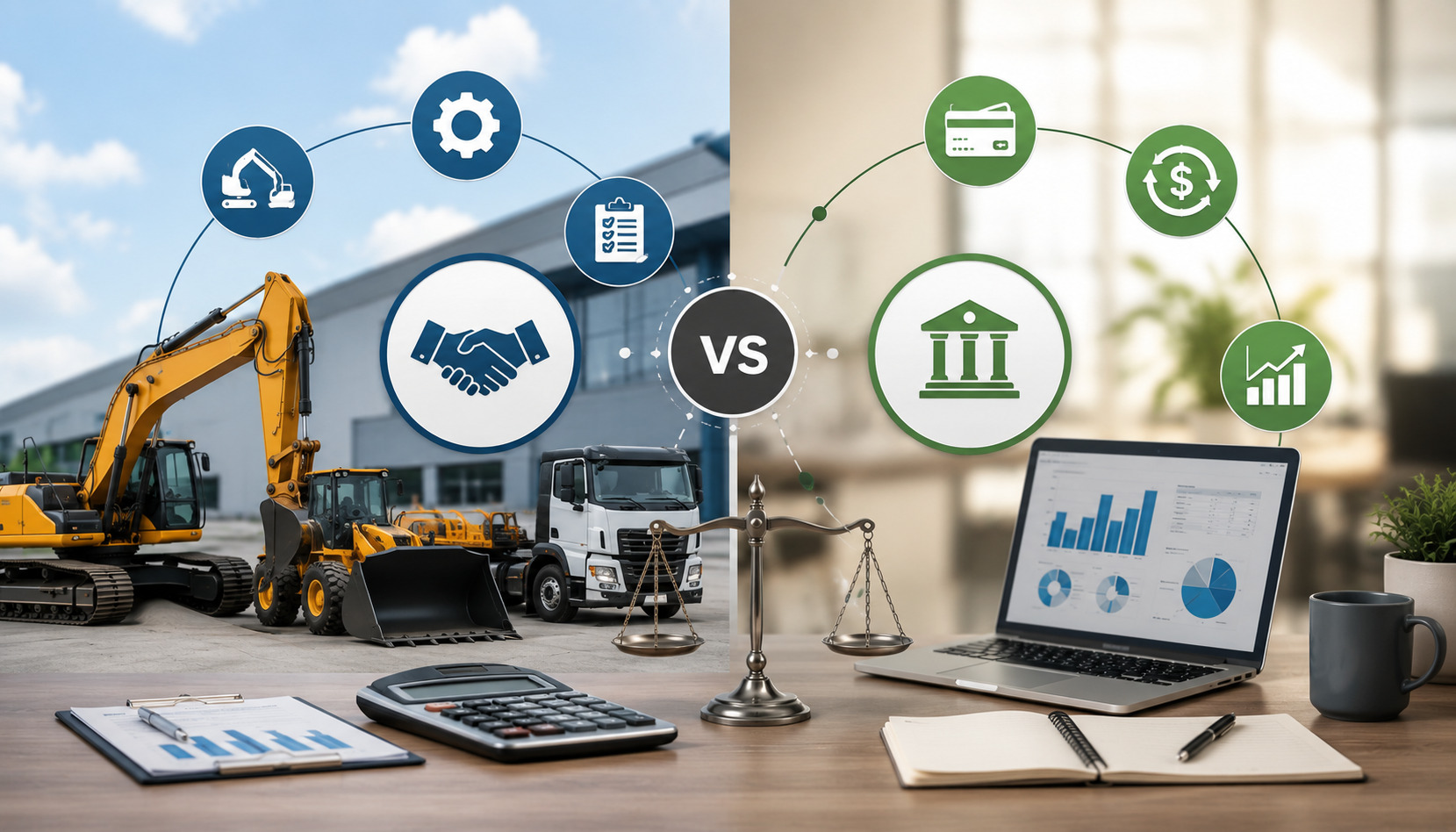
Equipment Financing vs Business Line of Credit
Buying equipment can create a major growth opportunity, but it can also put pressure on cash flow. Businesses often compare equipment financing vs business line of credit when they need machinery, vehicles, tools, technology, fixtures, or other assets while still keeping enough working capital available for daily operations.
Both are useful business funding options, but they solve different problems. Equipment financing is usually designed for a specific purchase. A business line of credit is usually designed for flexible, short-term access to cash.
The better choice depends on what you are funding, how quickly you need money, how predictable your cash flow is, and whether the expense is a one-time asset purchase or an ongoing operational need.
Disclaimer: This article is for informational purposes only and is not financial advice. Businesses should compare offers carefully and consult a qualified financial professional before making funding decisions.
What Is Equipment Financing?
Equipment financing is a form of small business financing used to buy or lease business equipment. It may be used for items such as commercial vehicles, restaurant equipment, construction machinery, medical devices, manufacturing tools, office technology, software systems, or specialized industry equipment.
In many cases, the equipment itself helps secure the financing. That means the lender may consider the value, condition, useful life, and resale potential of the equipment when reviewing the application. This structure can make equipment loans more accessible than some unsecured funding options, especially when the asset has clear business value.
Most equipment financing uses fixed-term financing. The borrower receives funds for the purchase and repays the balance over a set schedule. Payments are typically predictable, which helps with budgeting. For businesses planning a major purchase, that structure can be easier to manage than open-ended borrowing.
Ownership depends on the financing structure. With equipment loans, the business often works toward ownership as payments are made. With leasing, the business may use the equipment for a set period and then return it, renew the lease, or purchase it depending on the agreement.
For a deeper look at the fundamentals, businesses can review guides on equipment financing basics before comparing offers.
What Is a Business Line of Credit?
A business line of credit is a flexible funding option that allows a business to borrow up to an approved limit, repay what it uses, and borrow again as credit becomes available. This is called revolving credit, and it is different from a traditional term loan because the borrower does not receive one fixed lump sum that closes after repayment.
With a business credit line, interest usually applies only to the amount drawn, not the full approved limit. For example, if a business is approved for a larger limit but only uses part of it, the cost is generally based on the used amount, plus any applicable fees. According to Wikipedia’s overview of revolving credit, revolving credit allows funds to be withdrawn, repaid, and drawn again while the account remains open.
A business line of credit is commonly used for working capital. That may include inventory, payroll timing gaps, emergency repairs, vendor payments, marketing campaigns, seasonal expenses, or short-term cash flow needs. It can also help a business respond quickly when opportunities or unexpected costs arise.
Unlike equipment purchase financing, a line of credit is not always tied to one specific asset. That flexibility is its biggest advantage. However, it also requires discipline. Because funds are easy to access, businesses must avoid using revolving credit for expenses that do not generate enough return to justify the cost.
Equipment Financing vs Business Line of Credit: Key Differences
The core difference in an equipment financing vs business line of credit comparison is purpose. Equipment financing is usually built around a specific asset. A line of credit is built around flexible access to working capital.
This difference affects repayment, approval, cost, collateral, and how the funds should be used. Equipment loans often provide structure and predictability. Lines of credit provide flexibility and speed once approved.
Here is a practical comparison:
| Feature | Equipment Financing | Business Line of Credit | Best For |
| Primary use | Buying or leasing equipment | Working capital and short-term needs | Depends on funding purpose |
| Funding structure | Lump sum or equipment-specific lease | Revolving credit limit | Line of credit for flexible needs |
| Repayment | Fixed payments over a set term | Pay down and reuse available credit | Equipment financing for predictable budgeting |
| Collateral | Often secured by the equipment | May be secured or unsecured | Equipment loans when the asset has value |
| Interest cost | Usually based on financed amount | Usually based on drawn amount | Line of credit when funds are used selectively |
| Best fit | Large planned asset purchases | Cash flow gaps, repairs, payroll, inventory | Choose based on use case |
| Risk | Equipment may be repossessed after default | Credit line may be reduced, frozen, or called | Review terms carefully |
| Flexibility | Lower flexibility after funding | Higher flexibility while available | Line of credit for ongoing needs |
An equipment financing comparison should focus on total cost, repayment term, down payment, ownership, fees, and equipment restrictions. A business line of credit comparison should focus on credit limit, draw fees, interest rate, repayment frequency, renewal terms, and whether the line can be reduced or closed.
Funding Purpose
Equipment financing is usually tied to one defined purchase. The lender wants to know what the business is buying, how the equipment will be used, and whether the asset supports revenue, productivity, or operational capacity. This makes sense when the purchase has a clear business role.
A business line of credit is broader. It can be used for short-term expenses that change from month to month. A business may draw funds for inventory one month, repay the balance, and later draw again for repairs or payroll timing.
This makes the equipment loan vs line of credit decision easier when the expense is clearly defined. If the business needs a delivery truck, production machine, diagnostic device, or commercial oven, equipment financing may align better. If the business needs flexible access to cash for unpredictable expenses, a business credit line may be more practical.
Repayment Structure
Equipment loans typically use fixed repayment schedules. The business borrows for a defined purchase and repays the balance over a set period. This gives owners predictable payments and a clear payoff timeline.
A line of credit works differently. The business can draw, repay, and draw again as long as the account remains open and in good standing. Payments may vary depending on the balance, interest rate, lender rules, and repayment schedule.
Fixed-term financing is helpful when a business wants stability. Revolving credit is helpful when a business needs flexibility. The risk is that flexible repayment can become expensive if balances remain high for too long.
Collateral and Approval Factors
With equipment financing, the equipment often plays an important role in approval. Lenders may evaluate the asset’s value, age, condition, invoice, resale potential, and expected useful life. They may also review business revenue, cash flow, credit profile, time in business, and industry risk.
A business line of credit approval may rely more heavily on revenue consistency, bank activity, payment history, credit strength, and cash flow. Some credit lines are secured by business assets, while others are unsecured and may have stricter requirements or higher costs.
Businesses preparing to apply can benefit from reviewing application and eligibility guidance before submitting documents. Better preparation can make the process smoother and help owners compare offers more confidently.
When Equipment Financing Makes More Sense
Equipment financing usually makes more sense when the business has a planned equipment purchase with a clear cost, purpose, and expected return. If the asset will help generate revenue, improve efficiency, reduce labor strain, increase production, or replace unreliable equipment, financing the asset directly can be practical.
This option is especially useful for larger purchases. Paying cash for expensive equipment can weaken working capital and leave the business exposed to payroll, repairs, vendor bills, or seasonal slowdowns. Equipment purchase financing allows the business to spread the cost over time while keeping cash available for operations.
Equipment financing can also help align the cost of the asset with the income it helps produce. For example, a manufacturer buying a machine that increases output may prefer fixed payments that fit projected monthly revenue. A contractor buying a vehicle may prefer predictable payments tied to the asset’s useful life.
This option may be a strong fit when:
- The equipment has a long useful life.
- The purchase amount is too large to pay in cash comfortably.
- The business wants predictable monthly payments.
- The equipment will directly support revenue or operations.
- The business wants to preserve working capital.
- The asset has resale value or can serve as collateral.
Businesses buying used assets should be especially careful. Used equipment may cost less upfront, but lenders may look closely at condition, age, documentation, and remaining useful life. For more detail, review this guide to financing used equipment.
When a Business Line of Credit Makes More Sense

A business line of credit usually makes more sense when the funding need is short-term, flexible, or unpredictable. It is designed for access, not necessarily for one large fixed purchase. That makes it useful when expenses vary and the business does not know exactly how much it will need.
Common uses include inventory purchases, temporary payroll gaps, emergency repairs, vendor payments, seasonal demand, marketing pushes, and short-term operating expenses. A line of credit can also serve as a financial cushion when customer payments arrive later than expected.
A business credit line can be especially useful for companies with uneven cash flow. For example, a business may have strong sales but delayed receivables. A line of credit can bridge the gap without requiring a new loan application every time cash timing becomes tight.
This option may be a strong fit when:
- The business needs flexible access to working capital.
- Expenses are short-term or recurring.
- The exact funding amount is uncertain.
- The business expects to repay quickly.
- Cash flow fluctuates by season or project.
- The business wants emergency access to funds.
However, a line of credit should be used carefully. It may not be ideal for long-term equipment purchases if repayment terms are short, rates are variable, or payments become difficult while the equipment is still being used.
Cost Comparison: Equipment Loan vs Line of Credit
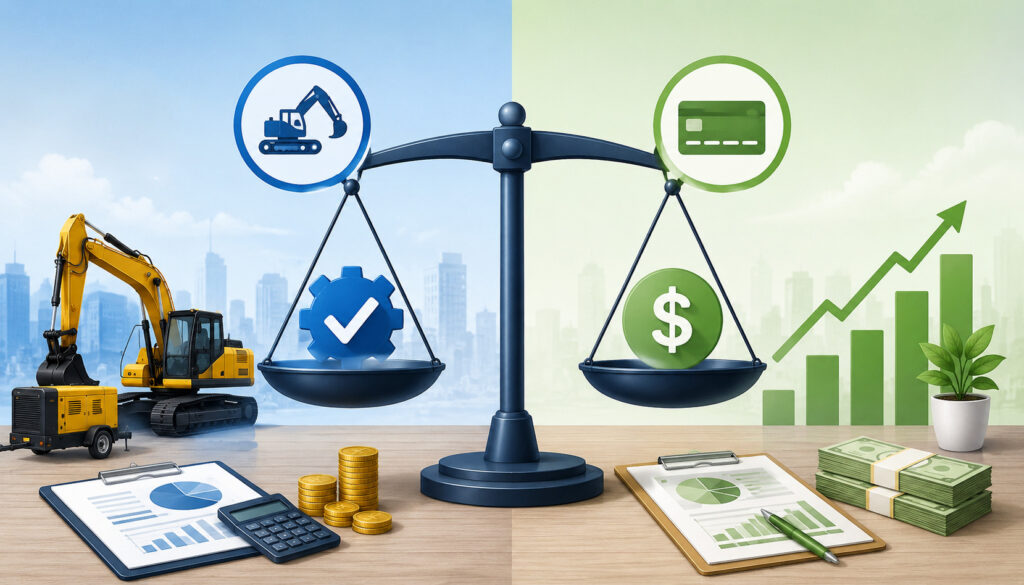
The cost comparison between an equipment loan vs line of credit depends on more than the interest rate. Businesses should look at total borrowing cost, fees, repayment structure, utilization, payment frequency, and how long the debt will remain outstanding.
Equipment loans often have fixed payments and defined terms. That makes the total cost easier to estimate upfront. The business can compare the payment schedule, interest, origination fees, documentation fees, down payment requirements, and any prepayment rules.
A business line of credit may seem cheaper because interest is typically charged only on the amount used. This can be true when the business draws funds briefly and repays quickly. But if the balance stays high, costs can add up. Some lines also include draw fees, maintenance fees, renewal fees, inactivity fees, or variable rates.
The best comparison is not simply “which rate is lower?” It is “which structure fits the use of funds?”
For a long-term asset, equipment financing may provide a better match because the repayment term can align with the equipment’s useful life. For short-term expenses, a line of credit may be better because the business only pays for funds when needed.
Hidden costs also matter. With equipment financing, businesses should consider insurance, maintenance, installation, delivery, taxes, training, and downtime during setup. With a line of credit, businesses should consider fees, rate changes, minimum payments, and the risk of relying too heavily on revolving credit.
Pros and Cons of Equipment Financing
Equipment financing can be highly effective when the business needs a specific asset and wants structured repayment. It can help preserve cash, support growth, and make expensive equipment more manageable.
Pros of equipment financing:
- Predictable payments support budgeting.
- The financing is tied to a productive business asset.
- The equipment may serve as collateral.
- Terms may align with the asset’s useful life.
- It can preserve working capital.
- It may support ownership over time.
- It can make large purchases more accessible.
For example, a growing bakery may finance a commercial oven instead of paying cash. The oven increases production capacity, and fixed payments allow the owner to plan around monthly revenue.
Cons of equipment financing:
- Funds are usually restricted to the equipment purchase.
- The business may need a down payment.
- Older or specialized equipment may be harder to finance.
- The borrower may be responsible for insurance and maintenance.
- Default may put the equipment at risk.
- Some agreements may include prepayment rules or fees.
Equipment financing works best when the asset is necessary, productive, and durable. It is less useful for general working capital or uncertain expenses.
Businesses comparing equipment financing options should gather invoices, equipment details, financial statements, bank records, and revenue documentation before applying. This can improve lender confidence and help the business compare terms more accurately.
Pros and Cons of Business Lines of Credit
A business line of credit is one of the more flexible business funding options because it gives access to funds when needed. It can help businesses handle timing gaps without applying for a new loan each time.
Pros of a business line of credit:
- Flexible access to working capital.
- Interest typically applies only to funds used.
- Repaid funds may become available again.
- Useful for emergencies and seasonal needs.
- Can support inventory, payroll, repairs, or vendor payments.
- May help smooth cash flow.
- Can be kept available as a backup funding source.
For example, a retailer may use a line of credit to buy inventory before a busy season, then repay the balance as sales come in. A service business may use it to cover payroll while waiting for customer invoices to clear.
Cons of a business line of credit:
- Rates may be variable.
- Fees may apply even when funds are not used.
- Credit limits can be lower than expected.
- Lenders may reduce or freeze access.
- Carrying balances too long can become costly.
- Easy access can lead to overborrowing.
- It may not be ideal for long-term equipment purchases.
A line of credit is most effective when used strategically and repaid quickly. It should support business timing, not become a permanent substitute for stable cash flow.
How to Choose the Right Funding Option
Choosing between equipment financing and a business line of credit starts with the purpose of the money. If the funds are for a specific piece of equipment, equipment financing is often the more logical starting point. If the funds are for ongoing operating needs, a line of credit may be more useful.
Purchase size matters. A large equipment purchase may be easier to manage through fixed-term financing because payments are spread over time. A smaller or uncertain expense may fit better with revolving credit.
Equipment type also matters. Durable equipment with measurable value may be easier to finance directly. Highly specialized, rapidly depreciating, or older equipment may require more documentation or a stronger borrower profile.
Consider these decision factors:
- What is the exact purpose of the funds?
- Is the expense one-time or recurring?
- How long will the asset or need provide value?
- Can the business afford fixed payments?
- Is repayment expected quickly or over a longer period?
- How stable is cash flow?
- How strong is the business credit profile?
- Are there fees beyond the interest rate?
- Does the business need speed, structure, or flexibility?
Businesses should also compare lender requirements. Some lenders focus on credit strength, while others emphasize revenue, bank activity, collateral, or time in business. Preparing financial records can help. This guide on preparing financial statements for equipment loans is useful when organizing documentation.
Common Mistakes to Avoid
One common mistake is using short-term credit for a long-term asset. A business line of credit can sometimes be used to buy equipment, but that does not always make it the best fit. If repayment terms are short or rates are high, the business may face cash flow pressure before the equipment has produced enough value.
Another mistake is overborrowing. Just because a lender approves a certain amount does not mean the business should use it all. Borrowing should be based on repayment ability, not only approval size.
Businesses also sometimes focus only on the payment amount. A low payment may look attractive, but the total cost could be higher if the term is long or fees are added. Always review the full agreement.
Other mistakes include:
- Ignoring origination, draw, renewal, or documentation fees.
- Failing to compare multiple offers.
- Not checking prepayment terms.
- Financing equipment without estimating return.
- Using a line of credit for expenses that do not support revenue.
- Not planning for maintenance, insurance, delivery, or installation.
- Waiting until cash flow is strained before applying.
Another issue is not understanding ownership. Equipment loans, leases, and rental structures can work differently. Businesses comparing lease and purchase options may find this leasing vs buying resource helpful.
What is the difference between equipment financing and a business line of credit?
Equipment financing is usually used to buy or lease a specific business asset, such as machinery, vehicles, tools, or technology. It often comes with fixed payments over a set term, and the equipment may help secure the financing.
A business line of credit is more flexible. It gives access to a revolving credit limit that can be used, repaid, and used again. It is generally better for working capital, seasonal expenses, repairs, payroll timing gaps, inventory, and emergencies.
The main difference is structure. Equipment financing is asset-focused and predictable. A business line of credit is flexible and reusable.
Is equipment financing better for large purchases?
Equipment financing is often better for large planned purchases because it spreads the cost over a defined repayment term. This helps businesses avoid draining cash reserves all at once.
It can also match the repayment schedule to the equipment’s useful life. If a machine, vehicle, or tool will support operations for a long time, fixed-term financing may make more sense than using revolving credit.
That said, businesses should still compare total cost, down payment requirements, fees, and approval terms. A large purchase should support revenue, productivity, or cost savings strongly enough to justify the financing.
Can a line of credit be used to buy equipment?
Yes, a line of credit can sometimes be used to buy equipment, depending on the lender’s rules. However, that does not always mean it is the best choice.
A business credit line may work for smaller equipment purchases, urgent replacements, repairs, or partial costs. It may also help when the business expects to repay the balance quickly.
For larger equipment purchases, equipment financing may be more suitable because it provides structured repayment and may offer terms better aligned with the asset’s lifespan. The decision depends on cost, repayment ability, and how long the business expects to carry the debt.
Which option is cheaper?
Neither option is always cheaper. Equipment loans may offer predictable costs and potentially better terms for asset-backed purchases. Lines of credit may cost less when funds are borrowed briefly and repaid quickly.
The real comparison depends on interest rate, fees, repayment term, utilization, payment frequency, and total time borrowed. A line of credit can become expensive if the balance stays high. Equipment financing can also become costly if the term is too long or fees are high.
Businesses should compare the total dollar cost of each offer, not only the advertised rate.
Does equipment financing require collateral?
Equipment financing often uses the equipment itself as collateral. This means the lender may have a claim on the equipment if the borrower defaults.
Some lenders may also require a down payment, business lien, personal guarantee, or additional documentation depending on the borrower profile and equipment type. Requirements vary by lender and deal structure.
The collateral aspect can be helpful because the equipment has value, but it also creates risk. Businesses should be confident that payments are affordable before agreeing to financing.
Which option is better for cash flow?
A business line of credit is often better for short-term cash flow flexibility. It can help cover temporary gaps, seasonal expenses, or urgent operating needs without requiring a new loan each time.
Equipment financing may be better for preserving cash during a large equipment purchase. Instead of paying the full cost upfront, the business spreads payments over time.
The better choice depends on the cash flow problem. For a specific asset, equipment financing may protect cash reserves. For unpredictable operating needs, a line of credit may provide more flexibility.
Can businesses use both options?
Yes. Many businesses use both options for different purposes. Equipment financing can fund planned asset purchases, while a line of credit can remain available for working capital.
This combination can be practical when managed carefully. For example, a business may finance a vehicle with fixed payments and keep a line of credit available for fuel, repairs, payroll timing, or inventory.
The key is avoiding too much debt at once. Businesses should review cash flow, repayment schedules, and total obligations before combining multiple funding products.
How should businesses compare lenders?
Businesses should compare lenders based on total cost, repayment terms, approval requirements, funding speed, fees, customer support, and contract flexibility. The lowest advertised rate is not always the best deal.
For equipment financing, compare down payment, term length, ownership structure, collateral rules, and prepayment terms. For a business line of credit comparison, review draw fees, renewal fees, repayment frequency, credit limit, and whether rates are variable.
It is also wise to prepare financial documents before applying. Strong documentation can improve the quality of offers and make comparisons easier.
Conclusion
The right choice in an equipment financing vs business line of credit comparison depends on the purpose of the funds. Equipment financing is usually best for planned asset purchases, especially when the equipment will support revenue, productivity, or long-term operations.
A business line of credit is usually better for flexible working capital needs, short-term cash flow gaps, repairs, payroll timing, inventory, seasonal expenses, and emergencies.
For many businesses, the strongest approach is not choosing one forever. It is using each tool for the right job: fixed-term financing for equipment and revolving credit for flexible operating needs.
Before deciding, compare total cost, repayment structure, fees, collateral, cash flow impact, and business goals. A funding option should support the business, not create unnecessary pressure.