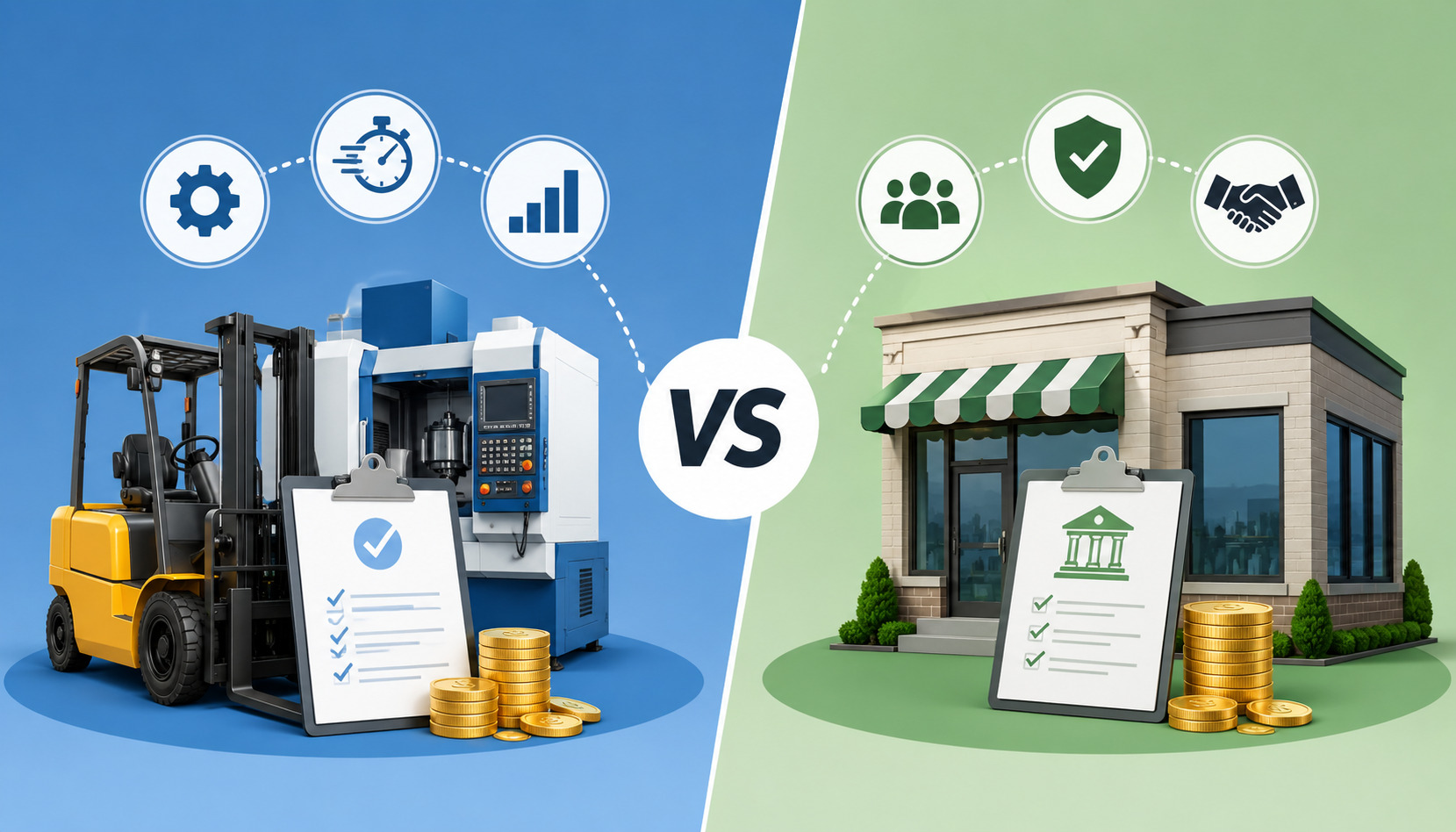
Equipment Financing vs SBA Loans
Buying equipment can be one of the most important decisions a business owner makes. Machinery, vehicles, tools, technology, medical equipment, restaurant equipment, and construction equipment can improve productivity, increase capacity, reduce manual work, and help a business serve more customers.
The challenge is that essential equipment is often expensive. Paying cash may drain working capital, while using the wrong loan structure can create repayment pressure. That is why many owners compare equipment financing vs SBA loans before moving forward.
Both options can help fund equipment purchases, but they work differently. Equipment financing is usually tied directly to the asset being purchased. SBA loans are broader small business funding options that may be used for equipment, working capital, expansion, refinancing, or other approved business needs.
This guide explains the differences, pros and cons, approval factors, costs, and common mistakes to avoid so you can make a practical business loan comparison.
What Is Equipment Financing?
Equipment financing is a type of business funding used to purchase or refinance business equipment. The equipment itself usually plays a major role in the approval decision because it may serve as collateral for the loan. This makes equipment financing different from many general-purpose loans.
In a typical equipment financing structure, a lender provides funds for a specific asset, such as a delivery vehicle, excavator, oven, CNC machine, medical device, office technology, or specialized production equipment. The business repays the loan through scheduled payments over a fixed term.
This is why fixed-term equipment financing is popular among businesses that want predictable monthly payments. The borrower knows the payment amount, term length, and payoff schedule before accepting the offer.
In many cases, ownership begins when the equipment is purchased, although the lender may hold a security interest until the loan is repaid. Some structures may require a down payment, especially for used equipment, higher-risk equipment, newer businesses, or borrowers with weaker credit.
Equipment financing for small businesses can be useful because it connects the loan purpose directly to the asset. If the equipment helps generate revenue, improve efficiency, or reduce operating costs, the monthly payment may be easier to justify.
Business owners comparing small business equipment loans should pay attention to:
- Loan amount
- Down payment
- Interest rate or factor cost
- APR
- Repayment term
- Fees
- Collateral requirements
- Prepayment rules
- Equipment age and condition requirements
For more preparation guidance, see this resource on preparing financial statements for equipment loans.
What Are SBA Loans?
SBA loans are lender-issued loans backed in part by a federal small business agency. The agency does not usually lend directly to the business. Instead, it sets guidelines for approved lending programs and reduces lender risk, which can make financing more accessible for eligible businesses.
SBA loans are not limited to equipment purchases. Depending on the program and lender requirements, funds may be used for working capital, business acquisition, expansion, real estate, refinancing, inventory, and equipment. That flexibility is one reason owners include them in an SBA loan comparison.
An SBA loan for equipment purchase may be attractive when the business needs more than just one piece of equipment. For example, a restaurant might need kitchen equipment, leasehold improvements, furniture, inventory, and opening cash reserves.
A construction business might need machinery plus working capital for payroll, insurance, and mobilization costs.
Compared with many fast equipment loan options, SBA loans often involve more documentation. Lenders may request tax returns, financial statements, debt schedules, ownership information, business plans, projections, collateral details, and personal financial information from owners.
The tradeoff is that SBA-backed financing may offer longer repayment terms and competitive pricing for qualified borrowers. However, approval can take longer, and not every business will qualify.
SBA equipment financing can make sense when the business has time to complete a detailed application and wants funding that supports a broader plan. It may be less ideal when equipment is needed immediately or when the purchase is simple, urgent, and asset-specific.
Equipment Financing vs SBA Loans: Key Differences
The best way to compare equipment financing vs SBA loans is to look beyond interest rate alone. The better option depends on the purpose of the funds, timing, documentation burden, repayment ability, collateral, and how the equipment fits into the business plan.
Equipment financing is usually more direct. The business identifies the equipment, applies for funding, and the lender evaluates the asset, borrower profile, and repayment capacity. SBA loans often involve a wider review because the loan may support multiple business purposes and must meet program rules.
Here is a practical equipment financing comparison:
| Feature | Equipment Financing | SBA Loans | Best For |
| Primary purpose | Buying or refinancing specific equipment | Broader business needs, including equipment | Depends on whether funding is asset-specific or multi-purpose |
| Collateral | Equipment often serves as collateral | May require business assets, personal guarantees, or additional collateral | Equipment financing for asset-backed purchases; SBA loans for broader requests |
| Funding speed | Often faster | Often slower due to documentation and review | Equipment financing when timing matters |
| Documentation | Usually focused on credit, bank statements, financials, invoice, and equipment details | Often more detailed financial and ownership documentation | SBA loans for prepared borrowers |
| Repayment structure | Fixed payments over a set term | Term varies by program and use of funds | Both can work if payments fit cash flow |
| Best use case | Specific machinery, vehicles, technology, or equipment | Equipment plus working capital, expansion, refinancing, or larger projects | SBA loans for multi-purpose funding |
| Down payment | May be required | May be required depending on program, lender, and project | Compare cash required upfront |
| Approval focus | Borrower strength plus equipment value | Borrower strength, eligibility, lender standards, and use of proceeds | Strong borrowers may compare both |
The right equipment loan vs SBA loan choice usually comes down to one question: are you financing one asset, or are you financing a broader business plan?
Funding Purpose
Funding purpose is one of the biggest differences in an equipment loan vs SBA loan decision. Equipment financing is usually tied to a specific asset. The lender wants to know what you are buying, how much it costs, who is selling it, whether it is new or used, and how the equipment will support business operations.
That makes equipment financing a strong fit for targeted purchases. A contractor buying a skid steer, a bakery buying ovens, or a clinic buying diagnostic equipment may not need a broad loan package. They may simply need business equipment funding that matches the purchase price and expected useful life.
SBA loans are broader. They may support equipment, but they may also support working capital, expansion costs, inventory, real estate, refinancing, or business acquisition. This makes SBA loans useful when equipment is only one part of the funding need.
For example, a manufacturer expanding production may need machinery, installation, training, inventory, and extra payroll during ramp-up. In that situation, SBA equipment financing may be part of a larger loan strategy.
Approval Process
The approval process can feel very different when comparing equipment financing vs SBA loans. Equipment financing may be more asset-focused. Lenders often review the borrower’s credit profile, time in business, revenue, bank activity, existing debt, and the equipment being purchased.
Because the equipment may secure the loan, the lender can often move faster than with a broader business loan. Some equipment loan options are designed for streamlined review, especially when the request is moderate, the equipment has clear resale value, and the borrower has stable revenue.
SBA loans usually involve a deeper review. The lender may need to confirm eligibility, document repayment ability, review ownership details, analyze financial statements, and make sure the use of funds fits program requirements. This does not mean SBA loans are always difficult, but they often require more preparation.
Borrowers may need to provide tax returns, interim financials, debt schedules, personal financial statements, business plans, projections, leases, purchase agreements, and equipment quotes. The process can be worthwhile, but it is rarely the fastest route.
For a deeper look at lender review steps, this guide on the equipment loan approval process may help.
Repayment Terms and Costs
Repayment terms and costs should be compared carefully. A lower interest rate does not always mean a better deal if fees, down payment, collateral requirements, repayment length, or restrictions create a higher total cost.
Equipment financing often uses fixed payments over a defined term. The term may be based on the equipment type, age, expected useful life, borrower profile, and loan size. Shorter terms usually mean higher monthly payments but lower total interest. Longer terms may reduce monthly pressure but increase total borrowing cost.
SBA loans may offer longer repayment periods, especially for larger approved uses. This can reduce monthly payments, but the application process may include more fees, documentation, and underwriting requirements.
When comparing costs, review:
- APR, not just the stated rate
- Origination fees
- Packaging fees
- Closing costs
- Appraisal or valuation costs
- Down payment
- Prepayment rules
- Personal guarantee requirements
- Collateral requirements
- Total repayment amount
When Equipment Financing Makes More Sense

Equipment financing often makes more sense when the business has a clear, immediate, equipment-specific need. If the purpose is to buy one asset or a defined group of assets, a direct equipment loan may be simpler than applying for broader funding.
This is especially true when timing matters. A broken machine, aging vehicle, overloaded kitchen, or delayed construction project can create real revenue pressure. Waiting through a longer application may cost more than the potential savings from another loan type.
Equipment financing may also be a strong fit when the equipment will directly generate revenue or reduce costs. For example, a new delivery vehicle may allow more routes. A production machine may increase output. A diagnostic device may add billable services. A refrigerated unit may reduce waste.
Predictable payments are another advantage. Many small business equipment loans are structured with fixed monthly payments, making it easier to budget. If the payment aligns with expected equipment usage, the loan can support growth without draining cash reserves.
Equipment financing may make sense when:
- The purchase is limited to equipment
- The business needs funding quickly
- The equipment has clear business value
- The borrower wants predictable payments
- The asset can support the loan as collateral
- The business wants to preserve working capital
- The loan term matches the asset’s useful life
Used equipment may also be eligible, although lenders often review age, condition, seller credibility, and resale value. For more detail, see this guide on financing used equipment.
When SBA Loans Make More Sense

SBA loans may make more sense when equipment is only one part of a larger funding need. If the business is expanding, relocating, acquiring another business, refinancing debt, or adding working capital, a broader loan structure may be more practical than using separate loans for each need.
For example, a medical practice may need equipment, office buildout, software, furniture, and working capital. A restaurant may need kitchen equipment, seating, signage, inventory, and payroll reserves. A manufacturer may need machinery plus raw materials and staff training.
In these cases, comparing SBA loan comparison factors can be useful because the loan may support a complete project rather than only the equipment invoice.
SBA loans may also appeal to businesses seeking longer repayment terms or competitive capital. A longer term can lower monthly payments, which may help preserve cash flow during growth. That can be valuable when the equipment will take time to generate returns.
However, SBA loans require patience and preparation. Businesses must be ready to provide documentation and respond to lender questions. The process can be worthwhile for qualified borrowers, but it may not fit urgent purchases.
SBA loans may make sense when:
- The funding need includes more than equipment
- The business can handle a detailed application
- The project is larger or more complex
- Lower monthly payments are important
- The business wants one loan for multiple approved uses
- The borrower has strong financial documentation
- The timeline is flexible
Pros and Cons of Equipment Financing
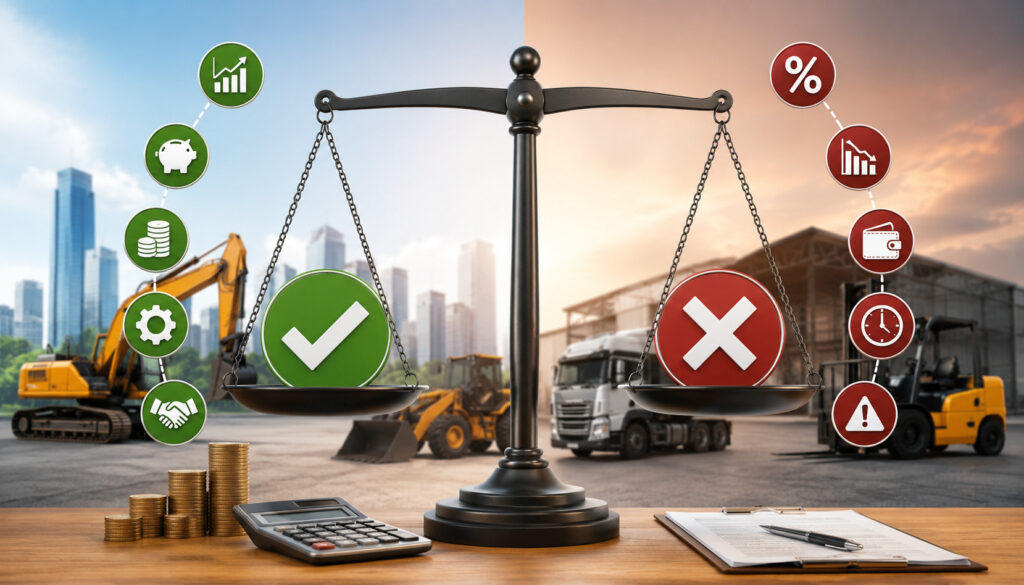
Equipment financing has practical advantages, especially for businesses that need a specific asset. Still, it is not automatically the right choice. The best decision depends on cost, timing, cash flow, equipment type, and long-term business plans.
The main benefit is focus. Equipment financing is built around the asset being purchased. That can make the process faster and easier to understand than a broader business loan. The equipment’s value, use, and resale potential may support the approval.
Another advantage is cash preservation. Instead of paying the full purchase price upfront, the business can spread payments over time. This can protect working capital for payroll, inventory, marketing, repairs, taxes, and other operating needs.
Common advantages include:
- Faster approval than many broader loan programs
- Predictable payment structure
- Equipment may serve as collateral
- Useful for machinery, vehicles, technology, tools, and specialized assets
- Can help preserve cash flow
- May be available for new or used equipment
- Easier to connect loan cost to asset value
Common drawbacks include:
- Funds are usually limited to equipment
- Down payment may be required
- Used or specialized equipment may face stricter review
- Shorter terms may create higher payments
- Total cost can be high for weaker credit profiles
- The business may still need a personal guarantee
- Equipment can become obsolete before the loan is repaid
Practical example: A landscaping business buying a mower, trailer, and truck may prefer equipment financing because the assets are specific, revenue-related, and easy to evaluate. But if that same business also needs working capital, hiring funds, and marketing support, a broader loan may be worth comparing.
Pros and Cons of SBA Loans
SBA loans can be powerful small business funding options, but they are not the best fit for every equipment purchase. They are often strongest when the business has a broader plan and enough time to complete the process.
One major advantage is flexibility. SBA-backed loans may support equipment along with other approved uses. This can help businesses avoid stacking multiple loans with different payment dates, rates, and terms.
Another advantage is the potential for longer repayment terms. Longer terms can reduce monthly payments and make larger projects more manageable. This may be helpful when equipment is part of a growth plan that will take time to produce returns.
Common advantages include:
- Can fund equipment and other approved business needs
- May offer competitive pricing for qualified borrowers
- Longer repayment terms may lower monthly payments
- Useful for expansion, acquisition, refinancing, and working capital
- Can support larger funding requests
- May reduce the need for multiple separate loans
Common drawbacks include:
- More documentation is usually required
- Approval can take longer
- Eligibility rules apply
- Collateral and guarantees may still be required
- Fees and closing costs should be reviewed carefully
- Not ideal for urgent equipment needs
- The process may be too detailed for small, simple purchases
Practical example: A restaurant opening a second location may need ovens, refrigeration, furniture, signage, leasehold improvements, inventory, and startup cash reserves. SBA financing may be more useful than a single equipment loan because the project includes multiple funding categories.
How to Compare Equipment Loan vs SBA Loan Offers
When comparing equipment financing vs SBA loans, do not stop at the advertised interest rate. The best offer is the one that fits the business purpose, repayment ability, timeline, and total cost.
Start with APR. APR gives a broader view of financing cost because it may include interest and certain fees. Then compare the repayment term. A longer term may reduce monthly payments, but it can increase total interest. A shorter term can save money but may strain cash flow.
Next, review the monthly payment. A loan that looks affordable annually may still create problems during seasonal slow periods. Businesses with uneven revenue should compare payment obligations against conservative monthly cash flow, not best-case projections.
Also compare restrictions. Equipment financing may require funds to be used only for the asset listed on the invoice. SBA loans may allow broader approved uses, but they also come with program and lender rules.
Key comparison points include:
- APR
- Monthly payment
- Total repayment amount
- Loan term
- Down payment
- Fees
- Collateral
- Personal guarantee
- Documentation burden
- Funding speed
- Use-of-funds restrictions
- Prepayment rules
- Equipment age limits
- Seller requirements
A good business equipment funding comparison should also consider opportunity cost. If waiting for a loan delays revenue-producing equipment, the delay has a cost. If fast funding is expensive, that has a cost too.
Common Mistakes to Avoid
One of the biggest mistakes in a business loan comparison is choosing only by interest rate. Interest rate matters, but it does not tell the whole story. A loan with a slightly lower rate may have higher fees, stricter collateral requirements, a longer total repayment period, or a larger down payment.
Another mistake is ignoring total cost. Monthly payment is important, but a low payment over a long term can cost more overall. This may be acceptable if cash flow preservation is the priority, but it should be a conscious decision.
Borrowing more than needed is another common issue. Extra capital may feel helpful, but unnecessary debt can weaken cash flow and reduce flexibility. This is especially risky when the equipment does not immediately improve revenue or efficiency.
Businesses should also avoid mismatching loan term and equipment life. Financing fast-depreciating equipment over too long a period can leave the borrower paying for an asset that is outdated, worn out, or no longer useful.
Other mistakes include:
- Not reviewing fees
- Ignoring prepayment terms
- Overestimating future revenue
- Forgetting maintenance and insurance costs
- Assuming all equipment qualifies
- Failing to compare multiple offers
- Submitting incomplete financial documents
- Not checking whether used equipment is eligible
Startups should be especially careful because lenders may require stronger owner credit, higher down payments, or additional documentation. This guide on equipment financing for startups explains common requirements and options.
What is the difference between equipment financing and SBA loans?
The main difference is purpose and structure. Equipment financing is usually designed for a specific equipment purchase. The asset being financed often plays a central role in underwriting and may serve as collateral.
SBA loans are broader funding options issued by lenders under SBA program guidelines. They may be used for equipment, but they may also support working capital, expansion, refinancing, acquisition, or other approved purposes.
In a practical equipment financing comparison, equipment financing is often faster and more direct. SBA loans may offer broader flexibility and potentially longer terms, but they usually require more documentation and a longer approval process.
Can SBA loans be used to buy equipment?
Yes, SBA loans may be used for equipment purchases when the use of funds fits program and lender requirements. Businesses may use SBA-backed financing for machinery, vehicles, furniture, fixtures, technology, and other qualifying business assets.
An SBA loan for equipment purchase may be especially useful when equipment is part of a larger project. For example, a business might need equipment plus working capital, buildout costs, inventory, or refinancing.
The key is to confirm eligibility with the lender before applying. The lender will review the equipment, business purpose, borrower profile, repayment ability, and required documentation.
Is equipment financing faster than an SBA loan?
Equipment financing is often faster because the request is usually tied to a specific asset. The lender can evaluate the equipment, invoice, borrower profile, and cash flow without reviewing as broad a funding package.
SBA loans often take longer because lenders must review eligibility, documentation, ownership details, financial history, use of funds, and program requirements. That added review can be worthwhile for larger or broader funding needs, but it may not be ideal for urgent equipment purchases.
If a machine breaks down, a vehicle must be replaced, or a revenue opportunity depends on fast equipment access, equipment loan options may be more practical.
Which option has lower payments?
Either option may have lower payments depending on the loan amount, rate, term, fees, and borrower qualifications. SBA loans may offer longer repayment terms in some cases, which can lower monthly payments. However, longer terms can also increase total interest paid.
Equipment financing may have higher monthly payments if the term is shorter, but the total cost may be lower if the loan is repaid faster. That is why monthly payment should be compared alongside total repayment amount.
The best approach is to request written offers and compare APR, fees, down payment, term length, monthly payment, and total cost.
Does equipment financing require collateral?
Equipment financing commonly uses the equipment itself as collateral. This means the lender may have a security interest in the asset until the loan is repaid.
However, collateral rules vary by lender, borrower profile, equipment type, and transaction size. Some lenders may also require a personal guarantee, additional business assets, or a down payment.
The equipment’s resale value matters. Standard equipment with an active resale market may be easier to finance than highly specialized equipment with limited resale demand.
Are SBA loans harder to qualify for?
SBA loans can be more documentation-heavy than many equipment loans. Lenders often review credit, cash flow, financial statements, ownership information, collateral, tax documents, debt obligations, and business history.
That does not mean they are impossible to qualify for. Strong borrowers with organized financials, stable revenue, reasonable debt levels, and clear use of funds may be good candidates.
The application process may feel more demanding because the lender must evaluate both the borrower and the program requirements. Preparation can make a major difference.
Can startups use equipment financing or SBA loans?
Startups may be able to use either option, but qualification can be more challenging. A newer business may not have enough revenue history to show repayment ability, so lenders may rely more heavily on owner credit, down payment, projections, collateral, industry experience, and available cash reserves.
Equipment financing may be available when the asset has strong value and the owner has a solid profile. SBA loans may also be possible, but the application may require a detailed business plan, projections, equity injection, and supporting documentation.
Startups should compare realistic options and avoid taking on payments that depend on overly optimistic revenue assumptions.
How should businesses compare funding options?
Businesses should compare funding options by looking at purpose, timing, cost, repayment ability, and documentation. The best loan is not always the one with the lowest rate. It is the one that supports the business goal without creating unnecessary cash flow pressure.
A strong comparison should include APR, fees, down payment, term, monthly payment, collateral, funding speed, restrictions, and total repayment amount.
For a specific asset purchase, equipment financing may be the better fit. For a larger project involving several expenses, SBA financing may be worth considering.
Conclusion
The choice between equipment financing vs SBA loans depends on what the business needs the money for, how quickly funding is required, and how much documentation the borrower can provide.
Equipment financing is often best for specific equipment purchases. It can be faster, more asset-focused, and easier to connect directly to the value of the equipment. It may work well for machinery, vehicles, tools, technology, restaurant equipment, medical devices, and construction equipment.
SBA loans may be better for broader business funding needs. They can support equipment along with working capital, expansion, refinancing, or other approved uses. They may also offer attractive terms for qualified borrowers who can manage a more detailed application process.
Before choosing, compare purpose, cost, timeline, documentation, repayment ability, collateral, and cash flow. The right financing should help the business grow stronger, not create unnecessary financial strain.