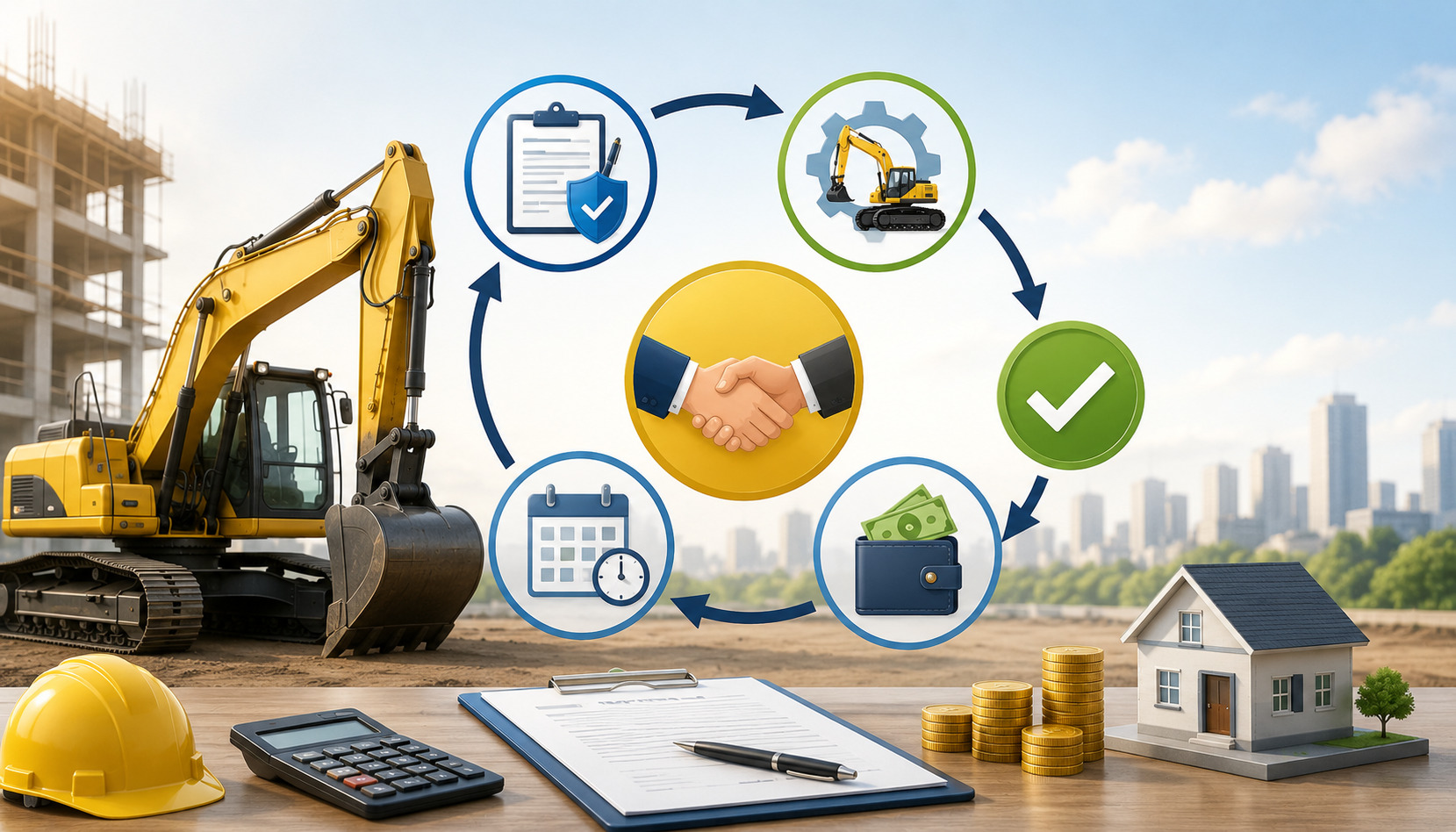
Lease-to-Own Equipment Financing Explained
Businesses often need equipment before they have the cash to buy it outright. Machinery, vehicles, tools, technology, medical devices, restaurant equipment, and construction equipment can all be expensive, yet they may be essential for serving customers, producing goods, expanding capacity, or replacing aging assets.
That is where lease-to-own equipment financing can help. It allows a business to use needed equipment now while making scheduled payments over time and working toward possible ownership. Instead of treating equipment only as a rental expense or only as a loan purchase, this structure sits between traditional leasing and buying.
For many owners, the appeal is practical: preserve cash, get the asset into service, and avoid delaying growth. But lease-to-own structures also come with contract details that matter. The monthly payment, purchase option, maintenance responsibilities, fees, and end-of-term requirements can significantly affect the real cost.
This guide explains how lease-to-own equipment financing works, when it makes sense, when another option may be better, and what to review before signing.
What Is Lease-to-Own Equipment Financing?
Lease-to-own equipment financing is a financing arrangement that lets a business lease equipment for a set term with the opportunity to own it at the end.
The business makes regular payments under an equipment lease agreement, uses the asset during the lease period, and may complete ownership through a final payment, fixed buyout, fair market value purchase, or other purchase option.
In practical terms, the business does not always become the legal owner on day one. During the lease, the financing provider or lessor may retain ownership while the business receives the right to use the equipment. Once the required payments and end-of-term conditions are satisfied, ownership may transfer according to the contract.
This structure is common for companies that need equipment but want to avoid a large upfront purchase. It may be used for lease-to-own machinery, commercial vehicles, kitchen equipment, office technology, medical devices, manufacturing systems, and specialized tools.
Lease-to-own equipment financing is different from a short-term rental. A rental is usually designed for temporary use with no expectation of ownership. It is also different from a standard equipment loan, where the borrower typically buys the equipment upfront and repays the lender over time.
The key feature is the path to ownership. That path may be automatic after the final payment, or it may require the business to exercise a purchase option. Before signing, business owners should read the agreement carefully and confirm exactly how ownership works.
For broader context on leasing structures, this guide on how equipment leasing works for small businesses is a helpful related resource.
How Equipment Lease-to-Own Programs Work
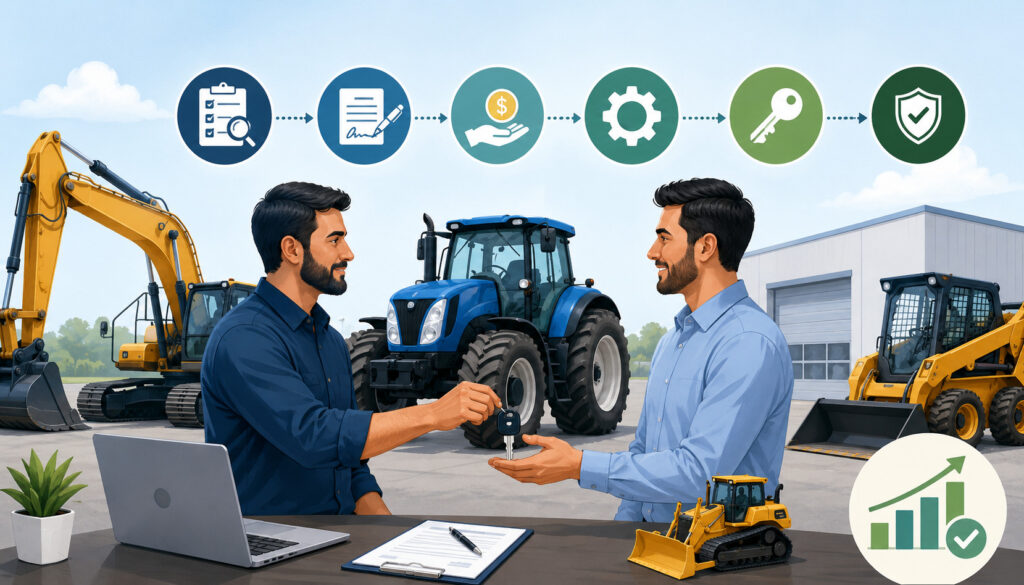
Equipment lease-to-own programs usually begin with the business choosing the equipment it needs. The equipment may come from a dealer, vendor, manufacturer, reseller, or private seller, depending on the financing provider’s rules.
The provider reviews the equipment value, business profile, credit strength, revenue, time in operation, and other risk factors before offering terms.
Once approved, the business signs an equipment lease agreement. The agreement explains the payment amount, term length, due dates, ownership language, buyout option, insurance requirements, default rules, and end-of-term process. The financing provider may pay the vendor directly, and the business begins using the equipment once it is delivered and accepted.
Payments are typically made monthly, although some agreements may allow seasonal, quarterly, or customized payment schedules. The payment amount depends on the equipment cost, lease term, residual value, credit profile, buyout structure, fees, and financing terms.
At the end of the term, the business may have several choices. It may buy the equipment, renew the lease, return the asset, or upgrade to newer equipment. In a true lease-to-own structure, the expected outcome is often ownership, but the exact process depends on the agreement.
| Feature | How It Works | What Borrowers Should Consider |
| Payment schedule | The business makes regular lease payments over a fixed term. | Lower payments may mean a longer term or larger buyout. |
| Purchase option | The agreement may allow ownership through a fixed buyout, fair market value price, or nominal final payment. | Confirm whether ownership is automatic or requires action. |
| Equipment use | The business uses the equipment during the lease term. | Usage limits, location rules, or return conditions may apply. |
| Maintenance | The borrower may be responsible for repairs, service, and upkeep. | Budget for maintenance beyond the lease payment. |
| Insurance | Many agreements require insurance coverage on the equipment. | Check who must be listed on the policy. |
| End-of-term choices | The business may buy, renew, return, or upgrade depending on the contract. | Missing notice deadlines can create extra costs. |
Monthly Lease Payments
Monthly lease payments help businesses spread equipment costs over time instead of paying the full purchase price upfront. This can make lease to own business equipment attractive for companies that need to preserve cash for payroll, inventory, marketing, rent, or other operating expenses.
The payment is not just a simple division of the equipment price. It may reflect the financing provider’s required return, the expected value of the equipment at the end of the lease, administrative fees, credit risk, and the type of purchase option included.
A lower payment can be helpful for cash flow, but it does not always mean the best deal. A longer term may reduce monthly pressure while increasing the total cost. A fair market value buyout may keep payments lower during the lease but leave uncertainty at the end.
Businesses should compare the monthly payment with expected revenue from the equipment. If the equipment improves productivity, reduces labor costs, or allows the business to accept more customers, the payment may be easier to justify.
Purchase Option at the End
The purchase option is one of the most important parts of lease purchase equipment financing. It defines how the business can become the owner after making payments during the lease term.
Some agreements include a fixed purchase amount. This gives the business more predictability because the buyout price is known upfront. Others use fair market value, meaning the final price depends on the equipment’s value when the lease ends. Some structures use a nominal final payment, such as a small buyout amount, after all required lease payments are made.
Each option affects the economics of the deal. A nominal buyout may make ownership more predictable but can result in higher monthly payments. A fair market value option may lower payments during the term but create uncertainty later.
Before signing, ask these questions:
- What is the exact purchase option?
- Is the buyout amount fixed or estimated?
- Does ownership transfer automatically?
- Is written notice required to buy the equipment?
- Are there end-of-term fees?
- What happens if the business misses the purchase deadline?
Ownership and Maintenance Responsibilities
Ownership and maintenance responsibilities can be confusing in rent-to-own equipment financing because the business may use the equipment every day without technically owning it during the lease term. The contract should clearly explain who owns the equipment during the lease and when ownership may transfer.
Maintenance is just as important. Many business equipment lease agreements require the borrower to maintain the asset, complete repairs, follow manufacturer service schedules, and keep the equipment in good working condition. Insurance may also be required, especially for high-value machinery, vehicles, or specialized equipment.
These obligations matter because a low monthly payment can become expensive if the business is responsible for repairs, downtime, replacement parts, inspections, or damage. For used equipment, maintenance risk can be especially important.
Business owners should also review whether the agreement restricts modifications, relocation, heavy usage, subleasing, or changes to the equipment. If the asset is central to operations, even one overlooked restriction can create problems later.
Lease-to-Own vs Traditional Equipment Loans
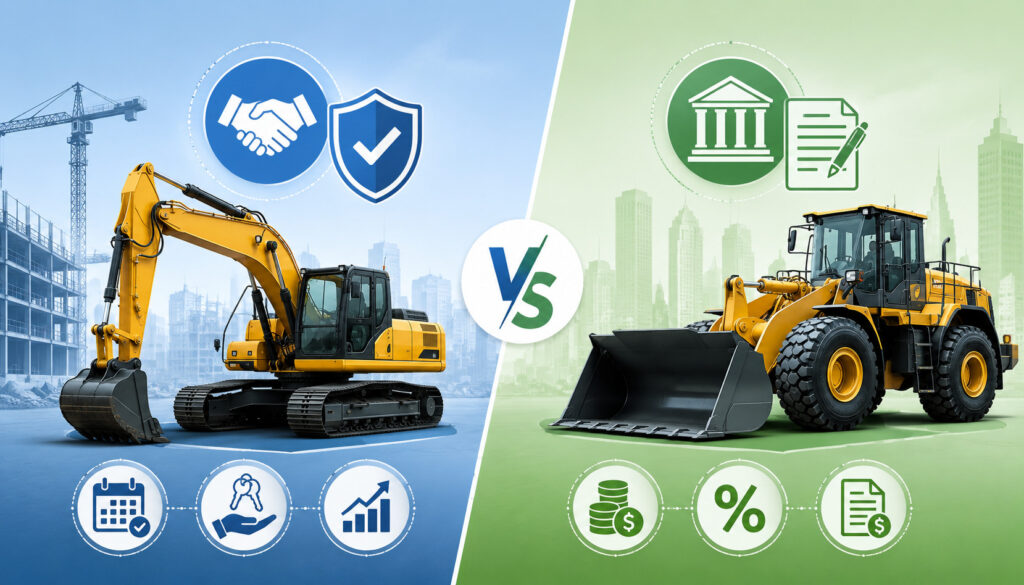
Lease-to-own equipment financing and traditional equipment loans can both help businesses acquire equipment, but they work differently. With a traditional equipment loan, the business usually purchases the equipment upfront. The lender provides funds, the borrower repays the loan, and the equipment often serves as collateral.
With lease-to-own financing, the provider may retain legal ownership during the lease term. The business uses the asset and may become the owner at the end through the purchase option. This distinction affects ownership timing, collateral treatment, accounting considerations, tax planning, and flexibility.
Equipment loans are often attractive when the business knows it wants long-term ownership from the start. They may be suitable for assets with a long useful life, strong resale value, and limited risk of becoming obsolete. For example, a durable machine used for many years may fit a loan structure well.
Lease-to-own programs may be more appealing when the business wants access now but prefers lower upfront cost, structured payments, or more flexible end-of-term choices. They can also help businesses that do not want to make a large down payment.
However, flexibility can come at a cost. Depending on the contract, lease-to-own arrangements may cost more over the full term than a straightforward loan. The buyout amount, fees, and lease charges all matter.
Accounting and tax treatment can vary based on the agreement and business circumstances. The IRS explains depreciation concepts for business property in Publication 946, but businesses should consult qualified professionals before relying on tax assumptions.
In short, equipment loans often favor direct ownership, while lease-to-own structures favor access plus a possible ownership path. The better choice depends on cash flow, equipment life, approval strength, tax planning, and how long the business expects to use the asset.
Benefits of Lease-to-Own Business Equipment
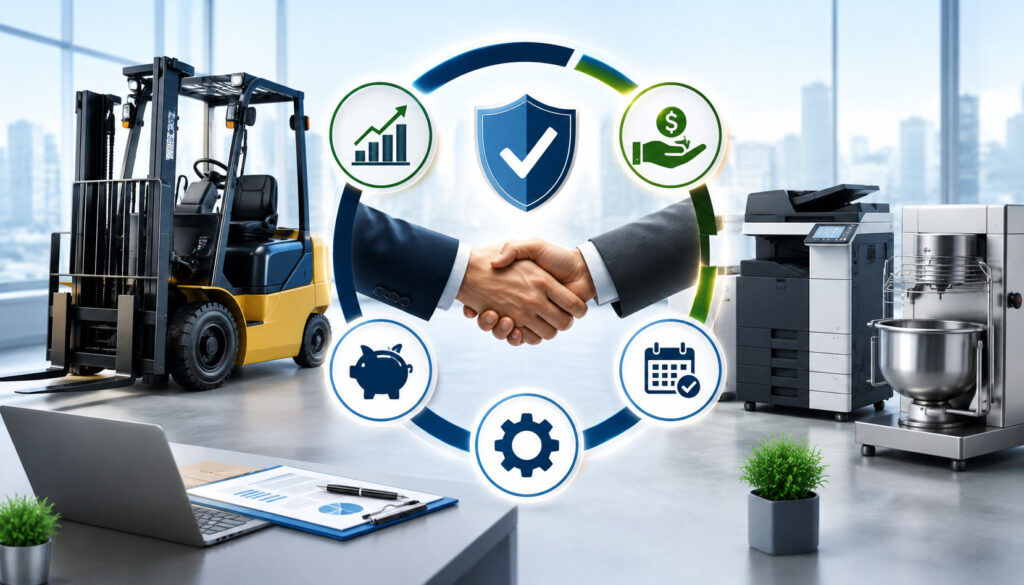
Lease-to-own business equipment can offer several advantages for companies that need productive assets but want to manage cash carefully. The first benefit is cash flow flexibility. Instead of paying the full price upfront, the business spreads the cost across predictable payments.
This can be especially useful when the equipment is needed to generate revenue. A contractor may need machinery to take on larger jobs. A restaurant may need ovens, refrigeration, or dishwashing systems to increase capacity. A medical office may need diagnostic equipment to expand services. In each case, waiting until enough cash is available could delay growth.
Another benefit is the possibility of ownership. Unlike a basic rental, lease-to-own equipment financing gives the business a path to keep the asset after the term. That can be valuable when the equipment has a long useful life or becomes central to operations.
Budgeting is also easier when payments are fixed. A predictable business equipment lease payment can help owners plan monthly expenses, estimate job costs, and manage working capital. Some providers may also offer seasonal structures for businesses with uneven revenue.
Lease-to-own financing may also preserve other borrowing capacity. Rather than using a general line of credit or depleting cash reserves, the business can match the financing to a specific asset.
Potential benefits include:
- Access to needed equipment sooner
- Reduced upfront cash burden
- Predictable payment schedule
- Path to equipment ownership
- Ability to preserve working capital
- Possible approval flexibility
- Potential upgrade or renewal options
- Better alignment between equipment use and payment timing
For newer businesses reviewing their options, this guide on equipment financing for startups may provide useful additional context.
Risks and Costs to Understand
Lease-to-own equipment financing can be useful, but it is not risk-free. The biggest risk is focusing only on the monthly payment while ignoring total cost. A payment that looks affordable may become expensive after fees, interest-like charges, insurance, maintenance, and the final buyout are included.
Early termination rules can also be restrictive. Some agreements require the business to pay most or all remaining payments if it exits early. Others may include return fees, restocking costs, or penalties. This matters if the equipment becomes unnecessary, obsolete, damaged, or unsuitable before the lease ends.
Maintenance obligations are another major cost. The business may be required to keep the equipment in good condition, pay for repairs, maintain insurance, and follow service schedules. If the equipment is used heavily, these costs can add up quickly.
Buyout terms deserve special attention. A fair market value purchase option may be reasonable, but it can create uncertainty because the final price is not known at signing. A fixed buyout is more predictable, but the monthly payment may be higher.
Depreciation and tax treatment can also be complex. Depending on the structure, the business may or may not treat the equipment like an owned asset during the term. This can affect financial statements and tax planning.
Other risks include:
- Documentation fees
- Late payment charges
- Automatic renewal clauses
- Insurance requirements
- Usage restrictions
- Equipment return conditions
- Personal guarantees
- Default remedies
- Obsolescence before payoff
- Limited ability to modify or sell the equipment
For used assets, condition risk is especially important. Before financing used equipment, owners may want to review inspection records, service history, and expected remaining life. This related guide on financing used equipment covers additional considerations.
When Lease-to-Own Equipment Financing Makes Sense
Lease-to-own equipment financing often makes sense when a business needs essential equipment, expects to use it for a long time, and wants eventual ownership without a large upfront purchase. It can be especially helpful when the equipment will support revenue, improve efficiency, reduce outsourcing, or increase production capacity.
Newer businesses may consider equipment lease-to-own programs when cash reserves are limited but equipment is necessary to operate. For example, a new food service operation may need refrigeration and cooking equipment before revenue becomes stable. A service business may need vehicles, tools, or technology to begin accepting jobs.
Businesses with predictable revenue may also be good candidates. If monthly cash flow can comfortably support the payment, lease-to-own financing can align equipment cost with the income the equipment helps generate.
This option may also fit businesses that want ownership but need time. A company may not want to rent forever, but it may also not want to drain cash with a purchase. Lease-to-own can create a middle path.
Good-fit situations often include:
- Equipment is essential to daily operations
- The business wants to keep the asset long term
- Cash is better preserved for operations
- Revenue is predictable enough to support payments
- The equipment has a useful life beyond the lease term
- The buyout terms are clear and reasonable
- The business has compared equipment loan alternatives
- The asset is not likely to become obsolete quickly
Lease-to-own machinery may be especially practical when the machine is durable, repairable, and expected to remain productive for many years. The more stable the equipment’s value and usefulness, the easier it is to justify working toward ownership.
When Another Financing Option May Be Better
Lease-to-own equipment financing is not always the best choice. A traditional equipment loan may be better when the business wants immediate ownership, has strong credit, can make a reasonable down payment, and expects to use the equipment for many years.
A short-term rental may be better when the equipment is needed only for a project, temporary demand spike, or seasonal job. Renting can cost more per month, but it may avoid long-term obligations and maintenance exposure.
An operating lease may be more suitable when the business does not want ownership. This can apply to technology, office systems, medical devices, or other assets that may become outdated quickly. In those cases, returning or upgrading equipment may be more valuable than owning it.
A line of credit may be better for smaller purchases, repeated equipment needs, or situations where flexibility matters more than financing one specific asset. However, lines of credit may have variable costs and may not be ideal for large long-term equipment purchases.
A cash purchase may be the best option when the business has sufficient reserves, the equipment price is manageable, and avoiding financing costs is a priority. Paying cash can simplify ownership, but it can also reduce liquidity.
Other equipment financing options may be better if:
- The equipment is needed only temporarily
- The asset may become obsolete quickly
- The business wants immediate ownership
- The lease buyout is expensive or unclear
- The total cost exceeds loan alternatives
- The business has enough cash without hurting liquidity
- Maintenance risk is too high
- The agreement includes restrictive terms
The best choice depends on the equipment, the business model, and the cost of capital. Owners should compare several equipment leasing options before committing.
How to Compare Lease-to-Own Offers
Comparing lease-to-own offers requires more than looking at the monthly payment. Two offers can have the same payment but very different total costs, buyout terms, fees, and end-of-term requirements.
Start with the total cost. Add every scheduled payment, upfront fee, documentation charge, delivery cost, insurance requirement, maintenance obligation, and final buyout amount. This gives a clearer view of what the business will actually pay.
Next, review the purchase option. A fixed buyout provides certainty. A fair market value option may offer lower payments but less predictability. A nominal final payment may make ownership easier to understand, but it may be built into the payment structure.
Term length also matters. A longer term may reduce monthly pressure, but it can increase total cost and extend the obligation. A shorter term may cost more each month but reduce long-term expense.
Businesses should also review:
- Payment amount and frequency
- Total amount paid over the term
- Purchase option language
- End-of-term notice requirements
- Renewal clauses
- Late fees and default rules
- Insurance requirements
- Maintenance responsibilities
- Personal guarantee requirements
- Early payoff or early termination rules
- Equipment return standards
- Restrictions on use or location
It is also wise to compare lease-to-own offers against equipment loan alternatives. The right comparison is not “Can we afford the payment?” but “Is this the best way to acquire and use this equipment?”
For preparation guidance, this article on the equipment loan approval process can help business owners understand what financing providers may review.
Common Mistakes to Avoid
One common mistake is signing without understanding the buyout terms. Business owners may assume they will automatically own the equipment after the final payment, only to discover that they must pay fair market value, provide notice, or satisfy additional conditions.
Another mistake is ignoring total cost. A low payment can be appealing, but the full cost may be much higher once the term length, fees, maintenance, insurance, and final purchase amount are included.
Choosing equipment that becomes obsolete too quickly can also create problems. Technology, software-linked systems, and certain specialized devices may lose value or usefulness before the lease ends. In those cases, an upgrade-friendly lease or short-term rental may be better.
Overlooking maintenance is another issue. If the business is responsible for repairs, downtime, and replacement parts, the true cost of lease-to-own equipment financing can rise quickly. This is especially important for used machinery, vehicles, and equipment with heavy daily use.
Businesses should also avoid signing without comparing alternatives. Lease purchase equipment financing may be useful, but it should be reviewed alongside loans, rentals, operating leases, lines of credit, and cash purchase options.
Avoid these mistakes:
- Assuming ownership transfers automatically
- Focusing only on monthly payment
- Ignoring final buyout cost
- Missing automatic renewal language
- Overlooking maintenance duties
- Underestimating insurance costs
- Financing equipment with a short useful life
- Not comparing multiple offers
- Failing to review early termination terms
- Signing before confirming tax and accounting treatment
A careful review process can prevent expensive surprises and help the business choose financing that supports long-term operations.
What is lease-to-own equipment financing?
Lease-to-own equipment financing is an arrangement that lets a business lease equipment for a set period while working toward possible ownership. The business makes scheduled payments, uses the equipment during the term, and may become the owner through a purchase option or final payment.
It is often used for machinery, vehicles, tools, technology, restaurant equipment, medical devices, and construction equipment. The exact ownership process depends on the equipment lease agreement.
Is lease-to-own the same as equipment leasing?
Not always. Equipment leasing is a broad category. Some leases are designed mainly for temporary use, while others are structured with ownership in mind.
Lease-to-own equipment financing is a type of leasing arrangement that includes a path to ownership. That path may involve a fixed buyout, fair market value purchase, or nominal final payment.
Do businesses own the equipment during the lease?
In many lease-to-own structures, the financing provider or lessor owns the equipment during the lease term. The business has the right to use the equipment as long as it follows the agreement and makes required payments.
Ownership may transfer after the business completes the lease terms and satisfies the purchase option. The contract should clearly explain when and how ownership changes.
What happens at the end of the lease?
At the end of the lease, the business may be able to buy the equipment, return it, renew the lease, or upgrade to newer equipment. The available choices depend on the agreement.
In lease-to-own arrangements, the expected path is often purchase or ownership transfer. However, the business may need to provide notice, pay a buyout amount, or meet other end-of-term requirements.
Is lease-to-own equipment financing expensive?
It can be more expensive than paying cash or using certain equipment loans, especially after fees and buyout costs are included. However, it may help preserve cash and provide access to equipment sooner.
The best way to evaluate cost is to calculate the total amount paid, including monthly payments, upfront charges, maintenance, insurance, and final purchase price.
Can startups use lease-to-own programs?
Some startups may qualify for equipment lease-to-own programs, but approval can depend on credit, cash flow, owner background, equipment type, and available documentation. Newer businesses may face higher costs, larger upfront payments, or personal guarantee requirements.
Startups should be especially careful to match payments with realistic revenue expectations.
What should be reviewed before signing?
Before signing, review the monthly payment, term length, total cost, purchase option, fees, insurance requirements, maintenance duties, default rules, early termination terms, and end-of-term notice deadlines.
It is also wise to compare lease-to-own equipment financing with equipment loans, rentals, operating leases, lines of credit, and cash purchase options.
Is lease-to-own better than an equipment loan?
It depends. Lease-to-own may be better when the business wants lower upfront costs, structured payments, and a path to ownership. An equipment loan may be better when the business wants immediate ownership and can qualify for favorable loan terms.
The better option depends on cash flow, equipment life, total cost, tax treatment, and long-term plans for the asset.
Conclusion
Lease-to-own equipment financing can help businesses access essential equipment while working toward ownership. It can be useful for machinery, vehicles, tools, technology, medical equipment, restaurant equipment, and construction equipment when buying outright would strain cash flow.
The key is to review the full agreement, not just the payment. Business owners should understand total cost, buyout terms, maintenance responsibilities, insurance requirements, early termination rules, and end-of-term obligations before signing.
Lease-to-own can be a smart fit when the equipment is essential, the payment is manageable, and the business expects to use the asset long term. But it should always be compared with equipment loans, rentals, operating leases, lines of credit, and cash purchases.
Disclaimer: This article is for informational purposes only and is not financial advice. Business owners should consult qualified financial, tax, or legal professionals before entering any equipment financing agreement.