Equipment Loan Down Payments Explained
Equipment loan down payments play a major role in how business equipment financing is approved, structured, and repaid. When a business buys machinery, vehicles, technology, restaurant equipment, medical devices, construction tools, or other revenue-producing assets, the lender often wants the borrower to contribute part of the cost upfront.
That upfront contribution matters because it affects loan approval, lender risk, monthly payments, cash flow, equipment value, collateral strength, and total financing cost. A down payment can also show that the business has financial discipline and is committed to the purchase.
This guide explains how equipment loan down payments work, what lenders may consider, how much down payment for equipment financing may be expected, and how businesses can prepare before applying.
Disclaimer: This article is for informational purposes only and is not financial advice. Loan terms, costs, and approval requirements vary by lender and borrower profile.
What Are Equipment Loan Down Payments?
Equipment loan down payments are upfront payments made by a borrower when financing business equipment. Instead of borrowing the full purchase price, the business pays a portion of the cost at closing and finances the remaining balance through an equipment loan.
For example, if a business purchases a piece of equipment and contributes part of the price upfront, the lender only finances the remaining amount. That financed amount becomes the loan principal, which is repaid over time through scheduled payments.
In equipment purchase financing, the equipment itself often helps secure the loan. Because the lender may be able to claim the equipment if the borrower defaults, equipment loans can sometimes be easier to structure than unsecured financing. However, the equipment’s value, resale market, condition, and depreciation still matter.
A business equipment loan down payment is not the same as a fee. Fees may include origination charges, documentation costs, filing fees, appraisal expenses, or closing costs. A down payment reduces the amount financed, while fees are costs associated with arranging or processing the loan.
For businesses comparing equipment financing options, the down payment should be evaluated alongside interest rate, repayment term, fees, collateral requirements, and total cost. A low down payment may seem attractive, but it can increase monthly payments and total borrowing costs.
Why Lenders Require Down Payments for Equipment Loans
Lenders require down payments for equipment loans because they reduce financing risk. When a borrower contributes money upfront, the lender has less exposure if the equipment loses value, the business struggles with payments, or the asset must be resold after default.
Equipment can depreciate quickly. Some assets hold value well, while others lose value soon after purchase because of use, wear, technology changes, mileage, customization, or limited resale demand. A down payment helps create a cushion between the loan balance and the equipment’s market value.
Down payments also show borrower commitment. A business that invests its own cash into the purchase has more at stake. From a lender’s view, this may reduce the chance that the borrower walks away from the loan if business conditions change.
Another important concept is loan-to-value ratio. This compares the amount financed to the value of the equipment. A lower loan-to-value ratio generally creates a stronger financing position because the lender is not funding the entire purchase price.
For example, if a lender finances the full equipment cost, the loan balance may be close to or above the equipment’s resale value after fees, taxes, delivery, and depreciation. If the borrower makes a down payment, the lender has a better chance of recovering funds if the equipment must be sold.
Down payments can also support equipment loan approval when a borrower has limited time in business, uneven revenue, thin credit, or a high-cost purchase. They are not the only factor, but they can strengthen the application.
Government-backed business loan resources also explain that guarantees can reduce lender risk and help businesses access funding, which is why risk-sharing is an important part of many financing structures. See this business loan resource from the Small Business Administration for general educational context.
How Much Down Payment for Equipment Financing Is Common?
There is no single answer to how much down payment for equipment financing is required because lenders evaluate several factors. The required amount may depend on the equipment type, borrower credit profile, business history, revenue, cash flow, loan amount, loan term, and whether the asset is new or used.
Some financing structures may require little upfront cash for strong borrowers and equipment with reliable resale value. Other deals may require a larger equipment financing down payment, especially when the equipment is specialized, used, fast-depreciating, or difficult to resell.
Borrowers should avoid assuming that the minimum down payment for equipment loans will be the best choice. A lower down payment may preserve cash today, but it may also increase monthly payments, total interest, and lender risk. A larger down payment may reduce financing costs but can also strain working capital if the business uses too much cash.
The table below shows common factors that influence equipment loan down payments.
| Factor | How It Affects Down Payment | What Borrowers Should Consider |
| Equipment type | Specialized or fast-depreciating equipment may require more upfront cash | Consider resale value, useful life, and whether the equipment has broad market demand |
| New vs. used equipment | Used equipment may need more review and possibly a larger contribution | Ask whether an appraisal, inspection, or valuation is required |
| Credit profile | Stronger credit may support lower down payment options | Review credit history before applying and correct errors where possible |
| Business history | Established businesses may qualify more easily than newer businesses | Prepare financial records that show stable operations |
| Revenue and cash flow | Strong cash flow may reduce lender concerns | Show that payments fit comfortably into operating cash flow |
| Loan amount | Larger purchases may require more borrower investment | Budget for taxes, shipping, installation, and training |
| Term length | Longer terms can increase lender exposure | Match the repayment term to the equipment’s useful life |
| Equipment condition | Older or heavily used equipment may be riskier | Request maintenance records and confirm remaining useful life |
| Industry risk | Some industries have seasonal or volatile revenue | Build cash reserves and document recurring income |
| Financing structure | Loans, leases, and secured financing may treat upfront costs differently | Compare total cost, not just the upfront payment |
For more background on qualifying factors, see this guide to equipment loan requirements.
Equipment Type and Value
Equipment type and value can strongly influence equipment loan down payments. A lender will usually look at whether the equipment is essential, durable, marketable, and likely to retain enough value during the loan term.
New equipment may be easier to finance because it often comes with invoices, warranties, clear specifications, and predictable conditions. However, new equipment may also depreciate quickly after purchase, especially if it is technology-heavy or customized.
Used equipment can sometimes be a good investment because the initial depreciation has already occurred. Still, lenders may want more documentation, such as an appraisal, inspection, maintenance history, serial number verification, or dealer quote.
Specialized equipment may require a larger business equipment loan down payment because it can be harder to resell. A custom production machine, niche medical device, or industry-specific tool may have fewer buyers than a standard truck, forklift, oven, or computer system.
High-cost equipment can also lead to higher down payment expectations. As the loan amount increases, the lender’s exposure increases too. A borrower contribution can help balance the risk and improve the overall financing structure.
Credit Profile and Business History
Credit profile and business history are major parts of equipment financing requirements. Lenders may review business credit, owner credit, payment history, existing debt, open credit lines, bankruptcies, collections, tax obligations, and recent credit activity.
A strong credit profile can support better equipment loan terms. It may help a borrower qualify for a lower down payment, lower rate, longer term, or more flexible repayment structure. Weak credit does not always prevent equipment financing, but it can increase the lender’s need for protection.
Business history also matters. An established business with consistent revenue, clean bank statements, and reliable cash flow may be viewed as less risky than a startup or a business with irregular deposits. Lenders want evidence that the business can afford payments after covering payroll, rent, inventory, insurance, taxes, and other obligations.
Financial records can make a major difference. Profit and loss statements, balance sheets, tax records, bank statements, and debt schedules help lenders understand whether the equipment will support business growth or create financial pressure.
A newer business may still qualify, but the lender may ask for a larger equipment financing down payment, stronger owner credit, additional collateral, or a shorter term. The goal is to reduce uncertainty and confirm that the loan makes sense for both sides.
Loan Amount and Term Length
Loan amount and term length also affect equipment loan down payments. Larger loans usually create more risk because the lender is committing more capital. Even if the equipment has value, the lender must consider depreciation, resale costs, collection expenses, and the borrower’s ability to repay.
A larger loan may require stronger documentation, a more detailed equipment quote, proof of cash flow, and possibly a larger down payment. The lender may also evaluate whether the equipment will generate revenue, reduce operating costs, improve efficiency, or replace failing equipment.
Term length matters because equipment may lose value over time. If the repayment term is longer than the equipment’s useful life, the lender may worry that the borrower will still owe money after the asset becomes outdated, inefficient, or expensive to maintain.
A shorter term may reduce total interest cost but increase monthly payments. A longer term may improve monthly cash flow but increase total borrowing cost. The right balance depends on the equipment’s expected life, revenue impact, and the business’s cash flow.
Borrowers should compare equipment loan terms carefully. The lowest monthly payment is not always the best option if it stretches repayment beyond the equipment’s practical value.
Minimum Down Payment for Equipment Loans: What to Expect
The minimum down payment for equipment loans varies by lender, borrower profile, equipment type, and financing structure. Some borrowers may qualify with a small upfront contribution, while others may need a more substantial down payment to offset risk.
It is important to avoid fixed assumptions. A lender may advertise flexible equipment financing, but the actual requirement can change after underwriting reviews the application. The final amount may depend on credit, cash flow, debt load, equipment value, seller type, business age, and the overall strength of the file.
For example, a profitable business with strong credit and a highly marketable piece of equipment may receive more favorable down payment options. A newer business buying used or specialized equipment may face stricter terms.
Minimums may also differ between equipment loans and equipment leases. Some leases may require first and last payment upfront rather than a traditional down payment. Others may include documentation fees, advance payments, security deposits, or purchase options at the end of the term.
Borrowers should ask lenders direct questions, such as:
- What upfront amount is required?
- Is the upfront payment a down payment, deposit, fee, or advance payment?
- Does the amount reduce the financed balance?
- Are taxes, delivery, installation, and training included?
- Are there closing costs or documentation fees?
- Can the down payment be adjusted to lower monthly payments?
- Will a larger down payment improve approval odds?
How Down Payments Affect Monthly Payments and Total Cost
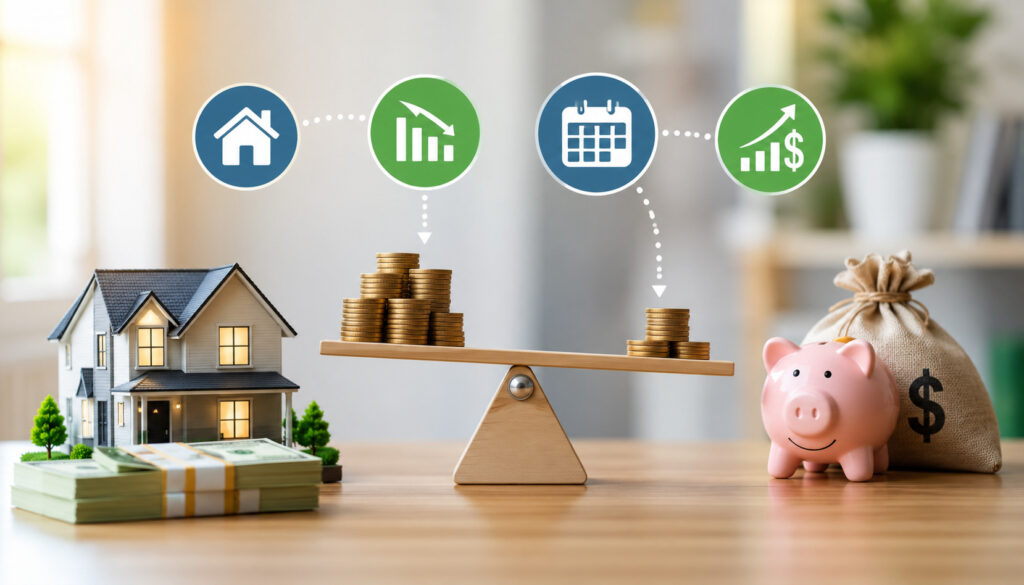
Equipment loan down payments directly affect the amount financed. The more a business pays upfront, the less it needs to borrow. That lower loan balance can reduce monthly payments, interest charges, and overall equipment loan costs.
For example, a business financing most of the purchase price will generally have a higher principal balance than a business that contributes more upfront. With the same rate and term, the higher balance leads to higher payments and more interest over time.
Down payments may also affect equipment loan approval. A larger down payment can improve the lender’s position by lowering the loan-to-value ratio. This can be especially helpful when the borrower has limited business history, seasonal revenue, or an equipment type that may depreciate quickly.
However, the best down payment is not always the largest possible amount. Businesses need working capital for payroll, inventory, rent, insurance, marketing, repairs, and unexpected expenses. Using too much cash upfront can create pressure later, even if the loan payment is lower.
The right strategy balances affordability, approval strength, and cash flow protection. A business should consider both the monthly payment and the remaining cash reserve after closing.
For a deeper look at financing structure, see this guide to business equipment financing.
Larger Down Payment Benefits
A larger down payment can provide several benefits. It reduces the amount financed, which can lower monthly payments and total interest cost. It may also help the borrower qualify for better equipment loan terms because the lender is taking on less risk.
A stronger borrower contribution may improve equipment loan approval odds. This is especially true when the equipment is expensive, used, specialized, or expected to depreciate quickly. The down payment gives the lender more protection if the equipment must be repossessed and sold.
A larger down payment can also create more equity in the equipment from the beginning. That may be helpful if the business plans to trade in, upgrade, refinance, or sell the equipment later.
However, businesses should avoid draining cash reserves. A lower loan payment is useful, but not if the business becomes short on operating funds. Before increasing a down payment, review expected revenue, seasonal fluctuations, repair costs, and emergency reserves.
Smaller Down Payment Trade-Offs
A smaller down payment can help preserve cash. This may be important for businesses that need working capital for hiring, inventory, marketing, installation, insurance, maintenance, or other operating expenses connected to the new equipment.
Preserving cash can be smart when the equipment will generate revenue quickly. For example, if a new machine allows the business to accept more orders, a smaller upfront payment may help the business keep enough cash to support growth.
The trade-off is that a smaller down payment usually means a larger loan balance. That can increase monthly payments, total interest, and overall equipment loan costs. It may also make approval more difficult if the lender believes the loan-to-value ratio is too high.
A low upfront payment can also create risk if the equipment depreciates faster than the loan balance decreases. In that case, the business may owe more than the equipment is worth for part of the term.
A smaller down payment is not automatically bad. It simply needs to be evaluated in context. Borrowers should compare multiple offers and consider whether the higher payment fits comfortably within projected cash flow.
Equipment Loan Requirements Beyond the Down Payment
Equipment loan requirements go beyond the down payment. Lenders usually review the borrower’s ability to repay, the equipment’s value, and the business’s financial condition. The down payment is only one part of the approval process.
Common equipment financing requirements may include business financial statements, tax records, bank statements, business debt schedules, ownership information, invoices, equipment quotes, seller details, and proof of insurance. Some lenders may also request a business plan, especially for newer businesses or larger purchases.
Credit profile is another key factor. Lenders may review owner credit and business credit to understand repayment history and risk. Recent late payments, high debt usage, collections, or unresolved tax obligations may affect approval or increase down payment expectations.
Cash flow is often one of the most important factors. A lender wants to see that the business can make payments without creating financial strain. Strong revenue is helpful, but lenders also review expenses, existing debt, profit margins, and bank account activity.
The equipment itself will also be evaluated. Lenders may consider:
- Purchase price
- Equipment age
- Condition
- Useful life
- Resale value
- Seller credibility
- Whether the equipment is new or used
- Whether it is essential to operations
- Whether it has a broad resale market
Insurance may also be required. Since equipment often serves as collateral, the lender may want proof that the asset is protected against damage, theft, or loss.
Down Payment vs Collateral: What’s the Difference?
A down payment and collateral are related, but they are not the same. A down payment is cash paid upfront toward the purchase. Collateral is an asset that secures the loan and gives the lender a claim if the borrower defaults.
In many equipment loans, the equipment being purchased serves as collateral. If the borrower cannot repay, the lender may have the right to repossess and sell the equipment according to the loan agreement. This collateral reduces lender risk, but it does not eliminate the need for a down payment in every case.
The down payment reduces the loan balance. Collateral supports the lender’s ability to recover funds if the loan fails. Both can help create a stronger financing structure.
For example, a business may buy a machine using equipment purchase financing. The business pays part of the price upfront, finances the rest, and the lender places a security interest in the machine. The down payment lowers the amount owed, while the machine secures the debt.
Sometimes lenders may ask for additional collateral beyond the equipment. This may happen if the equipment has limited resale value, the borrower has weak credit, the business is new, or the loan amount is large. Additional collateral could include other business assets, depending on the lender and financing structure.
Borrowers should carefully review collateral language before signing. They should understand what assets secure the loan, what happens after default, whether a personal guarantee is required, and whether the lender files a lien.
A down payment is paid at the beginning. Collateral remains tied to the loan until the obligation is satisfied or released under the agreement.
Ways to Prepare for an Equipment Financing Down Payment
Preparing for an equipment financing down payment starts before applying. A business should evaluate the equipment need, total purchase cost, cash position, and expected return from the asset. The goal is to enter the financing process with realistic expectations and organized documentation.
Start by identifying the true cost of the equipment. The sticker price may not include taxes, delivery, installation, training, software, maintenance, attachments, warranty coverage, insurance, or site preparation. These costs can affect how much cash the business needs at closing.
Next, review cash flow. A business should know how much it can contribute upfront without weakening operations. A down payment should not leave the business unable to cover payroll, rent, inventory, emergency repairs, or seasonal slowdowns.
Borrowers can also prepare by improving credit before applying. Paying down existing debt, resolving errors, avoiding unnecessary new credit, and maintaining clean payment history can help strengthen the application.
Comparing lenders is another important step. Different lenders may structure equipment loan down payments differently. One lender may require more upfront cash but offer a lower rate. Another may require less upfront cash but charge more over time.
Useful preparation steps include:
- Build a down payment reserve early
- Gather financial documents before applying
- Request quotes from reputable sellers
- Compare new and used equipment options
- Estimate revenue or cost savings from the equipment
- Review credit reports where available
- Ask lenders for full cost breakdowns
- Keep working capital separate from down payment funds
Common Mistakes to Avoid
One common mistake is focusing only on the lowest down payment. A low upfront requirement may seem appealing, but it can lead to higher monthly payments, more interest, and greater financial pressure. Borrowers should compare total equipment loan costs, not just upfront cash.
Another mistake is underestimating total purchase costs. Equipment may require installation, shipping, training, attachments, permits, software, warranties, or insurance. If these costs are not planned for, the business may run short of cash after closing.
Using all available cash for the down payment is also risky. Even if a larger down payment improves the loan offer, businesses still need reserves. Equipment may take time to generate revenue, and unexpected expenses can appear quickly.
Some borrowers also finance equipment that depreciates too quickly for the loan term. If the equipment becomes outdated before the loan is paid off, the business may be stuck making payments on an asset that no longer supports operations effectively.
Skipping lender comparisons is another costly mistake. Equipment financing for small businesses can vary widely. Rate, term, fees, collateral rules, payment frequency, and prepayment terms may differ from one lender to another.
Borrowers should also avoid ignoring contract details. Important items may include:
- Prepayment rules
- Late payment fees
- Insurance requirements
- Collateral language
- Personal guarantees
- Default terms
- Documentation fees
- End-of-term obligations
- Renewal or upgrade options
Finally, businesses should avoid buying equipment without a clear business case. The equipment should support revenue, efficiency, capacity, safety, compliance, or cost reduction. If the purchase does not improve operations, even attractive financing can become a burden.
What are equipment loan down payments?
Equipment loan down payments are upfront payments made toward the purchase of business equipment. The borrower pays part of the equipment cost at closing and finances the remaining balance through a loan.
The down payment reduces the amount borrowed. It may also help lower monthly payments, reduce interest cost, and improve the lender’s confidence in the transaction.
How much down payment is needed for equipment financing?
The amount varies by lender, borrower profile, equipment type, loan size, and financing structure. There is no universal requirement.
A strong borrower buying equipment with good resale value may qualify with less upfront cash. A newer business, weaker credit profile, used equipment purchase, or specialized asset may require more.
Can equipment loans have no down payment?
Some financing offers may advertise low or no down payment options, but approval depends on underwriting. Even when no traditional down payment is required, there may still be upfront costs such as fees, deposits, advance payments, taxes, or insurance.
Borrowers should ask whether upfront payments reduce the loan balance or are simply costs of closing the financing.
Does credit affect the down payment?
Yes, credit can affect equipment loan down payments. Strong credit may help a borrower qualify for lower upfront requirements, better rates, or more favorable terms.
Weaker credit may lead a lender to request a larger down payment, shorter term, additional collateral, or stronger documentation.
Do used equipment loans require higher down payments?
Used equipment loans may require higher down payments in some cases, but not always. It depends on the equipment’s age, condition, market value, maintenance history, and remaining useful life.
If the used equipment has strong resale demand and clear documentation, lenders may be more comfortable. If it is old, specialized, or difficult to value, a larger down payment may be required.
Is a larger down payment better?
A larger down payment can lower the loan balance, reduce monthly payments, decrease interest cost, and improve approval odds. However, it is not always the best choice if it drains working capital.
Businesses should balance lower financing costs with the need to preserve cash for operations, emergencies, and growth.
What documents are needed for equipment financing?
Common documents may include bank statements, tax records, financial statements, business ownership information, equipment quotes, seller invoices, debt schedules, and proof of insurance.
Lenders may also review credit history, business age, revenue, cash flow, and the equipment’s value before making an approval decision.
How can businesses prepare for down payment requirements?
Businesses can prepare by budgeting early, comparing lender offers, improving credit, organizing financial records, reviewing equipment costs, and preserving working capital.
It also helps to understand the full cost of the purchase, including delivery, installation, maintenance, insurance, taxes, and training.
Conclusion
Equipment loan down payments help reduce financing risk, support equipment loan approval, influence monthly payments, and shape the total borrowing cost. They are one of the most important parts of business equipment financing, but they should never be reviewed alone.
The right down payment depends on the equipment, lender, borrower profile, loan amount, repayment term, and cash flow needs. A larger down payment may improve terms and reduce cost, while a smaller down payment may preserve working capital but increase the financed balance.
Before choosing an offer, compare equipment loan terms, upfront costs, monthly payments, collateral requirements, and total repayment amount. The best financing structure is one that supports the equipment’s value, protects cash flow, and fits the business’s long-term needs.